


Most business owners understand that they can trademark a brand name or logo. Significantly fewer realize that the same body of law can also protect the distinctive visual appearance of a product. This includes its shape, color scheme, packaging design, and overall look and feel. This form of protection is called trade dress. It is one of the most powerful forms of brand protection available. It is also one of the most misunderstood and underutilized. Businesses that have invested in creating a distinctive product aesthetic or packaging identity often do not realize it. They may have something worth protecting beyond their brand name and logo. This is a gap in their strategy that competitors can exploit.
The Legal Definition of Trade Dress
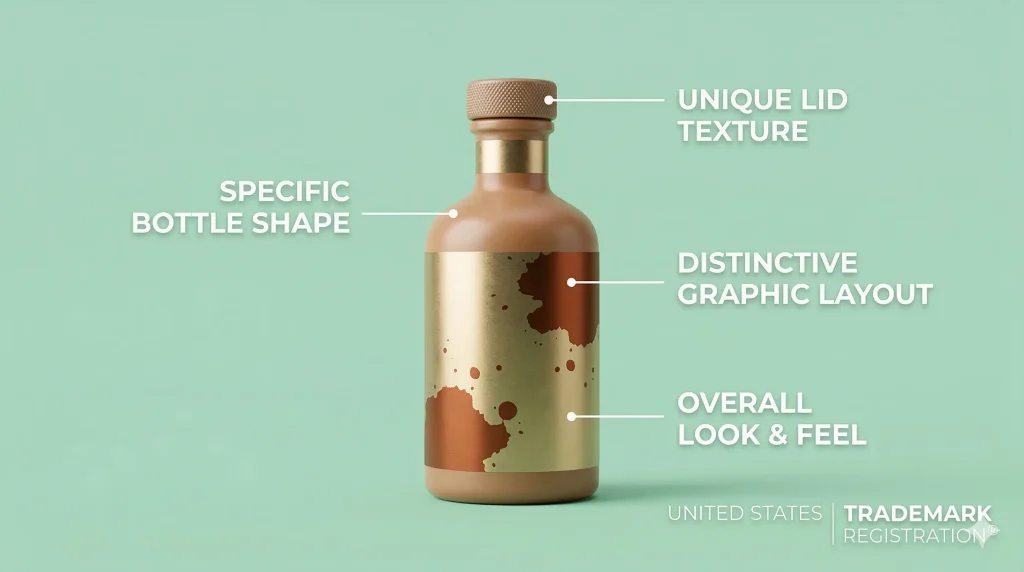
Intellectual Property Services professionals define trade dress as the total image and overall appearance of a product or its packaging. The definition is intentionally broad.
Trade dress can encompass the size, shape, color, color combinations, texture, and graphics of a product or its packaging. It can cover the specific layout and design language of a retail environment. Furthermore, it can also include the distinctive visual presentation used consistently in marketing and advertising. It can even extend to the arrangement of elements. Taken together, these elements create a recognizable commercial impression. Consumers then associate this impression with one specific source.
Brand Protection Services for trade dress operate under the same basic legal framework as traditional trademark law. Specifically, Section 43(a) of the Lanham Act protects distinctive, non-functional trade dress. It prevents others from copying it in ways that create consumer confusion about the source of goods or services. The legal test for trade dress protection is similar to the test for trademark protection. It focuses on distinctiveness, non-functionality, and the likelihood that consumers will associate the visual presentation with a specific source.
Classic Examples of Trade Dress in Commerce
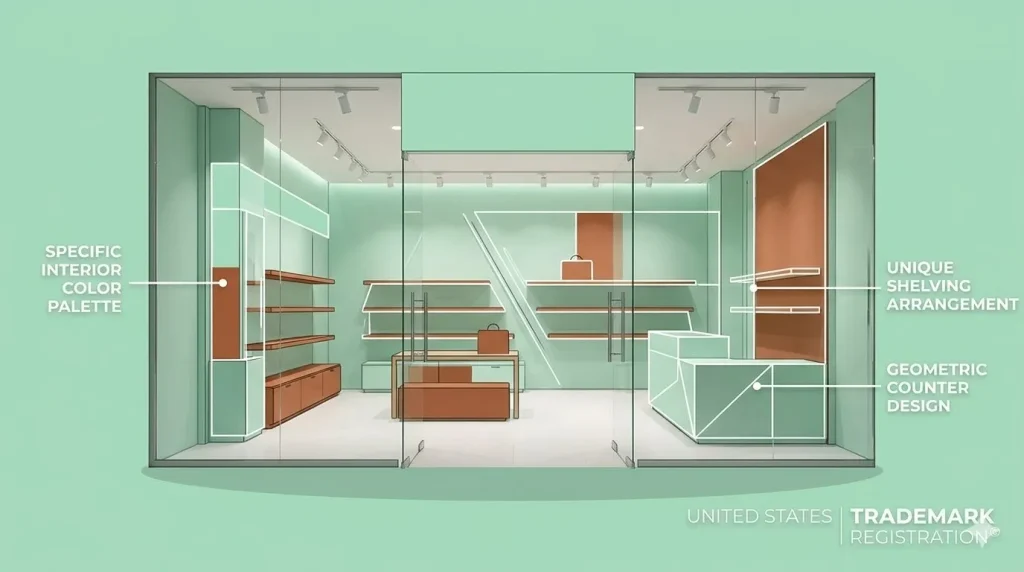
Trade dress law has produced some of the most recognizable intellectual property cases in American business history. Understanding those examples makes the concept more concrete.
Trademark protection solutions built around trade dress have protected product shapes. Consumers recognize these shapes globally without needing to see a name or logo. The distinctive curved bottle shape of a major soft drink brand has been protected as trade dress. The distinctive red lacquered sole of a luxury footwear brand has been protected as trade dress. The specific color combination and visual layout used by a taco chain to identify its restaurant locations were litigated as trade dress.
In the retail context, the specific interior design, color scheme, layout, and visual presentation of an Apple retail store have been recognized as protectable trade dress. In the digital context, courts have considered whether specific user interface designs can qualify for trade dress protection. This area continues to develop.
These examples share a common thread. In each case, the visual presentation is so strongly associated with one source that consumers recognize it as a brand indicator independently, without needing to see a name or logo. That level of consumer association is what trade dress protection is designed to preserve.
Product Packaging vs. Product Design: An Important Distinction
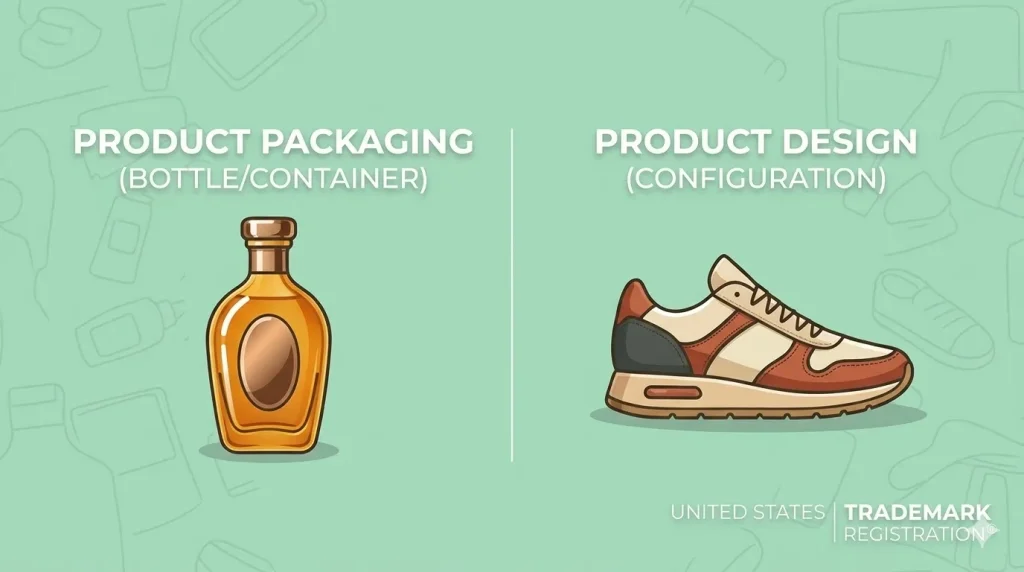
Trade dress law treats product packaging and product design differently, and understanding this distinction affects how you seek protection and how strong your claim will be.
Product packaging trade dress covers the box, label, wrapper, container, or other packaging that houses your product. Courts have traditionally received packaging trade dress claims more favorably than product design claims because people understand packaging to communicate and identify the source in a way that product design does not always do.
Trademark registration services for packaging trade dress require demonstrating that the specific combination of packaging elements is distinctive. This distinctiveness can be inherent or developed through consumer recognition. A packaging design that is distinctive enough for consumers to associate it with your brand, even without seeing your name, is a strong candidate for registration.
Product design trade dress covers the actual shape, configuration, or aesthetic of the product itself rather than its packaging. The legal bar for product design trade dress is higher. Courts require proof that the design has acquired distinctiveness, meaning consumers have come to associate that specific design with your brand as a source indicator through long-term and exclusive use in the marketplace. Inherent distinctiveness is not enough for product design trade dress under Supreme Court precedent.
The Critical Limiting Principle
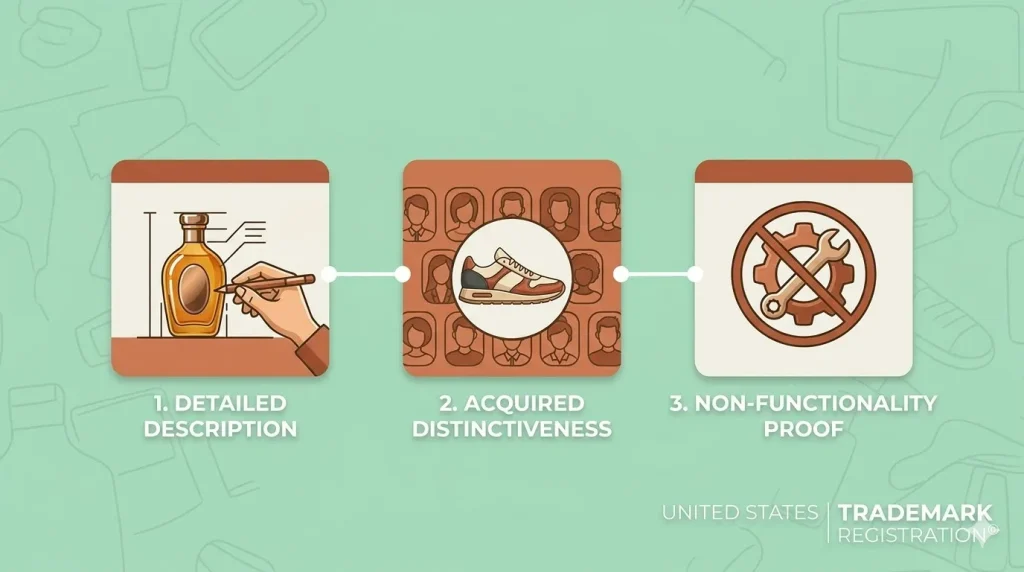
Every trade dress analysis begins with a threshold question: Is the feature functional? If it is, trade dress protection is not available, regardless of how recognizable or distinctive the feature has become.
The federal trademark office will refuse a trade dress filing if it deems the claimed elements functional. A product feature is functional if it is essential to the use or purpose of the product. It is also functional if it affects the cost or quality of the product. Competitors would need to use it to compete effectively in the relevant market.
The functionality doctrine is not a technicality. It reflects a fundamental principle: trademark law does not provide a perpetual monopoly over product features that have utility. Design patents exist for a limited period to protect ornamental product features. Trade secret law protects proprietary formulations and processes. Trade dress is for the distinctive, non-functional visual presentation that identifies the source. When a feature crosses from aesthetic into functional, it exits the trade dress category.
Practicing attorneys spend significant time in trade dress cases arguing the functionality question. Courts look at whether alternative designs were available, whether companies promoted the feature for its utilitarian advantages, and whether competitors would face a disadvantage if they could not use the feature. The non-functionality analysis is where many trade dress claims succeed or fail.
How to Register Trade Dress with the USPTO?
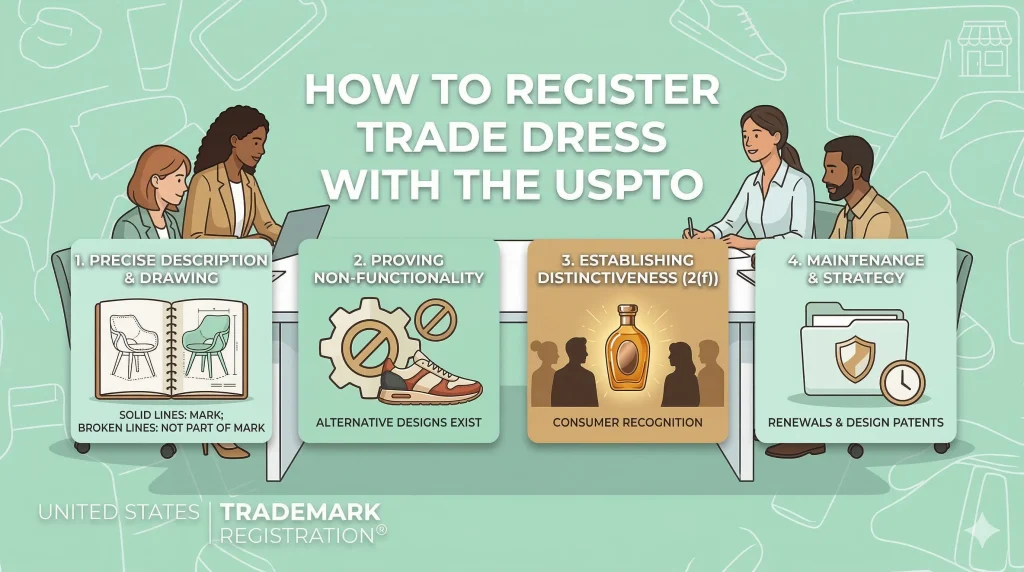
Trademark applicants follow the same general process for trade dress as they do for standard trademark applications, but they must carefully address some important additional requirements.
You must describe in writing the trade dress you are claiming. Courts require a precise, specific description of the visual elements that constitute the mark. Vague descriptions like “the overall look of the product” are insufficient and will invite refusals. Your description must identify exactly which visual elements, in which combination, you are claiming as your trade dress.
You must establish non-functionality. Show through the nature of the elements claimed or evidence demonstrating that the elements serve no functional purpose. You must also demonstrate distinctiveness. For packaging trade dress, this can be inherent distinctiveness. For product design trade dress, distinctiveness can be acquired through long use, advertising investment, consumer surveys, or other documentation.
Trademark Management Services for trade dress registrations emphasize the importance of building your evidence file over time. Advertising records, sales figures, documentation of exclusive use, consumer recognition surveys, and evidence that competitors have intentionally copied your presentation all contribute to a strong acquired distinctiveness showing.
Trade Dress Protection Without Registration
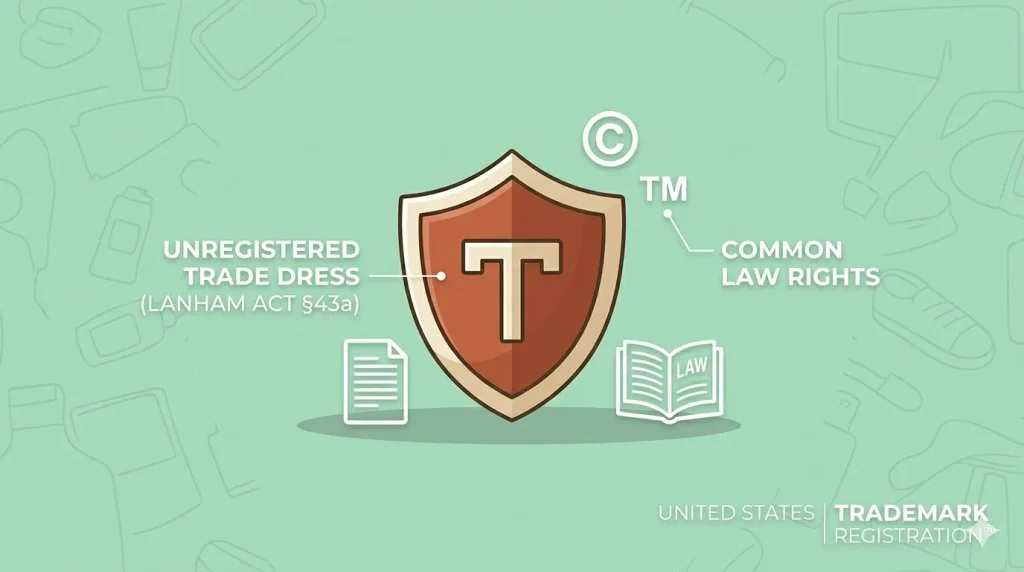
Federal registration is not the only path to trade dress protection, and in some cases, unregistered trade dress protection under Section 43(a) of the Lanham Act is the appropriate starting point.
Online Trademark Services professionals explain to clients that they can assert unregistered trade dress claims when the trade dress is distinctive and non-functional, even if they have not obtained federal registration. The practical difference is in what you have to prove and what presumptions you have access to in a legal dispute.
With federal registration, the law presumes that your trade dress is valid, and the official record documents your ownership. Without registration, you can still bring a claim under Section 43(a), but you carry the burden of proving both distinctiveness and non-functionality from scratch in every dispute. Registration shifts that burden significantly in your favor and make enforcement substantially more accessible.
Build a Complete Brand Protection Strategy
united states trademark registrations and law Services at USTML work with product companies, consumer brands, and retailers to assess whether their product design or packaging qualifies for trade dress registration, to build the evidence files that support registration and enforcement, and to file and prosecute trade dress applications with the USPTO.
If you have invested in creating a distinctive product aesthetic or packaging identity that consumers associate with your brand, that investment may deserve the same legal protection as your brand name. Start with a free trademark search and talk to our team about whether your product presentation qualifies for trade dress protection.
Frequently Asked Questions
Is trade dress the same thing as a trademark?
Trade dress is a form of trademark protection. The Lanham Act protects both traditional trademarks, such as names and logos, and trade dress, such as distinctive product appearance and packaging, under the same general framework. Trade dress functions as a trademark when consumers associate the visual presentation with a specific source rather than viewing it as generic or functional.
Does trade dress need to be registered to receive protection?
No. Trade dress can receive protection under Section 43(a) of the Lanham Act even without federal registration, as long as it is distinctive and non-functional. However, federal registration provides significant advantages, including a legal presumption of validity, nationwide priority from the registration date, and substantially stronger standing in enforcement actions and platform disputes.
What makes a product design non-functional for trade dress purposes?
Courts or trademark authorities consider a design element non-functional if it is not essential to the use or purpose of the product, does not affect cost or quality, and competitors do not need to use it in order to compete effectively. They also consider purely aesthetic choices, ornamental shapes, specific color combinations used for identification rather than utility, and visual elements that serve only to identify the source to be non-functional.
How do I prove that my trade dress has acquired distinctiveness?
Evidence of acquired distinctiveness typically includes how long and exclusively a company has used the trade dress in the marketplace, the company’s advertising expenditures for the specific trade dress, instances in which competitors intentionally copied the presentation, consumer recognition surveys showing that consumers associate the presentation with the brand, and media coverage connecting the visual presentation to the brand. Long-term exclusive use combined with substantial advertising investment is often the most persuasive combination of evidence.