


If you’re preparing to launch a product on Amazon, chances are you’ve already spent hours researching suppliers, calculating margins, reviewing competitors, and trying to understand Amazon’s ever-changing marketplace rules. Somewhere along the way, you’ve probably encountered advice about trademarks.
Some sellers claim a trademark is essential before you launch. Others insist it’s something you can worry about later. Then there are countless YouTube videos and Amazon forums filled with conflicting opinions about Brand Registry, intellectual property protection, and trademark filings.
It’s no surprise that many new sellers are confused.
One of the most common questions asked by Amazon entrepreneurs is simple:
Can I sell on Amazon without a registered trademark?
The answer is yes. Amazon does not require a federal trademark registration to open a seller account, list products, or start generating sales.
However, that answer only tells part of the story.
The real issue isn’t whether Amazon allows you to sell without a trademark. The real issue is whether building an Amazon business without trademark protection creates risks that could eventually cost you far more than the trademark itself.
For sellers who are simply testing products, the answer may be different than it is for entrepreneurs trying to build a recognizable brand. Understanding that distinction is critical because some of the biggest problems Amazon sellers face are not inventory problems or advertising problems. They’re brand protection problems.
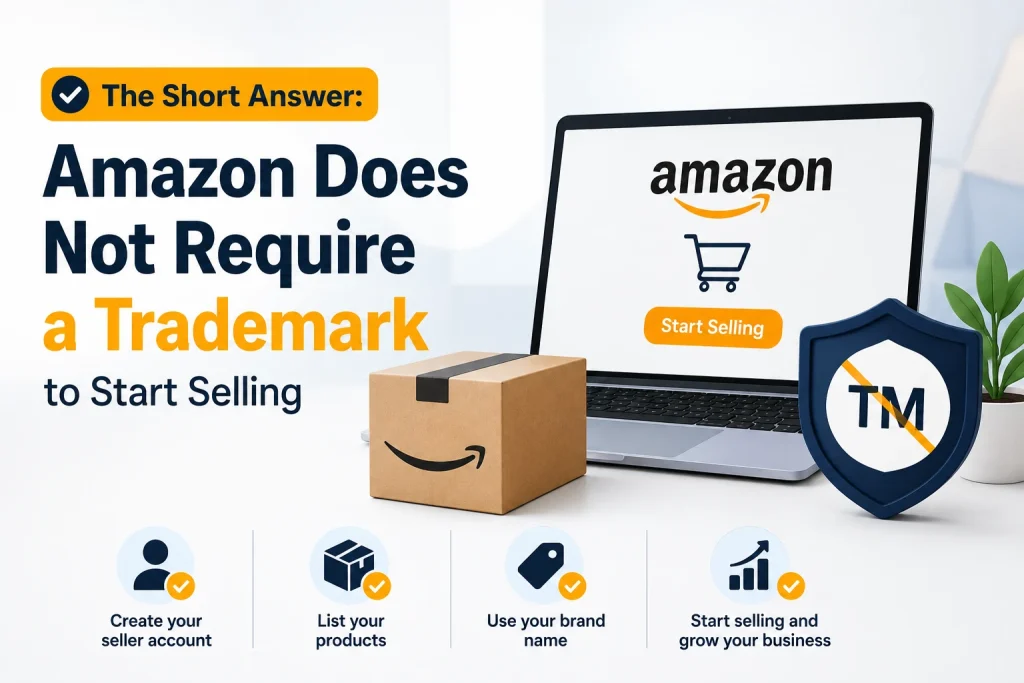
The Short Answer: Amazon Does Not Require a Trademark to Start Selling
Many first-time sellers assume Amazon requires trademark registration before allowing businesses to operate on the platform. That assumption is understandable because trademarks are frequently discussed in Amazon seller communities, especially when conversations turn toward Brand Registry and intellectual property protection.
In reality, Amazon’s basic seller requirements are focused on account verification, product compliance, and marketplace policies. You can create a seller account, source inventory, launch products, run advertising campaigns, and generate revenue without owning a registered trademark.
Thousands of sellers do exactly that every day.
This is one reason many entrepreneurs postpone trademark protection during the early stages of building their business. When you’re investing money into inventory, shipping, packaging, product photography, and PPC advertising, trademark registration can feel like a future problem rather than an immediate priority.
The challenge is that Amazon’s permission to sell does not automatically protect your brand. Those are two entirely different issues. A seller can operate successfully without a trademark while still remaining vulnerable to problems that become increasingly common as the business grows.
Understanding where those vulnerabilities come from is what separates long-term brands from short-term product listings.
Why Most Amazon Sellers Wait Too Long to Think About Trademarks?
In the beginning, delaying trademark protection often feels like a smart financial decision.
Imagine you’re launching your first private-label product. You’ve already spent thousands of dollars sourcing inventory from overseas manufacturers. You’re investing in packaging, listing optimization, and advertising. Every expense matters.
At that stage, many founders think the same way.
They tell themselves they’ll file for a trademark after the business becomes profitable.
The logic sounds reasonable. Why invest in protecting a brand before proving customers actually want the product?
The problem is that success tends to create the exact risks trademarks are designed to address.
A product that struggles to gain traction rarely attracts competitors. A product that starts generating consistent sales becomes visible. Other sellers begin analyzing your listings. Similar products appear. Branding becomes more important. Customers start recognizing your business rather than simply the product itself.
This transition often happens faster than founders expect.
Many Amazon sellers don’t start thinking seriously about trademarks until they encounter a problem. By then, the business has usually invested substantial resources into building recognition around a brand name that may not be adequately protected.
Experienced ecommerce operators understand something newer sellers often overlook: trademarks are not simply legal filings. They are business assets that become more valuable as brand recognition grows.
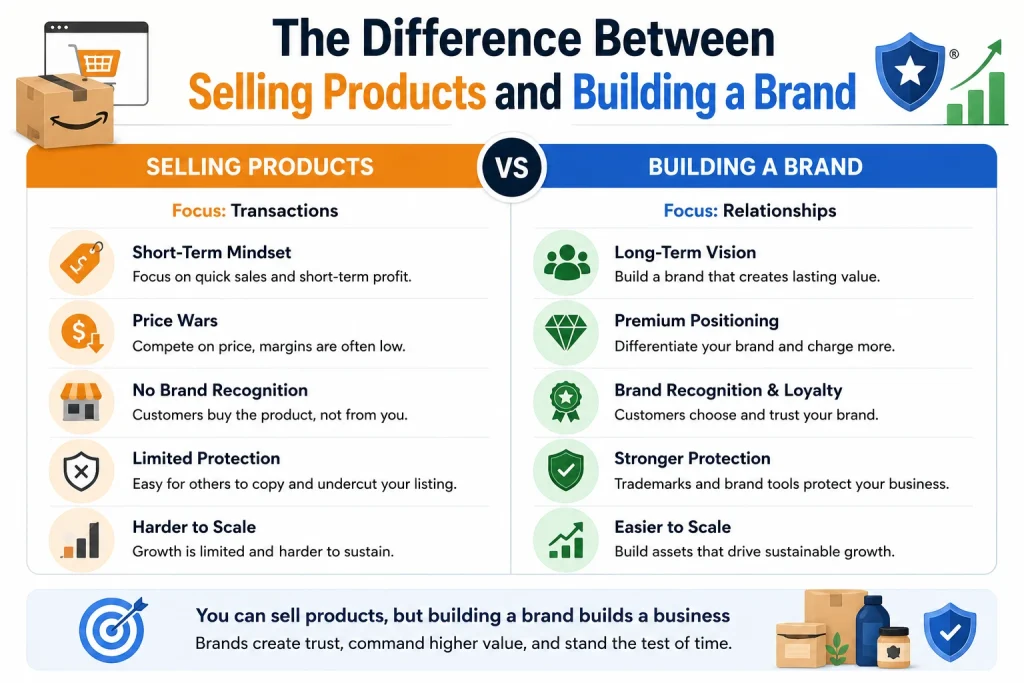
The Difference Between Selling Products and Building a Brand
One of the biggest mistakes Amazon sellers make is believing they are in the product business.
The most successful sellers eventually realize they are actually in the brand business.
Products can be copied. Manufacturing processes can be replicated. Packaging styles can be imitated. Even successful product ideas often attract competitors within months.
Brands are much harder to replicate.
A strong brand creates trust, recognition, and customer loyalty. It allows businesses to charge premium prices, expand into new product categories, and build long-term value that extends beyond a single listing.
Consider the difference between a generic kitchen gadget and a recognized household brand. The functional differences may be relatively small. The difference in business value, however, can be enormous because one company has invested in creating brand equity.
Trademark protection exists to support that brand equity.
As Amazon becomes increasingly competitive, branding is often one of the few sustainable advantages sellers can develop. Product features change. Advertising costs rise. Algorithms evolve. Strong brands tend to remain valuable because customers remember them.
For entrepreneurs who view Amazon as a long-term business rather than a short-term opportunity, trademark protection often becomes an important part of that strategy.
How Amazon Brand Registry Changed the Conversation?
A decade ago, many Amazon sellers viewed trademarks primarily as legal assets. Today, they’re often viewed as business tools.
A major reason for this shift is Amazon Brand Registry.
Brand Registry was created to help businesses establish stronger control over their presence within Amazon’s marketplace. The program provides brand-related features and protection mechanisms that many sellers consider valuable as their businesses grow.
For many entrepreneurs, Brand Registry is the moment trademarks move from being a legal topic to a practical business consideration.
The reason is simple.
As sellers invest more heavily in branding, they naturally want greater control over how their products appear on Amazon. They want stronger tools for addressing copycats, protecting listings, and maintaining consistency across the marketplace.
Brand Registry has become part of that conversation because it provides capabilities that many growing brands find useful.
The result is that trademark registration is no longer viewed solely as a legal safeguard. It is increasingly seen as part of a broader brand-building strategy.
This shift has influenced how serious Amazon businesses approach intellectual property from the very beginning.
What Happens When Competitors Start Paying Attention?
Many sellers underestimate how quickly success attracts competition.
A listing that generates a handful of sales each week is unlikely to attract much attention. A listing that consistently ranks well and produces strong revenue becomes a different story.
Competitors study successful products. They analyze keywords, pricing strategies, reviews, and branding. In highly competitive categories, businesses often look for opportunities to capture market share by introducing similar products.
This is where brand ownership becomes particularly important.
Imagine spending two years building a successful Amazon business. You’ve invested in product development, packaging, customer service, photography, advertising, and inventory management. Customers begin recognizing your brand name. Positive reviews accumulate. Repeat purchases increase.
Then another seller launches a product under a confusingly similar brand name.
Customers begin mixing up the two brands. Search results become crowded. Marketplace confusion increases.
Whether or not a particular situation creates legal concerns depends on many factors, but the broader lesson remains the same: as a brand becomes more valuable, protecting that brand becomes more important.
This reality explains why many established sellers view trademarks differently than new entrepreneurs just entering the marketplace.
The Hidden Cost of Waiting Too Long
When business owners think about trademark registration, they often focus on the filing cost.
What they frequently overlook is the potential cost of delay.
Imagine building a successful Amazon business for several years before discovering a significant branding issue. By that point, the company may have invested heavily in packaging, inventory, advertising campaigns, social media content, and customer recognition.
Changing direction becomes far more difficult.
A rebrand involves much more than updating a logo. It may require redesigning packaging, modifying listings, rebuilding brand awareness, and educating customers about the change.
The larger the business becomes, the more expensive those changes tend to be.
This is why many experienced founders approach trademark protection as a preventative measure rather than a reactive one. They understand that evaluating brand availability early often provides greater flexibility than trying to solve problems after substantial growth has already occurred.
When Should Amazon Sellers Consider Trademark Registration?
There is no single answer that applies to every seller.
A person testing a product idea with minimal inventory may have different priorities than a business generating six or seven figures in annual revenue.
However, trademark protection often becomes increasingly relevant when sellers begin focusing on long-term growth rather than short-term experimentation.
If you’re investing in custom packaging, expanding product lines, building a recognizable brand identity, or developing a business intended to grow over multiple years, trademark considerations typically become more important.
The question shifts from “Can I sell without a trademark?” to “How do I protect what I’m building?”
For many Amazon entrepreneurs, that shift represents an important milestone. It reflects the transition from simply selling products to building a business with lasting value.
Businesses seeking to establish stronger brand protection often explore professional trademark registration services as part of that growth strategy:
Evaluating trademark protection early can help sellers better understand their options before investing heavily in branding and expansion.
Successful Amazon Brands Understand This
Many of the most successful Amazon businesses share a common characteristic.
They treat branding as an asset rather than an afterthought.
They understand that long-term value comes from more than inventory and sales volume. It comes from customer trust, market recognition, and the ability to create a brand customers actively seek out.
Products generate revenue.
Brands create enterprise value.
That distinction is increasingly important in today’s marketplace because competition continues to grow while product differentiation becomes more difficult.
The businesses that survive long-term are often the ones that invest not only in products but also in protecting the identity behind those products.
Conclusion
So, can you sell on Amazon without a registered trademark?
Absolutely.
Amazon does not require trademark registration to launch products, operate a seller account, or generate sales. Thousands of businesses begin their Amazon journey without one.
However, the better question is whether you intend to build a product listing or build a brand.
As businesses grow, branding often becomes one of their most valuable assets. Customer recognition, marketplace reputation, and brand trust can take years to develop. Protecting those assets becomes increasingly important as the business expands.
While every seller’s situation is different, understanding trademark protection early allows entrepreneurs to make informed decisions about the future of their brand rather than reacting to problems after they occur.
Frequently Asked Questions
Do I need a trademark before opening an Amazon seller account?
No. Amazon does not require a trademark to create a seller account or begin selling products.
Can I sell private-label products on Amazon without a trademark?
Yes. Many private-label sellers launch products before obtaining trademark registration.
Why do Amazon sellers get trademarks?
Many sellers pursue trademarks to strengthen brand protection, support long-term growth, and take advantage of brand-related tools and opportunities.
Does Amazon automatically protect my brand?
Amazon provides various marketplace tools and policies, but brand owners remain responsible for protecting and managing their intellectual property.
Is trademark registration worth it for Amazon sellers?
For businesses focused on building a recognizable long-term brand, trademark protection is often considered an important business asset.
When is the best time to think about trademark protection?
Many entrepreneurs begin evaluating trademark protection once they commit to building a long-term brand and start investing significantly in growth, marketing, and customer recognition.