


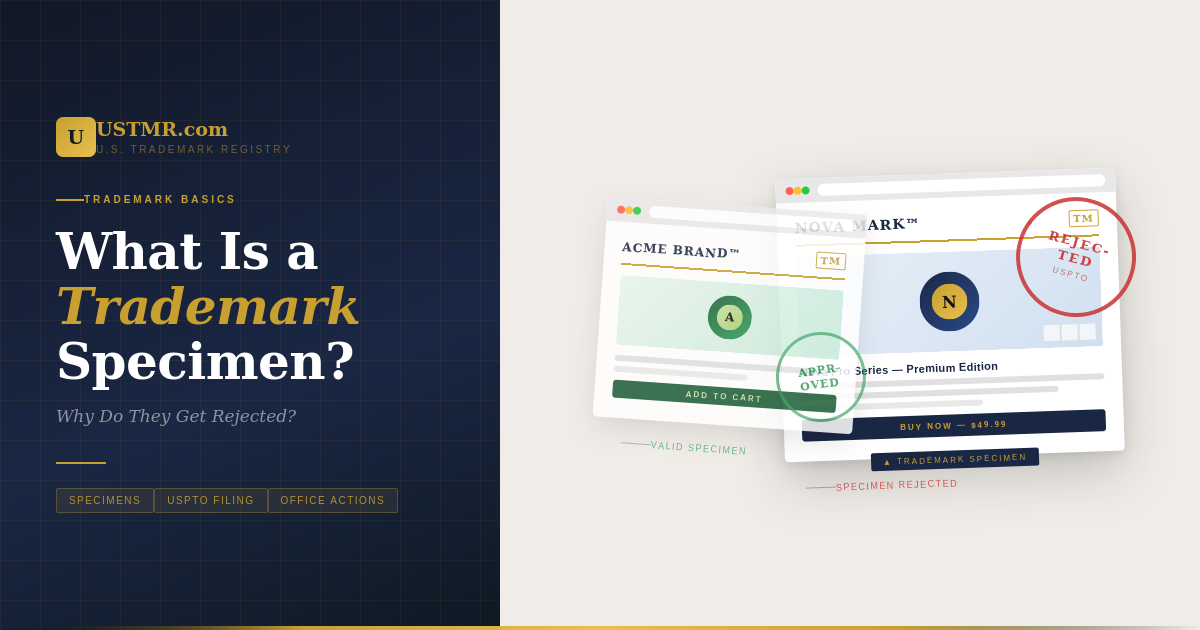
The email landed on a Tuesday morning. Marcus had spent three years building his outdoor gear brand. Filing his trademark application had felt like a milestone. Six weeks later, the USPTO rejected his trademark specimen.
The problem was his photos. They looked real, but a graphic designer had built them as rendered mockups for a pitch deck. No actual products. No real customers. The examiner spotted the difference immediately, and Marcus faced a hard deadline to produce acceptable evidence or lose the application entirely.
Thousands of brand owners hit this same wall every year. They pay their federal trademark filing fees, wait out the review period, then get blindsided by a specimen Office Action. Knowing what the USPTO needs before submitting is one of the most practical advantages any applicant can have.
What a Trademark Specimen Actually Is?
A trademark specimen is evidence of real commercial use. Not a logo file. Not a brand concept deck. It is proof that an actual product or service is reaching customers under that mark.
In the United States, trademark rights come from use, not registration. The USPTO needs to verify that an applicant is not simply reserving a name for future use. Specimens close that gap. They show the mark working in the market, identifying a source for consumers.
Use-in-commerce applicants submit specimens with the initial filing. Intent-to-use applicants submit them later via a Statement of Use. A qualified trademark registration service, just like USTML, reviews trademark specimen evidence before anything goes to the USPTO.
Specimens for Goods
For goods, the specimen must show the mark on or directly tied to the product as it reaches buyers. The USPTO wants commercial reality, not design concepts.
Accepted specimens for goods include:
- Product photos: Real photographs of the finished item with the mark clearly visible on the product or its surface.
- Packaging: Boxes, bags, bottles, or any container that carries the mark to the end buyer.
- Tags and labels: Hangtags, adhesive labels, or sewn-in labels attached to the product at the point of sale.
- E-commerce listings: Screenshots of a live product page showing the mark, the product image, and a purchase option such as Add to Cart.
Every acceptable goods specimen has one thing in common: it shows the mark where a real sale is happening.
Specimens for Services
Service mark specimens have no product to photograph. Instead, they must show the mark actively promoting or delivering the services named in the application.
Accepted specimens for services include:
- Website screenshots: A service or home page showing the mark alongside a description of what the business offers. The site must look operational, not theoretical.
- Brochures: Printed or digital materials distributed to clients that describe the services and display the mark.
- Advertisements: Print, digital, or broadcast ads promoting the specific services under the mark, not just the brand name alone.
- Business signage: Photos of the mark displayed at a physical location where services are actively delivered.
Connection is the keyword. An examiner must look at the specimen and immediately understand what service the mark represents.
Specimens That Get Rejected
Examiners follow consistent patterns when rejecting specimens. These are the most common traps.
Mockups and rendered images are the top reasons good specimens fail. A Photoshop composite or pitch-deck rendering does not prove commercial use. Examiners flag artificial lighting, mismatched proportions, and stock photos with logos dropped in.
“Coming soon” pages show intent, not use. A landing page collecting email signups for an unreleased product tells the examiner nothing about current commerce. Pre-launch social media announcements carry the same problem.
Promotional social media posts alone are rarely enough. A post announcing a new product line proves nothing about active sales. Even posts about existing products can fail if they lack a direct link to purchase.
Informational website pages that describe a business but do not actively offer services consistently fail as service mark specimens. The site must look like a working operation, not a placeholder.
The Ornamental Use Problem
Apparel and lifestyle brands face a specific risk. The USPTO separates a mark functioning as a brand identifier from one functioning as decoration, and the line matters.
A large logo across the chest of a t-shirt may read as a design element, not a source identifier. That is the ornamental use problem, and it triggers a refusal regardless of how recognizable the mark is.
Fixing this usually means placing the mark on a tag, neck label, or hangtag where it clearly identifies the brand. Experienced brand protection services catch ornamental use issues before an application reaches an examiner.
How to Prepare Specimens Before Filing?
Specimen review should happen before the application goes in, not after an Office Action lands. Working with trademark application services that include a specimen review step turns a reactive scramble into a systematic process.
A solid pre-filing checklist covers:
- Real product photos showing the mark on finished inventory, not mockups or design files
- Dated website screenshots where the mark and service description appear together on an active page
- Confirmation that the mark’s placement identifies the brand, not just decorates the product
- Verification that any website specimen looks like an operating business, not a coming-soon placeholder
- Documentation of when commercial use began, to support the date claimed in the application
Finding a problem before filing is manageable. Discovering it after a rejection means deadlines, extra fees, and delays.
Rejected vs. Accepted: Side by Side
Goods, rejected: A phone accessories brand submits a Kickstarter rendering of their case with the logo overlaid. Gradient background, stock phone model, artificial lighting. The examiner flags it as digitally manipulated and demands real-use evidence.
Goods, accepted: Same brand resubmits with a photo of the physical case on a plain surface, logo embossed on the back, plus a Shopify listing screenshot showing the product, price, and cart button. Both clear.
Services, rejected: A consultant submits a LinkedIn profile screenshot. It names the firm but describes no specific services and gives visitors no way to hire them. The examiner rejects it.
Services, accepted: Same consultant resubmits a services page screenshot with the firm name in the header, clear service descriptions, client testimonials, and a contact form. Approved.
How USTML Prevent Specimen Rejections?
Specimen rejections are preventable, yet they remain one of the most common Office Action types. Most happen because applicants submit what seems right rather than what the USPTO requires.
U.S. Trademark Registration (USTML) reviews specimens before filing as part of their standard USPTO filing services. That step catches mockup images, pre-launch pages, ornamental placement issues, and service mark specimens that lack the necessary connection to active commerce.
USTML’s trademark protection solutions and online trademark services mean clients arrive at the USPTO with evidence that has already been vetted. Marcus’s six-week detour could have been avoided entirely. For brands protecting real intellectual property, that kind of preparation is not optional. It is the whole point.