

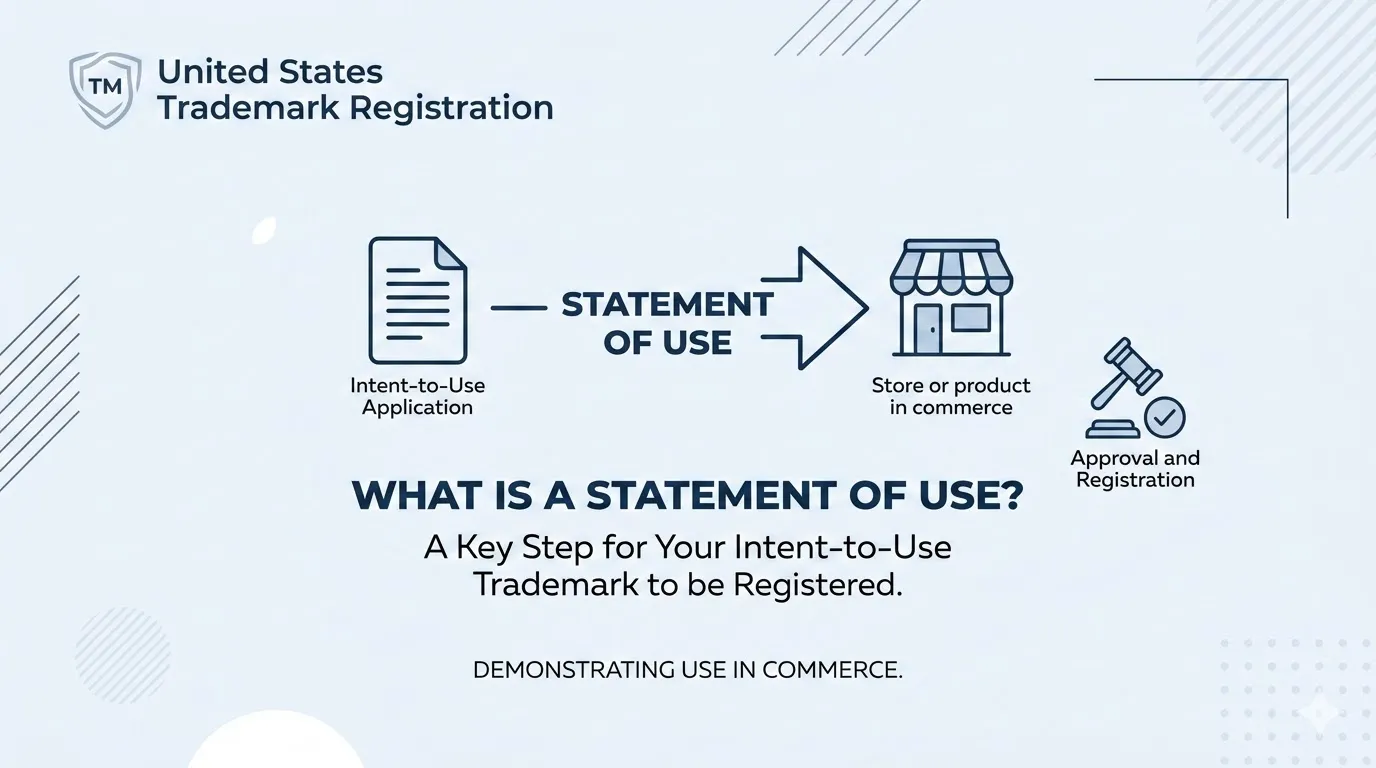
You filed your united states trademark registrations and law application based on an intent to use the mark in commerce. The USPTO examined it, approved it, and published it for opposition. No one opposed it. Now you’ve received a Notice of Allowance from the USPTO, and they’re asking you to submit a Statement of Use. If you’ve never seen this term before, that notice can feel disorienting.
Here’s what a Statement of Use is, what it requires, and exactly what’s at stake if the deadline passes without action.
Here’s Why the Statement of Use Exists
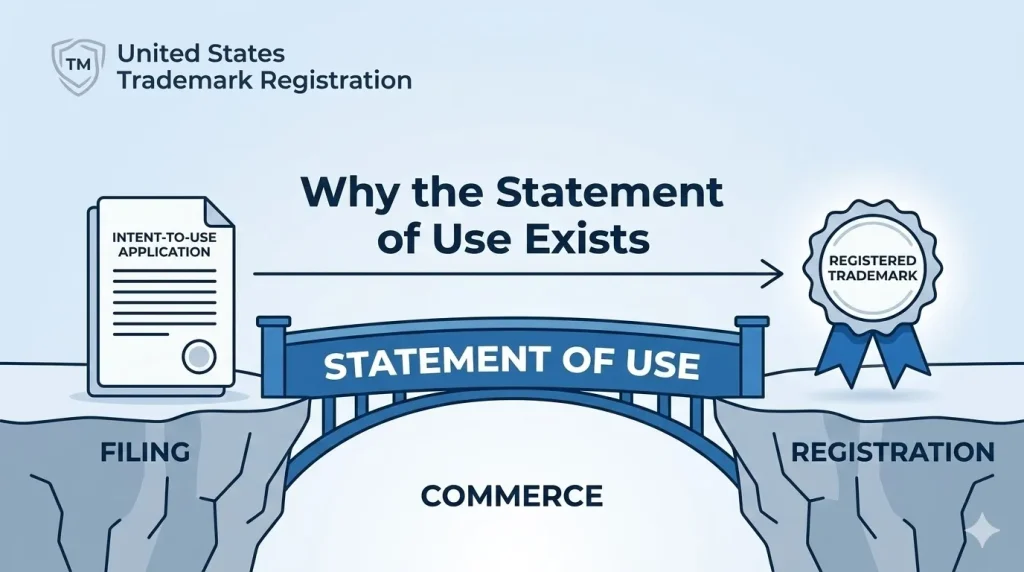
When you file an intent-to-use trademark application, you’re claiming that you have a bona fide intention to use the mark in commerce, but you’re not using it yet at the time of filing. The USPTO allows this because requiring actual use before filing would put U.S. applicants at a disadvantage compared to international applicants who can file under different frameworks.
You must demonstrate the actual use of the mark in commerce before registering an intent-to-use application. The Statement of Use is that demonstration. It’s the bridge between your approved application and your actual registration.
What does the Statement of Use contain?
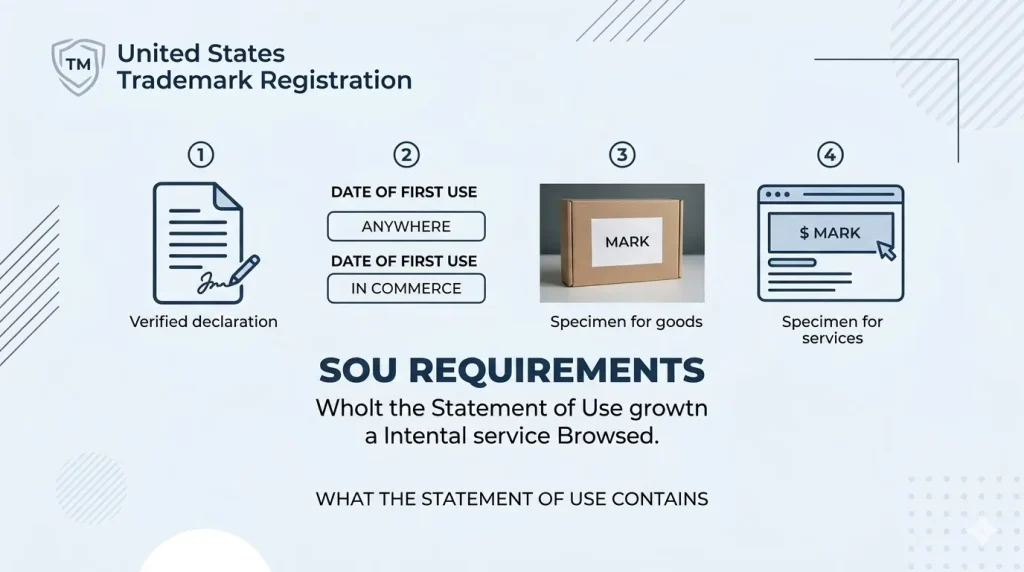
A Statement of Use is a filing submitted through the USPTO’s TEAS system that declares your mark is now in use in commerce in connection with the goods or services identified in your application. It contains four core elements.
The first element is a verified declaration that the mark is currently in use in commerce. The declaration is signed under penalty of law. Accuracy matters.
Second, the date of first use anywhere refers to the initial use of the mark with the goods or services, irrespective of any cross-state use.
Third, the date of first use in commerce, the date the mark was first used in a way that satisfies the legal definition of commerce, typically interstate commerce or commerce with a foreign country.
Fourth, a specimen demonstrating the mark’s actual use in commerce should be provided. For goods, this usually means a picture of the mark on the product, the packaging, or the label. For services, the fourth requirement typically means a screenshot of a website, a digital advertisement, or a brochure showing the mark in connection with the services.
The Deadline and What Happens If You Miss It?
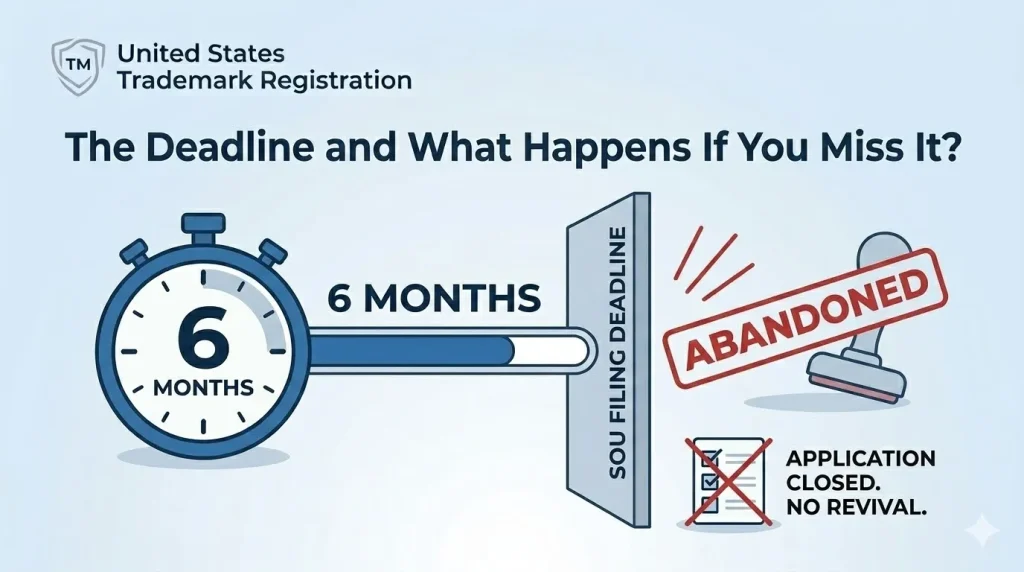
After the USPTO issues your Notice of Allowance, you have six months to either file your Statement of Use or request an extension of time. This is a challenging deadline. If six months pass without either a filed Statement of Use or an extension request, your application becomes abandoned.
Abandonment means the application is closed. There’s no revival option after the deadline for failing to file either the Statement of Use (SOU) or an extension request. In order to regain protection for the mark, you must initiate a fresh application and initiate the process anew, which necessitates a new priority date and new filing fees with the USPTO.
Federal trademark filing deadlines, particularly at the Statement of Use (SOU) stage, are not soft targets; they are strict deadlines that must be met to maintain trademark rights. The USPTO does not grant informal exceptions.
Extension Requests: Buying More Time
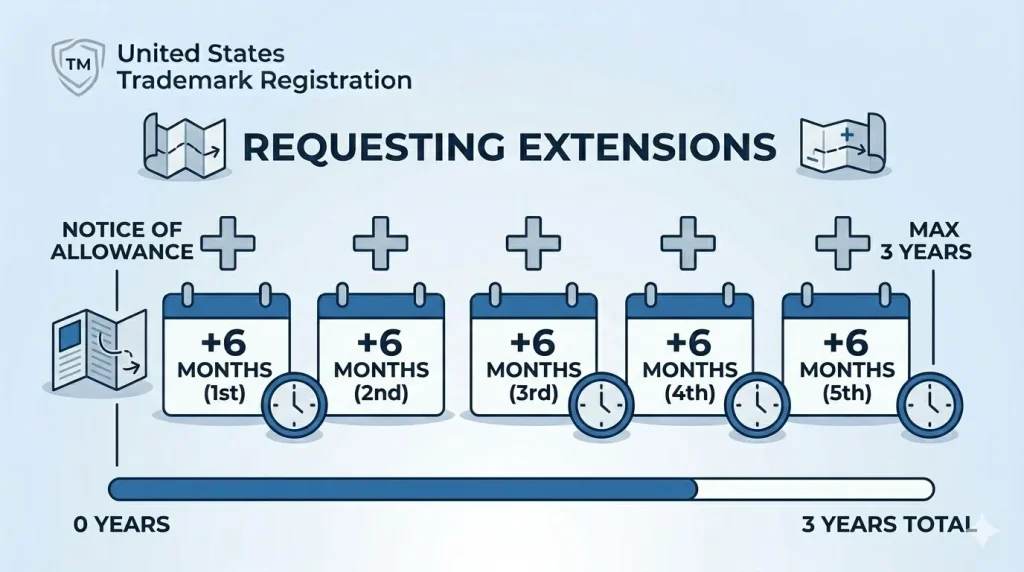
If your mark isn’t ready to use in commerce by the six-month deadline, you can request a six-month extension. You must have a continued bona fide intention to use the mark in commerce to qualify. The extension request costs an additional USPTO (United States Patent and Trademark Office) fee per class.
Extensions can be requested up to five times, giving you a maximum of three years from the Notice of Allowance date to file your Statement of Use. Each extension beyond the first requires a showing of good cause. By the final extension period, you must be close to actual use and able to demonstrate it.
USPTO filing services professionals handle extension requests routinely and ensure you don’t inadvertently miss an extension deadline by confusing it with the Statement of Use deadline. The two are different filings with different requirements, and conflating them is a common source of application abandonment.
What Counts as Usage in Commerce?
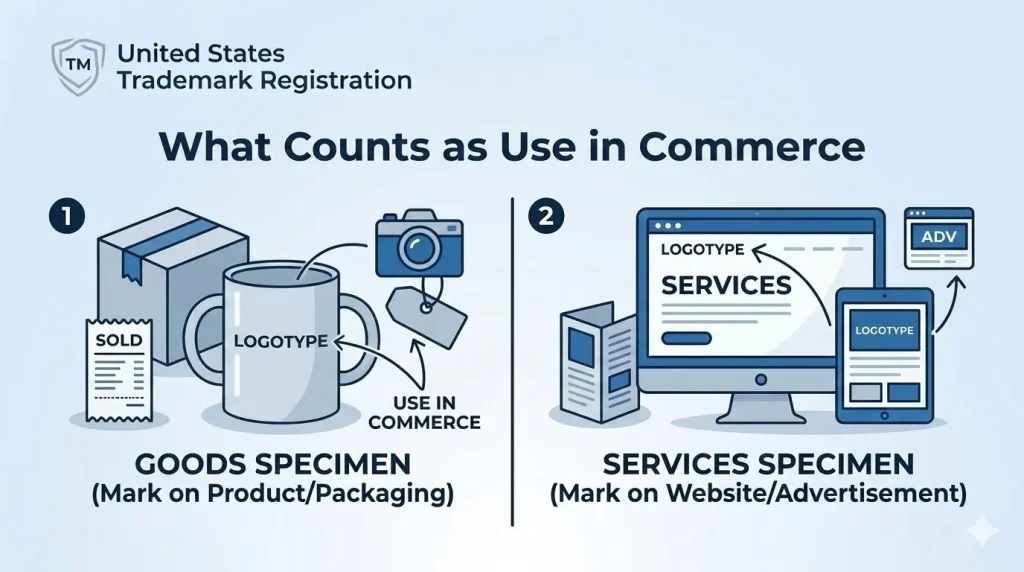
The specimen you submit with your Statement of Use must show genuine use in commerce. A mockup, a sample produced solely for the filing, or a use that doesn’t connect the mark to real goods or services being sold does not qualify.
For goods, the mark must appear on the product, the product’s packaging, or a tag or label attached to the product. The goods must be sold or transported in commerce. A promotional image without an associated sale doesn’t qualify.
For services, the mark must appear in a way that’s connected to the actual delivery of the services. A live website offering the services with the mark displayed, a brochure used in marketing the services, or an advertisement actively promoting the services to consumers are typical examples that work.
Online trademark services professionals review your proposed specimen before submission to confirm it meets the “use in commerce” standard. Submitting a specimen that the examiner refuses adds time and potentially another round of Office Action deadlines to the process.
When is the Statement of Use Refused?
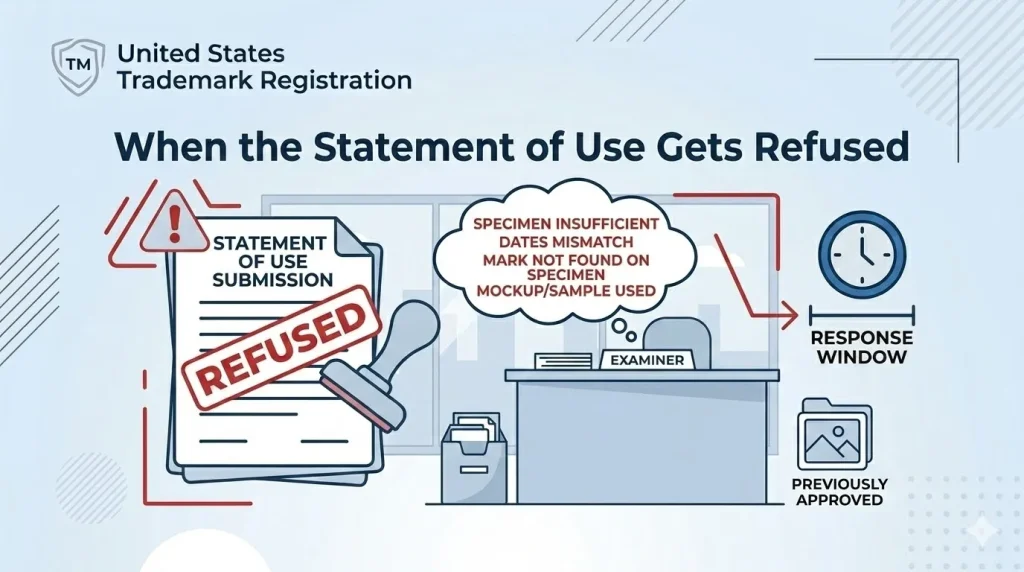
If the examiner finds your specimen insufficient—most commonly because it does not show genuine use in commerce, because the mark shown does not match the registered mark, or because the goods or services shown do not match the application—they will issue an office action.
You then have the standard Office Action response window to correct the issue by submitting a substitute specimen or addressing the examiner’s concern. Our filing team at USTML reviews Review Statement of Use filings carefully before submission to minimize the risk of specimen refusal. Getting the specimen right the first time keeps your timeline intact.
From Notice of Allowance to Registration
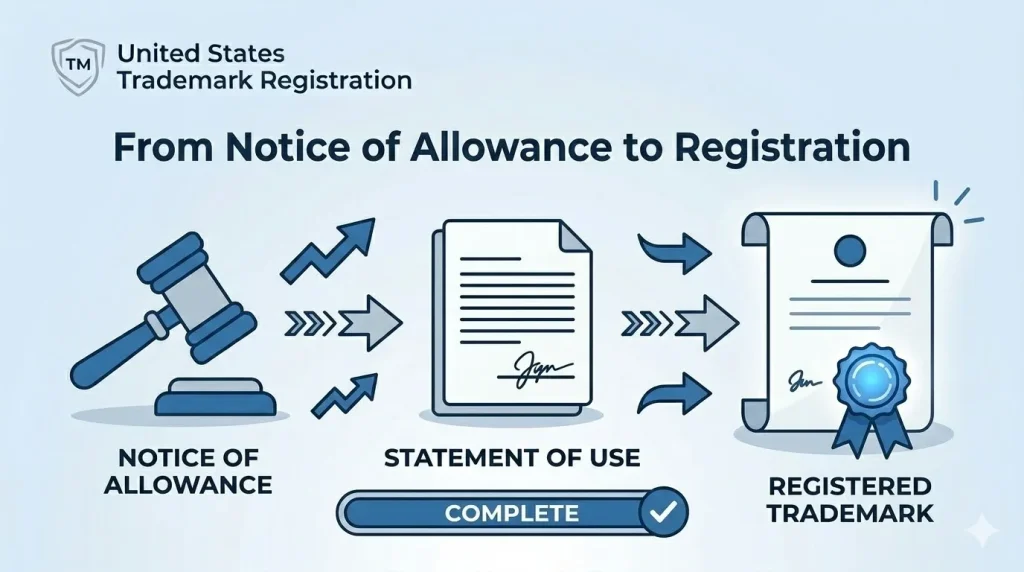
Once you file a Statement of Use that satisfies the examiner, the USPTO processes the filing and issues your registration. The timeline from SOU submission to registration certificate typically runs a few months, depending on the current USPTO workloads.
Our united states trademark registrations and law Services at USTML cover the full intent-to-use process, including Notice of Allowance tracking, deadline management, extension filings when needed, Statement of Use preparation, and specimen review. Our trademark application services are designed to guide clients from the initial filing to the registration certificate, ensuring no details are overlooked.
Have you received a Notice of Allowance and need to submit your Statement of Use? USTML’s team handles the full SOU process, including deadline tracking, specimen review, and submission, so your registration stays on track.
Frequently Asked Questions
What is the difference between a statement of use and an allegation of use?
Both are filings that demonstrate use in commerce for an intent-to-use trademark application, but they’re submitted at different stages. An Allegation of Use (also called an Amendment to Allege Use) is filed before the USPTO issues a Notice of Allowance. A Statement of Use is filed after the Notice of Allowance has been issued.
How long do I have to file a Statement of Use after receiving a Notice of Allowance?
You have six months from the Notice of Allowance date to file either a Statement of Use or an extension request. If neither is filed within that window, the application goes abandoned.
How many extensions can I request before I must file my Statement of Use?
You can request up to five six-month extensions, giving you a maximum of three years from the Notice of Allowance date. Each extension beyond the first requires a showing of good cause. Extensions don’t replace the Statement of Use. They extend the deadline for filing it.
What specimen should I submit with my Statement of Use?
The specimen must show the mark in actual use in commerce. For goods, product photos showing the mark on the item, its packaging, or a label typically work. For services, a website screenshot, advertisement, or marketing material showing the mark connected to active services is a common option. Mockups and promotional samples created solely for the filing don’t qualify.
Can I file a Statement of Use if my goods or services have changed since I filed the application?
You can file a Statement of Use only for the goods or services identified in your original application. If your business has shifted and you’re now using the mark with different goods or services, you may need to amend your identification or consider whether a new application is appropriate. A trademark professional can help you evaluate the best path forward.