

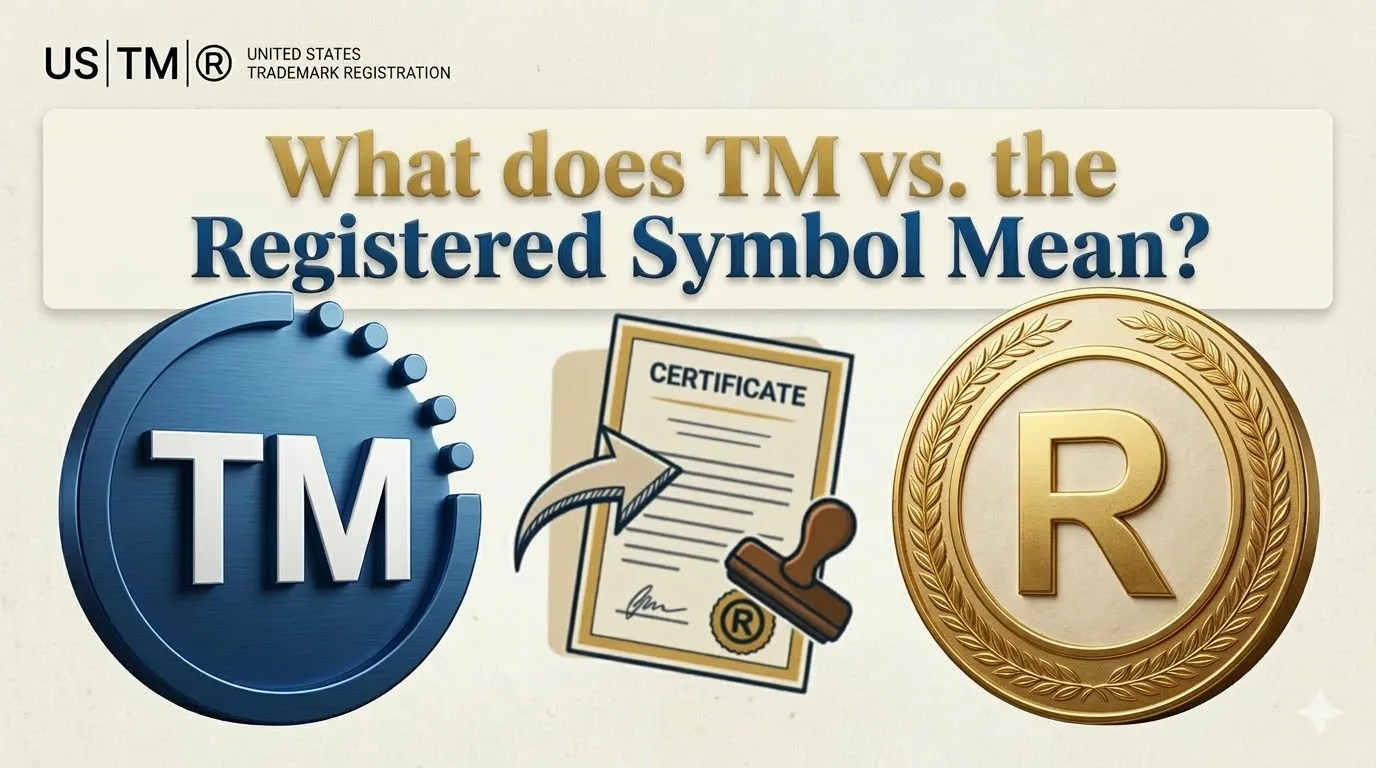
Walk through any shopping mall, pick up any product from your kitchen shelf, or browse the homepage of nearly any established brand. You will see both the TM symbol and the registered trademark symbol used frequently. They appear after logos, after product names, after taglines. Most business owners learn to use them by imitation, and many use them incorrectly without realizing it.
The distinction is not just technical. Placing the registered trademark symbol on your mark before the USPTO officially registers it violates federal law. Not using a symbol with a registered trademark can limit recovery from an infringer. Understanding the rules protects your legal position and signals that you take your brand rights seriously.
What does the TM symbol mean?
Trademark registration processes often begin with the TM symbol, and understanding what that symbol actually communicates is the foundation for using both symbols correctly.
TM is an informal notice symbol. It indicates that you are claiming trademark rights in a particular name, logo, or phrase. When you place “TM” after a mark, you are telling the public: this term is my trademark, and I consider it my brand identifier. You do not indicate whether the trademark is federally registered, currently in use, or even particularly strong.
Anyone can use TM at any time on any mark they treat as their trademark. You do not need to file an application, obtain registration, or get approval from any government agency. TM simply signals that you consider the mark your trademark. Businesses commonly place it on marks pending federal registration, on marks relying on common law rights without federal registration, and on marks they use in commerce while developing a registration strategy.
Brand Protection Services teams recommend using TM consistently on any mark you consider your brand identifier, even before filing, because it signals your intent and puts the public on notice of your claim. Consistent use also helps establish the record of use that may be relevant in common law rights disputes.
What Registered Symbol Means?
Filing a federal trademark gives you the right to use the registered symbol, but only after you complete the registration process. Using the registered trademark symbol signals that the United States Patent and Trademark Office officially recognizes the mark on the Principal Register.
This is a formal legal status, not a claim. The registered symbol tells the public, competitors, and courts that this mark has gone through the full USPTO examination process, survived the publication period, and received an official registration. It carries legal presumptions of validity and nationwide priority that the TM symbol does not carry.
IP services experts agree that you can use the registered symbol only if all of the following conditions are true. The USPTO has examined and approved your trademark application. Your mark has been published for opposition and survived that period. The USPTO has issued your official registration certificate. Your registration is on the Principal Register, not the Supplemental Register. Your registration remains active and has not been cancelled, abandoned, or expired.
Why Misusing the Registered Symbol Has Legal Consequences?
The legal stakes of misusing these symbols are high. Trademark protection solutions depend partly on how you have used them.
Using the registered symbol on an unregistered mark is a violation of federal trademark law. Specifically, 15 U.S.C. Section 1111 prohibits anyone from using the registered trademark symbol on a mark that the USPTO has not federally registered on the Principal Register. In addition to the law against it, courts see using the registered symbol incorrectly as a form of fraud, which can hurt your chances of protecting your trademark rights and might even lead to the cancellation of a trademark registration you get later.
In infringement litigation, opposing counsel will examine how you used your trademark symbols throughout the period in question. Inconsistent or improper use can create complications for your case, even if your underlying trademark rights are solid. The details of how you maintained and displayed your mark matter in a legal context.
How Proper Marking Affects Your Ability to Recover Damages?
Online Trademark Services professionals explain this aspect of trademark law to every client who registers: failing to use the registered symbol on your mark after registration can affect what damages you can recover if someone infringes on it.
Under federal trademark law, a trademark owner who has not provided proper notice of registration cannot recover profits or damages from an infringer who can prove they had no actual knowledge of the registration, unless the owner can prove the infringer had actual notice some other way. This is called the constructive notice rule. Proper marking with the registered symbol after registration creates that constructive notice automatically.
The practical implication is straightforward: after your registration certificate arrives, use the registered symbol on your mark in your advertising materials, your website, your product packaging, your email signature, and anywhere else the mark appears prominently. Doing so consistently from registration forward protects your ability to recover the full range of damages if infringement ever occurs.
What About the SM Symbol?
There is a third symbol that sometimes confuses: SM, which stands for “service mark.” A service mark is a trademark that identifies services rather than goods. Legally, service marks receive the same protection as trademarks, and the SM symbol carries the same meaning as TM but signals specifically that you are claiming rights in a mark used to identify services.
Trademark management services typically tell clients that the SM/TM distinction is less critical in practice than the registered vs. unregistered distinction. Many businesses place TM on all their marks, regardless of whether the mark identifies goods or services. The USPTO itself treats trademarks and service marks under the same general framework. Using TM instead of SM is not improper, though using SM where applicable is the technically correct approach.
A Practical Guide to Symbol Use at Each Stage
Before you file any trademark application, use TM after any mark you are treating as your brand identifier. Continue using TM throughout the entire application and examination period. Do not switch to the registered symbol when you receive a filing confirmation, a serial number, or even a Notice of Allowance. None of those events constitutes registration.
Switch to the registered symbol only after you receive your official registration certificate from the USPTO. Use it consistently in prominent placements from that point forward. If you file in multiple classes and your registration covers multiple marks, make sure your symbol usage reflects the registration status of each specific mark accurately.
Get Your Trademark Registered and Use the Right Symbol
united states trademark registrations and law Services at USTML handles the full process from initial filing through registration, and we help you understand exactly what your rights are and how to display them correctly at every stage. There is no guesswork about when you can start using the registered symbol. When we are managing your application, we tell you precisely when registration is official, and your symbol usage should change.
Start with a free trademark search to see if your mark is available for federal registration.
Frequently Asked Questions
Can I use the registered symbol while my trademark application is pending?
No. The registered symbol may only be used after your trademark is officially registered on the Principal Register. While your application is pending, regardless of how far along it is in the process, use TM to indicate your claim of trademark rights.
What happens if I use the registered symbol before my trademark is registered?
Using the registered symbol on an unregistered mark violates federal trademark law. Courts have treated this as a fraudulent misrepresentation. Improper use can create legal exposure, weaken your ability to enforce the mark, and in some cases, give others grounds to challenge your later registration.
Is there a legal requirement to use TM or the registered symbol on my mark?
There is no legal requirement to use either symbol. However, failing to mark your registered trademark with the registered symbol can limit the damages you can recover in infringement proceedings, because an infringer may successfully argue they lacked notice of your registration. Consistent marking after registration is strongly advisable, even though it is not legally mandatory.
Does using the registered symbol internationally work the same way as in the United States?
No. The registered symbol is recognized in the United States as indicating a federal USPTO registration on the Principal Register. Its use and recognition vary significantly across other countries. Legal complications may arise if you use the registered symbol in a country where your mark lacks registration. The laws of each jurisdiction should address trademark protection and proper marking if you are operating internationally.