

united states trademark registrations and law gives you rights. That’s the part most brand owners focus on during the filing process, and rightly so. Federal registration is a powerful legal tool. What the registration certificate doesn’t come with is a manual for what to do next, such as how to monitor for potential trademark infringements and maintain the trademark’s validity through proper usage and renewal processes.
The work of protecting a trademark doesn’t end when the USPTO approves your application. In many ways, it begins there. Here are the four most important things to do after your trademark registers to make sure those rights stay enforceable for as long as you need them.
File Your Maintenance Documents on Time
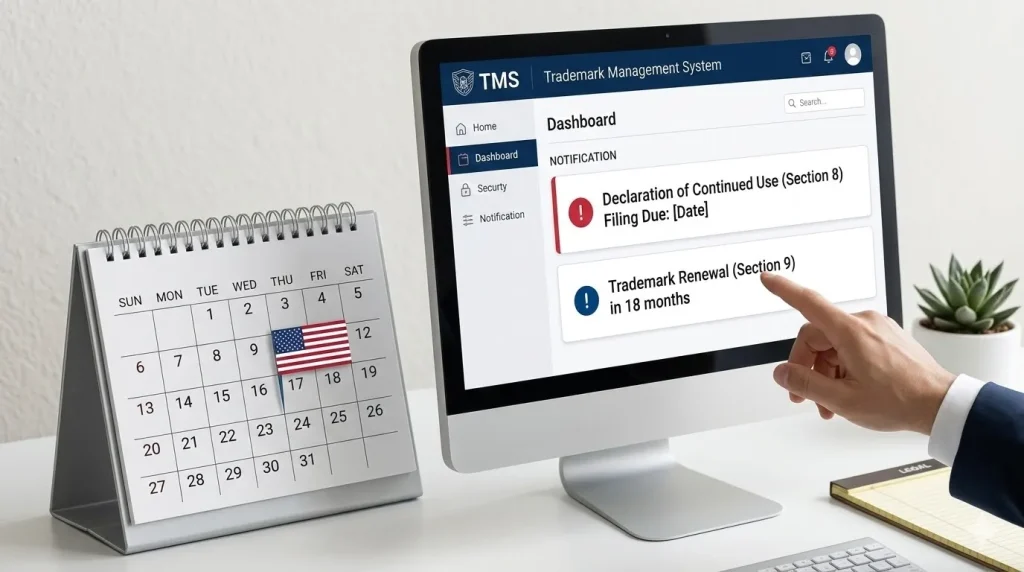
Federal trademark registrations don’t last forever by default. They require maintenance filings at specific intervals, and missing those deadlines results in cancellation. No grace period rescues a cancelled registration. You have to refile as a new application, which means a new priority date and new fees, with no guarantee of approval if the competitive landscape has shifted.
The maintenance schedule works as follows. Between the fifth and sixth year after your registration date, you must file a Declaration of Continued Use (Section 8 declaration) along with a specimen showing the mark still in use in commerce. At the same time, you have the option to file for incontestable status (Section 15 declaration), which significantly strengthens your legal position in future disputes by making certain defenses unavailable to challengers.
At the ten-year mark, your registration comes up for trademark renewal, a combined Section 8 and 9 filing that renews the registration for another ten-year term. After the first renewal, you repeat the process every ten years for as long as you want to maintain the registration.
Trademark management services that include calendar management and deadline tracking remove the risk of missing these filings. At USTML, we incorporate reminders into our client management system to ensure you don’t overlook anything during a hectic quarter.
Monitor for Conflicting Uses
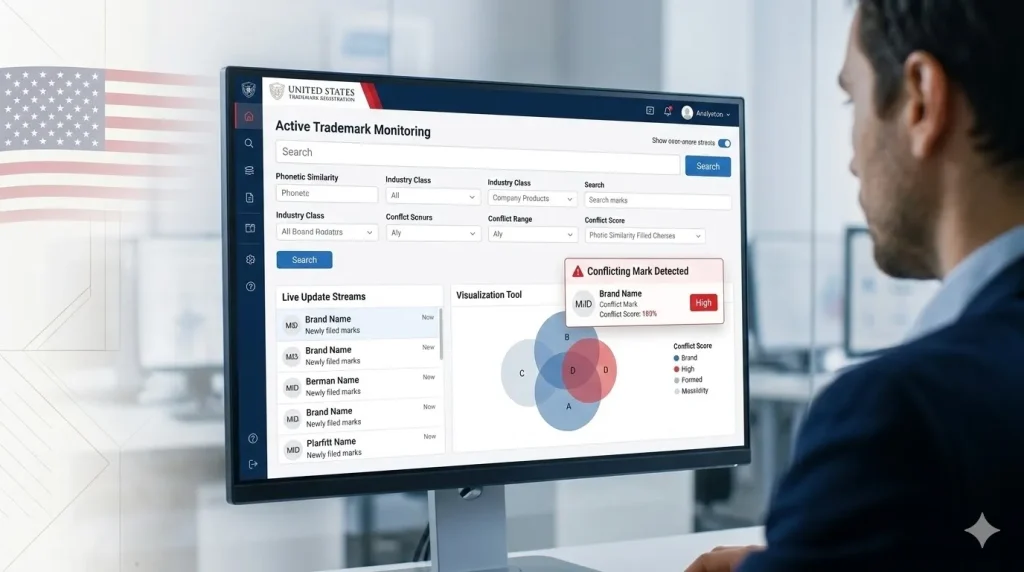
Your trademark registration is public record. Other businesses filing marks in your industry see it during their trademark searches. Most will steer clear of your registered brand. Some won’t notice it. A few will try to work around it.
Active trademark monitoring catches new USPTO applications that could conflict with your mark during the 30-day opposition window after publication. That window is your best opportunity to challenge a conflicting mark before it becomes a registered trademark. Once it registers, your options narrow and your costs increase.
Beyond the USPTO database, monitoring should extend to common law uses. Businesses operating under similar names without a federal registration can still create consumer confusion, dilute your brand’s distinctiveness over time, and establish local common law rights that complicate your expansion into new markets.
Brand protection services that cover both registered and unregistered uses give you a complete picture. A partial monitoring strategy is better than nothing, but it leaves gaps that determined infringers can exploit.
Use Your Mark Correctly and Consistently
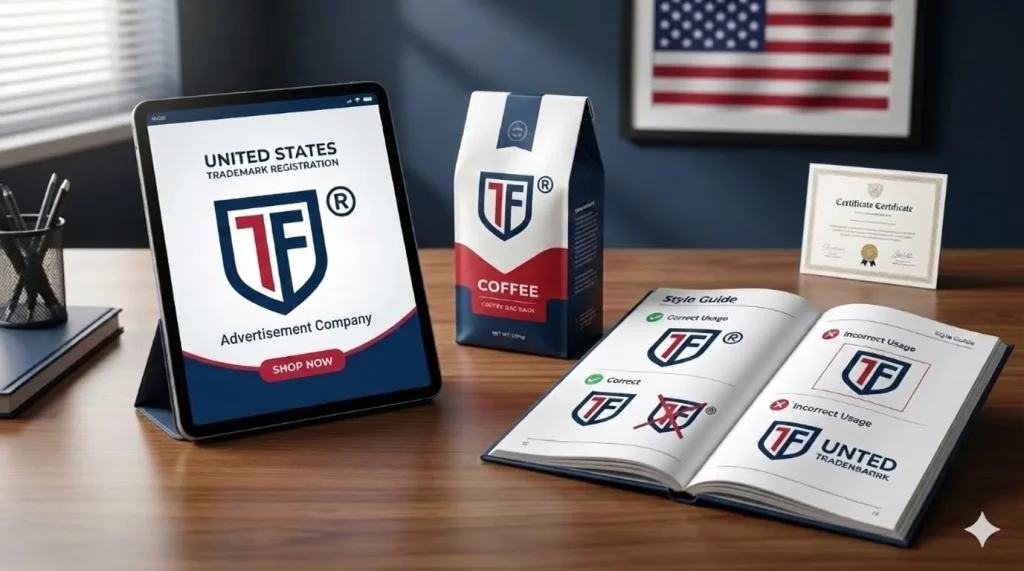
Your trademark rights are tied to your use of the mark in commerce. Using your mark incorrectly or inconsistently creates vulnerabilities that a challenger in a TTAB proceeding or a court case can exploit.
Use the ® symbol on your mark. The federal registration symbol alerts the public to your mark’s registration status. Using it consistently is both a legal best practice and a deterrent to potential infringers who might otherwise claim ignorance.
Use your mark as a trademark, not as a generic term. If your brand name starts being used generically, either by your own marketing team or by consumers, you risk losing trademark rights through genericide. “Escalator,” “Zipper,” and “Thermos” were once brand names that became generic because their owners didn’t enforce their trademark use. Your brand deserves better.
Keep your mark consistent with how it was registered. Using a significantly modified version of your mark without registering the new version can create problems during maintenance filings when you need to submit a specimen that matches your registration, potentially leading to legal disputes or loss of trademark protection.
Intellectual property services that include brand use guidelines help your marketing team, social media managers, and any licensees use your mark correctly across every channel. Consistency isn’t just aesthetic. It’s legally protective.
Enforce Your Rights Actively

A trademark that you don’t enforce is a trademark that weakens. Courts and the TTAB look at a brand owner’s enforcement history when evaluating trademark disputes. Patterns of non-enforcement can be used to argue that you’ve abandoned the mark’s distinctiveness or acquiesced to certain uses.
Enforcement doesn’t always mean litigation. In most cases, a cease and desist letter from a qualified professional resolves infringement without a court filing. The letter serves as a notice to the infringer, records your enforcement actions, and often prompts the infringing party to alter their approach.
When infringement is discovered through trademark monitoring, acting quickly while the infringement is recent is far more effective than waiting until consumer confusion has already occurred at scale. Online trademark services that include enforcement support give you a clear path from monitoring alerts to response, without having to navigate the process from scratch each time an issue surfaces.
Building a Post-Registration Trademark Protection Routine

The four steps above aren’t one-time tasks. They form an ongoing routine: maintenance filing deadlines are tracked, monitoring is running continuously, mark usage is reviewed periodically, and enforcement responses are ready when needed.
united states trademark registrations and law Services that extend beyond the registration certificate itself are what transform a filed trademark into a functioning brand protection asset. At USTML, we structure our trademark management services to support brand owners through every stage after registration, covering maintenance filing reminders, active monitoring, use guidance, and enforcement support when conflicts arise.
Registration is an achievement. What you do with it after the certificate arrives determines whether it actually protects your brand over the years that follow.
Already registered? Make sure your trademark stays protected. USTML’s post-registration services cover monitoring, maintenance, and enforcement support for brand owners who want more than a piece of paper.
Frequently Asked Questions
What maintenance filings are required to keep a federal trademark registration active?
Between years five and six after registration, you must file a Section 8 Declaration of Continued Use with a current specimen. At the ten-year mark, you file a combined Section 8 and Section 9 renewal. After the first renewal, the ten-year renewal cycle repeats for as long as you maintain the registration.
What is incontestable trademark status, and how do I get it?
Incontestable status is available after five years of consecutive use in commerce following registration. You obtain it by filing a Section 15 Declaration, typically alongside the Section 8 maintenance filing. Incontestable status limits the legal challenges others can raise against your mark, making your registration significantly more defensible.
Can I lose my trademark if I don’t use it?
Yes. Trademark rights are tied to use in commerce. A mark that hasn’t been used for three consecutive years can be declared abandoned, and your registration can be cancelled. Continuing to use the mark and maintaining your filings on schedule is essential to keeping the registration active.
What should I do if I find someone using a mark similar to mine?
Document the use, including dates, channels, and the specific marks involved. Then contact a trademark professional to evaluate the conflict and determine the appropriate response. In most cases, a cease and desist letter is the first step. If the infringing party has filed a trademark application, an opposition at the TTAB may also be appropriate.
How often should I audit my trademark portfolio?
For most businesses, an annual trademark audit is a reasonable practice. The audit should review active registrations, upcoming maintenance deadlines, monitoring results from the past year, and whether any new products, services, or brand extensions need their own trademark coverage.