

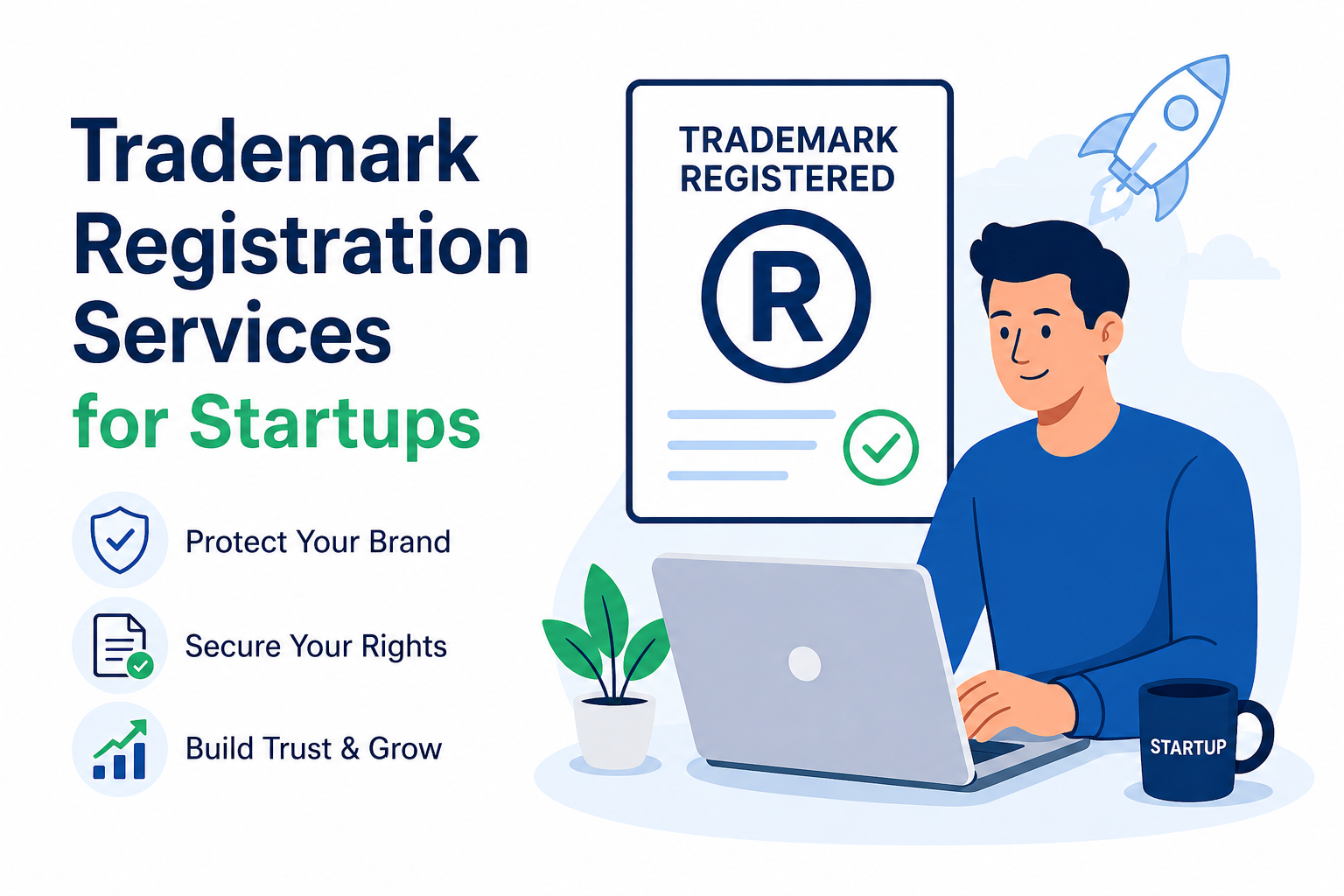
Trademark Registration Services for Startups: Protect Your Brand from Day One
When a startup should file a trademark?
A startup should file a trademark ASAP. Ideally before launch using an Intent-to-Use application. In the United States, trademark rights depend upon your filing date, not your idea or your traction. The moment you submit your trademark application, you lock your priority mark.. If you delay, you leave that door open for someone else.
This decision will be a proof of who owns the brand if a conflict shows up later. And it is the one most founders underestimate leaving it to luck.
The trademark problems no founder expects coming
There is a pattern that we hear from clients, and shows up again and again in the industry.
A startup spends months building. The name feels taken and locked in. The domain is secured. The product starts gaining early users. Maybe a few users, maybe some buzz on social media. It feels like a momentum.building.
Then someone else files the trademark first. Not because they built the brand first, but simply because they filed first.
At that point, everything changes.
The founder who decided the name is suddenly in a defensive position. Now the founder is left with these options: either fight for it, negotiate for it, or walk away from it. None of those options are cheap, and none of them are clean.
This is not a rare edge case. It is a predictable outcome of delaying trademark registration.
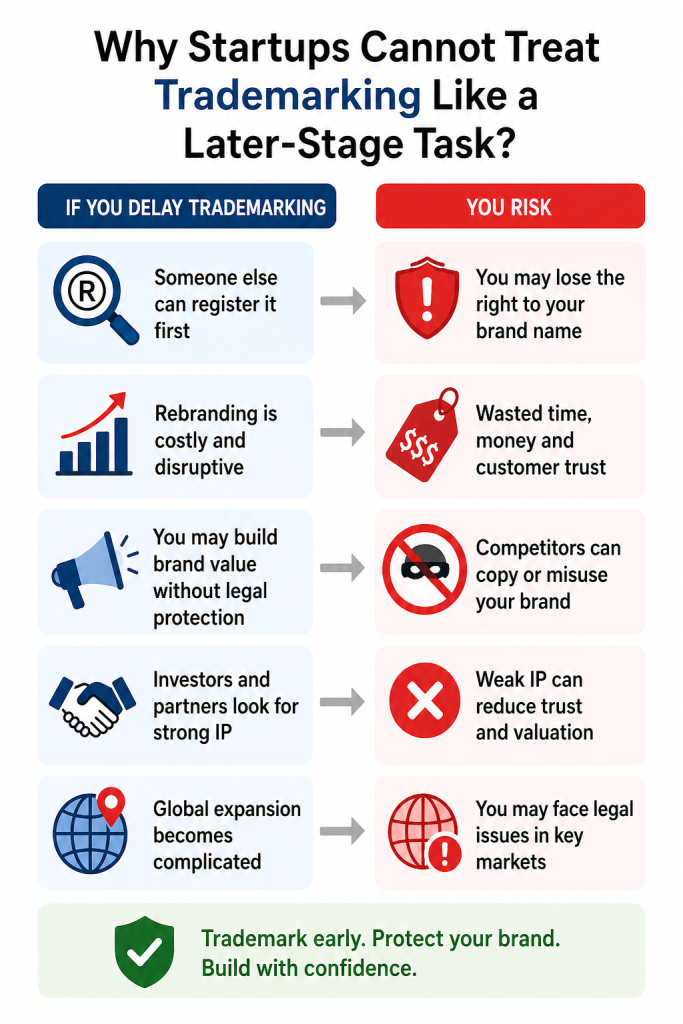
Why startups cannot treat trademarking like a later-stage task?
For an established business, trademark registration is about protection. For a startup, it is about survival of the brand itself. The difference is subtle, but filing stage and time can change the situation completely.
Startups move fast, and that speed creates exposure. The moment your name appears publicly, it becomes visible. Whether on a landing page, a product launch, or even a pitch deck, visibility without protection is a risk.
Moreover, investors do not only evaluate growth or product. They also evaluate ownership conditions. If your brand is not filed, or worse, if it is already in conflict, it raises questions resulting in funding complications.
This is why early-stage brand protection is not optional. It should be a priority..
Intent-to-Use vs Use-in-Commerce: What’s the difference?
Most early-stage founders get confused here, because they are not “ready” for filing. Revenue, users, early launch period and everything between. That mindset causes unnecessary delay.
Intent-to-Use exists for startups. That is what Intent-to-Use means.
Filing for an Intent-to-Use application allows you to secure your trademark before your product is fully live. You are stating that you intend to use this brand in commerce, and you want to own it on priority now.
From that point, you have time to build. The USPTO gives you an initial six-month window to show use of the mark. The good thing is that you can extend that window up to three years if your product is not yet ready. That is more than enough for most startups to move from idea to market.
Compare that to waiting. If you wait until launch, you are no longer early. You are already exposed.
Use-in-Commerce filings only make sense when your startup is actively selling and can prove the mark cleanly. Even then, weak or inconsistent proof can create problems. That is why many founders end up filing incorrectly when they rush at the last minute.
What a startup should trademark first?
One of the biggest mistakes is that everything needs to be protected immediately. That leads to over-filing, unnecessary costs, and confusion. The smarter approach is prioritization.
First comes your company name, especially as a trademark, is almost always the first asset to protect. That is the identity your customers will remember and your competitors will notice. Its better if you find the exact domain name, which makes your position even stronger.
Product names come next, but only if they carry independent value. Not every feature or variation needs protection. Focus on what you are building in the long-term.
Logos are often overvalued at this stage. They change frequently in early startups. Filing a logo for a trademark too early can lock you. Possibly into something you will redesign later.
The real strategy here is not coverage. It is timing and relevance.
What trademark registration actually costs a startup in 2026? A complete breakdown
This is where most founders go miser, and understandably so.
The government filing fee is straightforward. It is typically $350 per class. Most of the startups begin with one class, sometimes even two if they plan to operate across different categories.
A structured service like united states trademark registrations and law – USTML starts at $39, which keeps the barrier low while still providing guidance and preparation.
So realistically, a startup can secure its first trademark for under $400 in a single-class scenario.
Now let’s compare that to the cost of not filing a trademark
A forced rebrand due to a lost trademark does not just mean changing a name. It means redesign, redevelopment, lost recognition, and often lost momentum. The financial cost alone can go into thousands.
This is why early filing is not an expense decision. It is a risk management initiative.
Where most trademark services fall short for startups?
The trademark service space is built around two extremes.
On one side, you have high-cost legal services designed for established companies with large budgets.
On the other side, you have low-cost filing platforms that prioritize speed over accuracy.
Startups are in the middle, and that is exactly where most services do not adapt.
Founders actually need guidance here, not complexity or automation.
They need to know:
- Whether they are filing under the right class.
- Either their name has obvious conflicts.
- Whether their application is structured correctly.
- What happens after submission.
Why USTML fit the startup landscape?
united states trademark registrations and law – USTML built around the reality of early-stage businesses. It is not trying to replicate a law firm, and it is not a filing tool either. It sits in between, where most founders actually need support. We are a team of Intellectual Property consultants and copyright and trademark specialists.
The focus is on getting the fundamentals right for startups. That begins with class alignment and allocation, one of the most common points of failure.
Continuing further with proper application preparation, so the filing is not just submitted, but structured to acceptance.
For startups filing Intent-to-Use, the process does not end at submission. It evolves as the business moves toward launch. With USTML at your back, is like having a system that keeps track of that progress most founders expect..
There is also the cost factor. Startups do not want to experiment with expensive legal processes. They simply cannot afford mistakes. USTML keeps the entry fee low and focus on that actually matters.
The result is not just a filed trademark. It is a startup that knows its brand is secured properly from day one.
The timing mistake that costs startups the most
Founders rarely choose the wrong trademark service.
They choose the wrong timing.
They wait until:
- The product is live
- The brand has traction
- Someone asks about legal protection
By then, the window of lowest risk has already passed.
Trademark registration in the U.S earlier is always better than acting later.

FAQ: Trademark registration services for startups
Can I file a trademark before my startup has revenue?
Yes. Intent-to-Use applications are designed for this exact situation and allow you to secure your trademark before generating revenue.
What if I cannot afford to file right now?
At minimum, prioritize your core brand name. Delaying entirely increases the risk of losing it.
Do I need to trademark both my company name and product name?
Not always. Start with the name that holds the most long-term value and expand protection later if needed.
How long does trademark registration take?
Most applications take between 8 to 12 months, depending on review timelines and any issues that arise.
Will investors care if my trademark is pending instead of registered?
Yes, and positively. A pending application shows proactive brand protection, which is better than having no filing at all.
Conclusion
Startups do not lose brands because they made a technical mistake. They lost them because they assumed they had more time. In a system where filing date defines ownership, timing becomes everything.
Start your trademark application today and secure your brand with USTML before someone else does.