

Do you need trademark monitoring after your mark registers? The honest answer is yes. It’s not because we sell the product. It is because the united states trademark registrations and law creates a specific vulnerability. Only active monitoring addresses that risk.
New applications may appear that are similar to your mark. Those applications can dilute your brand. They can also create consumer confusion if left unchallenged.
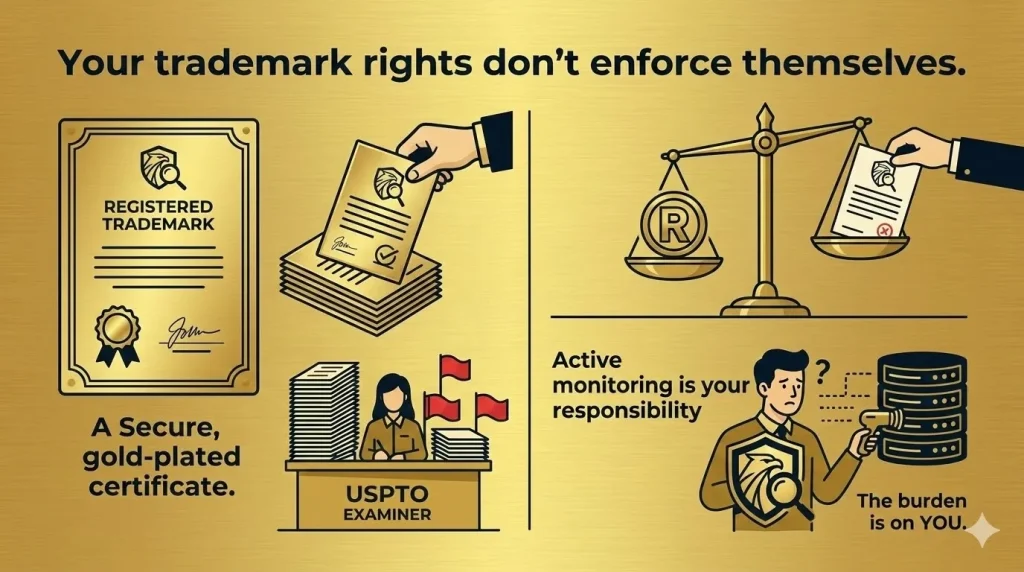
Your trademark rights don’t enforce themselves. The USPTO approves new applications every week. Some of those applications conflict with registered marks. The USPTO examiner may not catch every conflict. And when they miss one, the only person in a position to catch it is you.
What Trademark Monitoring Actually Does?
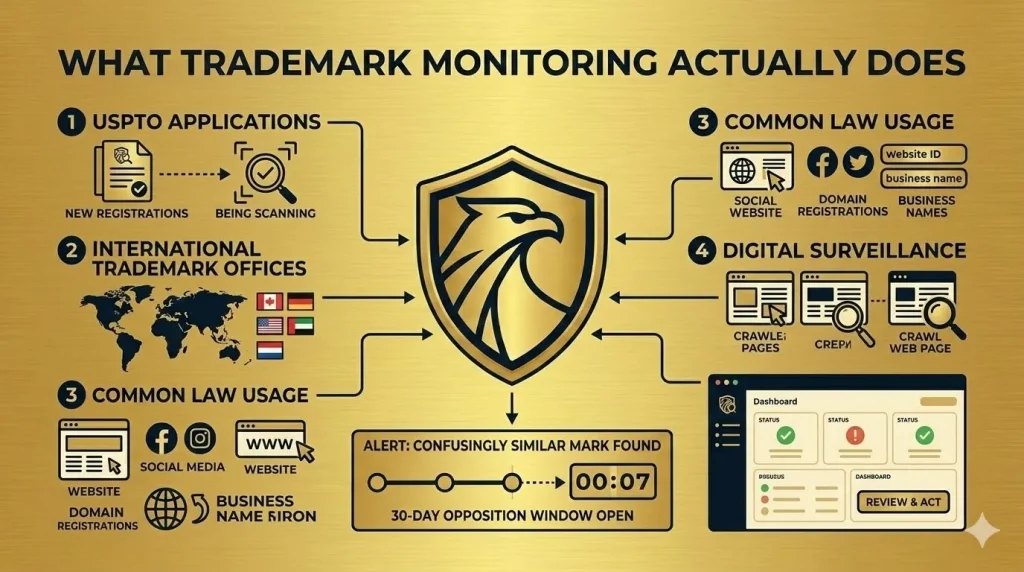
Trademark monitoring watches the USPTO’s database for new applications and registrations that could conflict with your mark. Broader watch services also monitor international trademark databases and common law usage.
When a potentially conflicting mark appears, the monitoring service alerts you. This allows you to evaluate the risk and act before the mark registers.
The significance of timing lies in the functioning of trademark opposition. After the USPTO approves an application and publishes the mark for opposition, there is a 30-day window during which any party that believes the registration would damage them can file an opposition with the Trademark Trial and Appeal Board. That 30-day window is your primary opportunity to stop a conflicting mark before it becomes a registered trademark. Miss it, and your options become significantly more expensive and difficult.
If you’re not monitoring, you won’t know the window opened. By the time you discover the conflicting mark through other means, a consumer confuses the two brands, a competitor surfaces in your market, or a product shows up on a platform you sell through, the mark has already been registered. You’re now dealing with a cancellation proceeding instead of an opposition, and cancellation is harder to win and more resource-intensive to pursue, which can lead to significant financial and reputational damage for the brand.
The Brands That Learn This the Hard Way
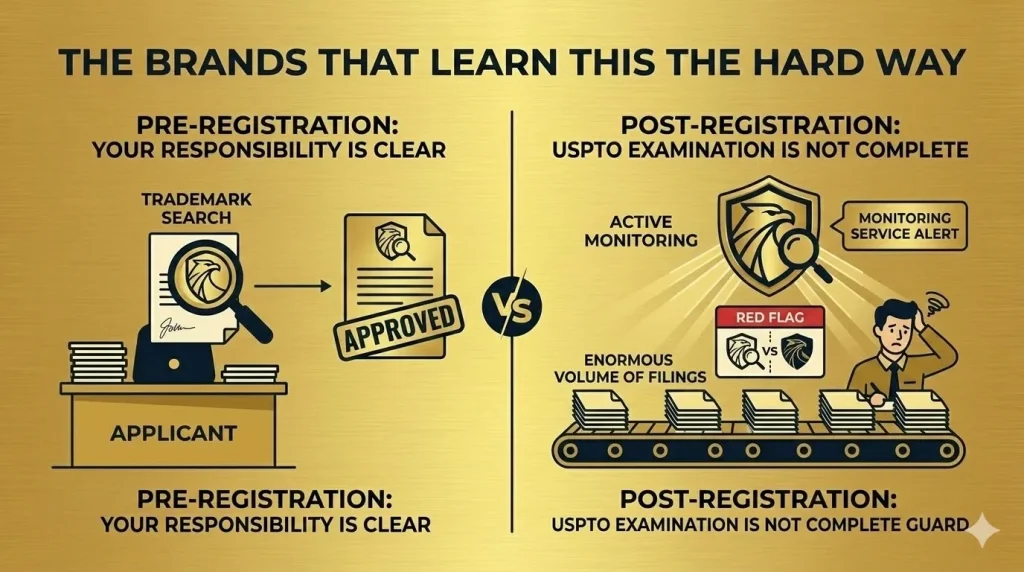
The pattern we see most often involves businesses that invest real resources in building their brand, register their trademark correctly, and then treat the registration certificate as the end of the process. Monitoring never comes up because no one raised it at the time of registration. The brand owner assumes the USPTO is watching on their behalf.
The USPTO is not watching on your behalf. The examination system is designed to prevent registration of clearly conflicting marks, but it operates on a per-application basis with an enormous volume of filings. Examiners work through a queue. Mistakes happen. Marks get approved that shouldn’t have been. The opposition system exists specifically because the USPTO acknowledges that examination alone isn’t a complete filter, and it allows third parties to challenge potentially harmful registrations that could infringe on their existing trademarks.
Brand protection services exist on this side of registration because the need is real, as they help businesses safeguard their trademarks from infringement and ensure that their brand identity remains protected in a competitive market. A trademark search before filing tells you whether your path to registration is clear. Monitoring after registration tells you whether someone is trying to occupy your space after you’ve established it.
What Does a Good Trademark Monitoring Service Covers?
Basic monitoring watches USPTO applications for marks that are identical or similar to yours in your registered classes. That covers the most direct conflicts.
Broader monitoring extends to international trademark offices, particularly useful for brands with any global presence or aspirations. It also covers common-law use monitoring: scanning the web, social media, domain registrations, and business registration databases for unregistered uses of confusingly similar marks. Unregistered use can still create priority rights and confuse your customers, even without a USPTO registration behind it.
Trademark management services that include both USPTO monitoring and broader digital surveillance provide a comprehensive view of your brand’s competitive landscape. The DCMA Trademark Engine provides this kind of comprehensive watch coverage, catching conflicts across multiple channels rather than just the USPTO database.
The Cost of Not Monitoring Trademark
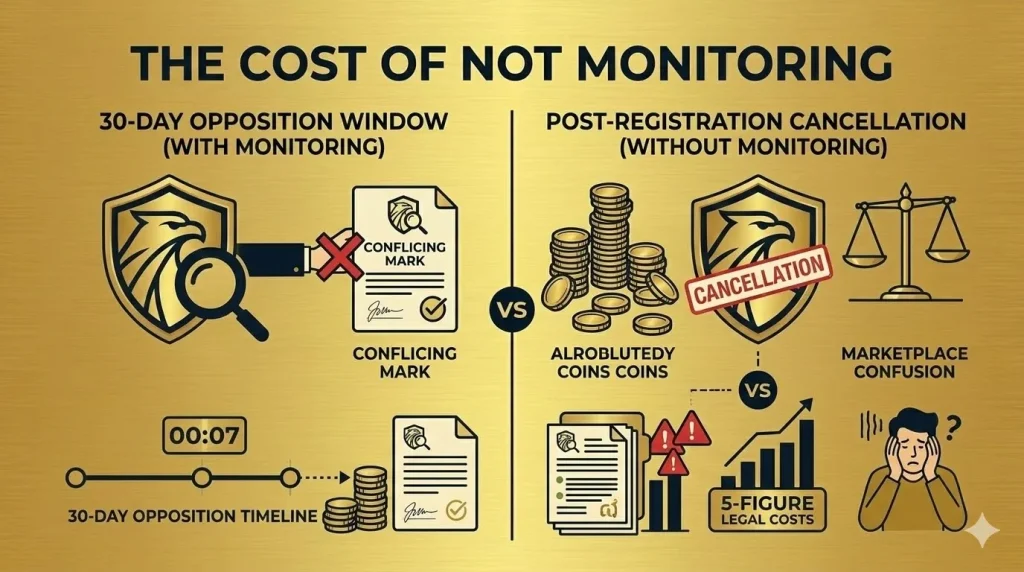
Brands that skip monitoring and later discover an infringing registration face a range of possible remedies, each more expensive than the one that came before it.
A cancellation petition at the TTAB requires demonstrating grounds for cancellation and surviving the opposition of a now-registered trademark owner. Legal costs for TTAB proceedings routinely run into five figures. The damages calculus becomes complex if the infringing mark has been in use for years and has developed its own consumer recognition.
If the infringing use has already caused consumer confusion in the marketplace, you’re also looking at lost sales, brand dilution, and a customer education problem that no legal victory fully solves. Months of unchecked parallel use can cause significant damage to brands built over years before addressing the situation.
How Often Should Trademark Monitoring Run?
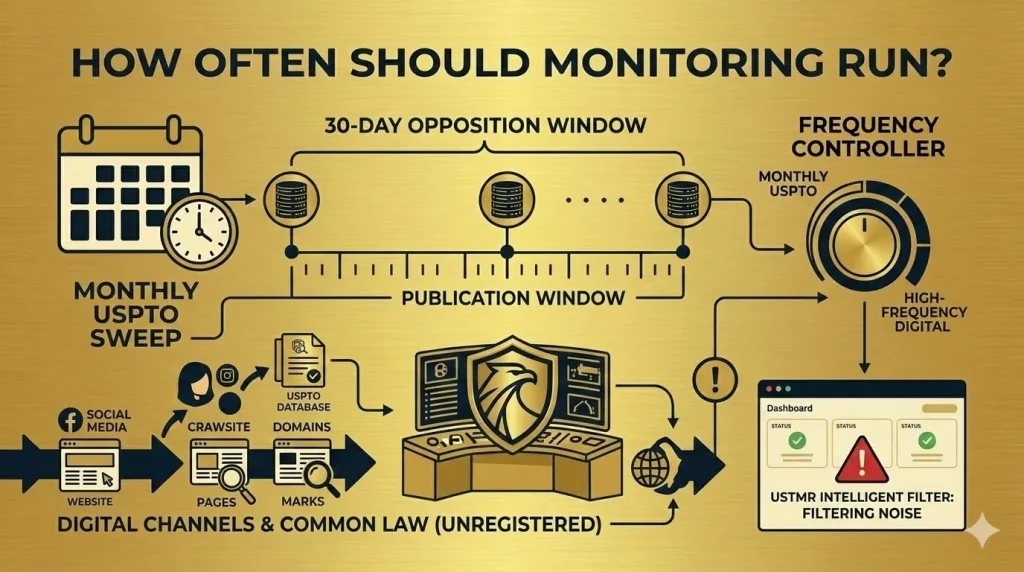
For active brands, monthly monitoring of USPTO applications is a reasonable baseline. The publication window runs 30 days, so monthly sweeps ensure you don’t miss an opposition deadline. Broader digital monitoring benefits from more frequent runs, particularly for brands in competitive categories where similar names and marks appear regularly.
Trademark protection solutions that include automated alert systems handle the timing for you. You don’t need to manually search the USPTO database every month. A properly configured watch service surfaces alerts when they’re relevant and lets you focus on your business the rest of the time.
At USTML, we design our trademark monitoring services to identify significant conflicts without creating unnecessary noise. We evaluate alerts for actual conflict risk before escalating, which means you’re spending time on real threats, not every application that shares a keyword with your brand.
Trademark Monitoring as Part of Ongoing Brand Management
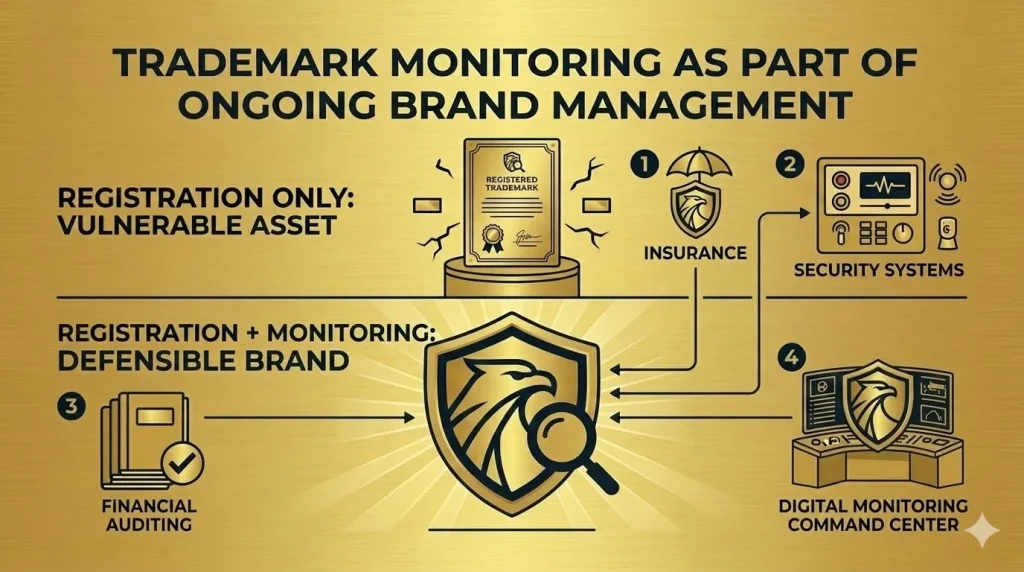
Think of monitoring the way you think about any other ongoing business protection, such as insurance, security systems, and financial auditing. You don’t buy insurance and then cancel it the day after you move in. You maintain it because risk doesn’t stop after the initial moment of protection.
Your trademark registration establishes your rights. Trademark monitoring keeps those rights defensible. Together, they form the foundation of a brand protection services strategy that actually holds up in the real world by ensuring that your trademark is not only registered but also actively monitored and enforced against potential infringements.
Your trademark is registered. Now protect it. USTML’s trademark monitoring service watches USPTO applications and alerts you to conflicts before they become registered marks.
Frequently Asked Questions
Does the USPTO monitor my trademark for me after registration?
No. The USPTO examines new applications against existing registrations, but the system is not designed to protect your brand proactively. Examiners don’t notify you when a potentially conflicting application is filed. Active monitoring is your responsibility.
What is the trademark opposition window, and why does it matter?
After the USPTO approves an application and publishes the mark in the Official Gazette, there is a 30-day window during which anyone who believes the registration would damage them can file an opposition. If you’re not monitoring, you won’t know the window opened, and you’ll lose your opportunity to challenge the mark before it registers.
How much does trademark monitoring cost compared to not monitoring?
Professional trademark monitoring is significantly less expensive than a TTAB (Trademark Trial and Appeal Board) cancellation proceeding, which can easily incur legal fees ranging from $10,000 to $50,000 or more. Monitoring prevents problems. Cancellation proceedings address preventable problems.
What happens if I discover an infringing trademark after it has already been registered?
You can file a cancellation petition with the TTAB (Trademark Trial and Appeal Board) if you have grounds, such as prior use or likelihood of confusion, which refers to the potential for consumers to be misled about the source of goods or services due to similar trademarks. Cancellation is more complex and more expensive than an opposition filed during the publication window. The longer the infringing mark has been in use, the more complicated the proceeding typically becomes, especially if the mark has established international recognition or if there are overlapping international trademark filings that could further complicate the case.
Does trademark monitoring cover international trademark filings?
Comprehensive watch services can cover international trademark databases, including filings through the World Intellectual Property Organization’s Madrid System. If your brand operates internationally or has international growth plans, global monitoring is worth considering alongside USPTO monitoring.