


Most trademark infringement does not start with big legal battles
It starts with a listing.
Someone uploads a product on Amazon. Another seller copies it on Etsy. A Shopify store appears with a similar name and slightly changed logo. Most brand owners do not notice it immediately because it does not look like a “legal issue” at first. It looks like competition.
By the time it becomes visible, the damage is already in motion. Sales shift. Listings get buried. Customers get confused. And the brand starts losing control of its identity in the marketplace. For structured trademark monitoring and brand protection systems, businesses in the US can reach out to united states trademark registrations and law – USTML
Marketplaces do not prevent infringement; they only react to it
A common misconception is that platforms like Amazon or Shopify protect brands automatically. They do not.
They only respond when something is reported, and even then, the response depends on proof and registration strength.
That means enforcement is not built into the system. It is something the brand has to actively trigger.
If no one is monitoring, infringement can continue for weeks or months without interruption.

The real problem is speed, not legality
Most founders think trademark enforcement is about proving ownership. In reality, it is about reacting faster than the copycats.
New sellers move quickly. Listings go live in hours. Ads start running immediately. Fake versions of products can circulate before the original brand even notices.
Legal ownership matters, but timing decides who captures the market visibility.
By the time a formal complaint is prepared, the infringing listing may already have traction, reviews, and ranking signals.
Amazon is the fastest-growing zone for trademark conflict
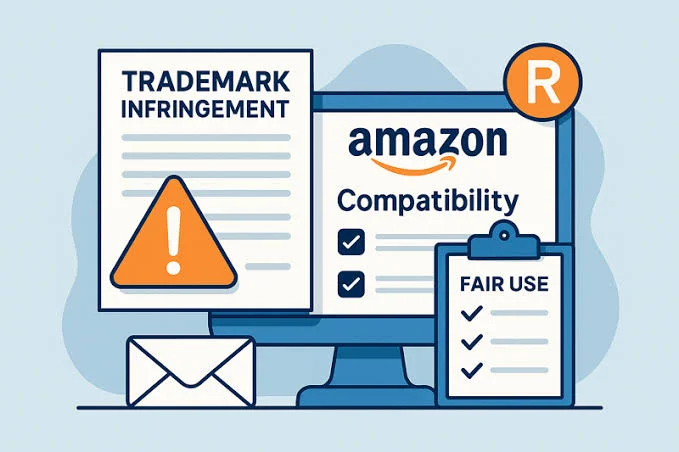
Amazon is where most modern trademark issues start because it combines scale with anonymity.
Sellers can launch similar products without much friction. Small variations in brand name or packaging are enough to confuse buyers.
Once a similar listing gains momentum, it becomes harder to remove because it already has sales history.
Many brands only discover infringement when customers start asking questions like:
“Is this your official product or a copy?”
At that point, control is already diluted.
Etsy and Shopify create a different type of problem
Etsy and Shopify behave differently from Amazon.
Instead of large-scale competition, the issue is fragmentation.
Dozens of small stores can use variations of a brand name, similar logos, or copied product descriptions. Individually, they look minor. Together, they create brand confusion.
Shopify is even harder because stores are independent. There is no central marketplace enforcement structure like Amazon.
So enforcement becomes a tracking problem, not just a reporting problem.
Most brands fail because they only act after damage appears
Trademark enforcement is often treated as a legal reaction.
But in marketplaces, waiting for “proof of harm” is already too late.
By the time action is taken, the infringing version may already have:
- customer reviews
- search visibility
- ad data
- marketplace ranking signals
Removing it does not erase the impact. It only stops further spread.
Registration alone does not stop marketplace infringement
Having a trademark is important, but it does not automatically block sellers.
It only gives the legal basis to take action.
Without monitoring, the trademark is passive. It exists, but it is not actively defending the brand space.
That is why many businesses feel confused. They assume registration equals protection. In reality, it only enables protection.
The enforcement step is still missing.
The real shift: from ownership to monitoring
Modern brand protection is not about proving you own a name.
It is about continuously tracking where that name is being used.
Marketplaces, social platforms, domain registrations, and ad networks all create exposure points.
Without active monitoring, infringement is discovered late, not early.
And in marketplace environments, late detection is expensive.
Why enforcement failures usually happen silently
Most brands do not collapse because of one major infringement case.
They weaken slowly.
One fake listing stays live. Another copy appears under a slightly different name. A third seller starts using similar branding in ads.
Each instance feels small, but together they reduce brand clarity in the market.
Customers start associating the product category with multiple sources instead of one origin.
That is the real loss.
The only reliable advantage is early detection
In marketplace enforcement, advantage does not come from legal strength alone.
It comes from visibility.
Brands that detect misuse early can remove listings before they gain traction. Brands that detect it late spend more time cleaning up damage than preventing it.
That difference decides how strong a brand remains in competitive marketplaces.
Conclusion
Trademark infringement in marketplaces is not a legal event. It is an ongoing exposure problem. The brands that stay protected are not the ones that react best. USTML makes sure you detect it fastest.