

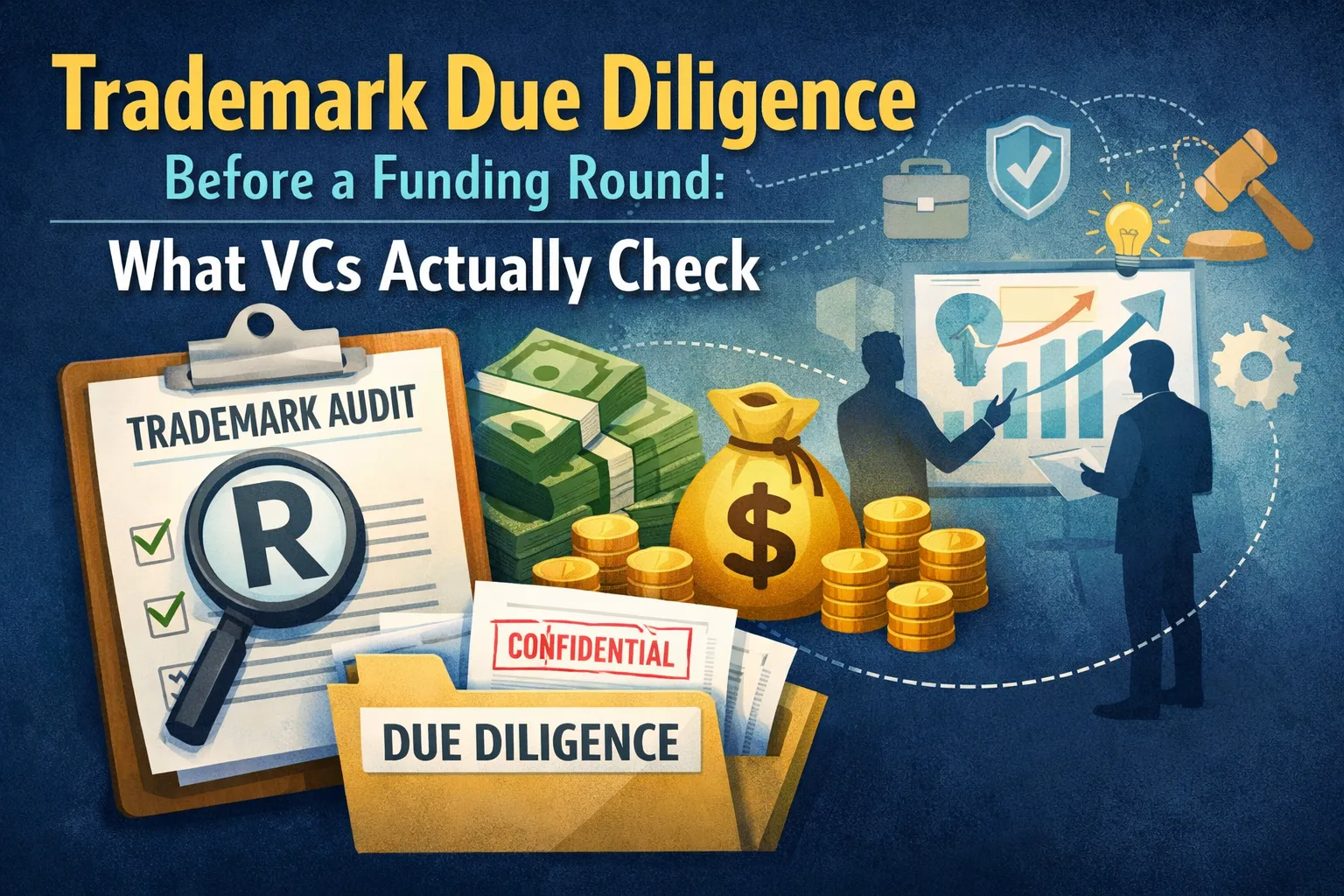
Trademark due diligence becomes a serious checkpoint during funding rounds. Many founders ignore it until investors raise concerns. A strong product does not eliminate legal risk. Investors care about how protected your brand really is. They see trademarks as core business infrastructure, not paperwork.
Venture capital firms want clean intellectual property before they commit capital. If your brand looks exposed, it creates uncertainty in valuation and future scalability. Even early stage startups face this review. Investors want to avoid disputes, rebranding costs, and legal interruptions after funding.
How investors actually evaluate your trademark position?
Most founders assume investors only check if a trademark exists. In reality, they go much deeper into structure and strength. They first check ownership. The trademark must belong to the company, not an individual founder. If it sits personally with a founder, investors flag it immediately.
They also check registration status and legal standing. A pending application is not enough for strong protection. A registered trademark carries far more weight in due diligence. Investors also verify jurisdiction. If you operate in the US, they expect filings with the United States Patent and Trademark Office. If you operate globally, they expect coverage in key commercial regions.
They also assess scope. Narrow protection signals limited control over expansion. Investors prefer trademarks that cover current and future business categories. Weak coverage creates long term risk in scaling strategy.
Why ownership clarity can delay or kill deals?
Ownership structure is one of the first legal checks in any funding round. Many early startups make mistakes here without realizing the impact. Founders sometimes file trademarks under personal names or external entities. That creates friction during legal review.
Investors want all intellectual property inside the company structure. This ensures control, transferability, and clean cap table alignment. If ownership is unclear, they often pause the deal. In many cases, they request assignment agreements before moving forward. That slows down momentum at a critical stage.
Clean ownership signals that the startup understands long term value creation. It also shows operational maturity, which investors take seriously during final decisions.
Clearance risk and hidden legal exposure
Investors also evaluate whether your brand name is legally safe. This is called clearance risk. It focuses on whether similar trademarks already exist in the same or related category.
They check exact matches, phonetic similarities, and visual confusion risk. Even partial similarity can create legal exposure. If they find conflicts, it increases perceived risk immediately.
This matters because investors do not want future disputes or forced rebranding scenarios. A single naming conflict can affect product continuity and market trust. Some deals slow down or fail entirely because of unresolved clearance issues.
A proper trademark search before fundraising removes this uncertainty and strengthens your position in negotiation.
How trademark classes impact scaling potential?
Trademark protection is tied to classification, and investors pay attention to it. Each class defines the scope of your legal protection. If your classification is too narrow, it limits your future growth.
For example, a SaaS company may need protection under both software and services categories. A marketplace may need broader coverage across commerce and platform services. If you only protect one category, expansion into adjacent areas becomes risky.
Investors see this as a scalability issue. They prefer brands that are protected across current operations and planned expansion areas. Strong classification strategy signals that the startup is thinking ahead.
Why investors treat trademarks as business assets?
Investors do not view trademarks as legal paperwork. They see them as assets that hold brand value. A strong trademark increases defensibility in competitive markets. It also improves exit potential during acquisition.
If a startup lacks proper trademark structure, it weakens negotiation power. Buyers and investors both discount risk when IP is unclear. That directly affects valuation.
Strong trademark protection supports long term business stability. It also reduces friction during future funding rounds and exits.
Final thought
Trademark due diligence is not a checkbox in fundraising. It is a signal of how well a startup understands risk, ownership, and scale. Investors notice it early and act on it quickly.
Founders who prepare early avoid delays and valuation pressure. They also build stronger trust with investors. Clean trademark structure is not optional in serious fundraising. It is part of being investment ready.