


Smart eyewear and wearable technology products sit at an uncomfortable intersection in the USPTO classification system. A single device can combine optical lenses, consumer electronics, health monitoring sensors, and medical diagnostic capabilities. Each function points to a different trademark class, and filing in the wrong one leaves significant portions of the product unprotected.
We handle trademark classification strategy for technology brands regularly, and wearable tech generates more classification questions than almost any other product category. Here is exactly how to think about Class 9 VS. Class 10 for smart eyewear, AR glasses, fitness trackers, and health wearables in 2026.
What Class 9 Covers?
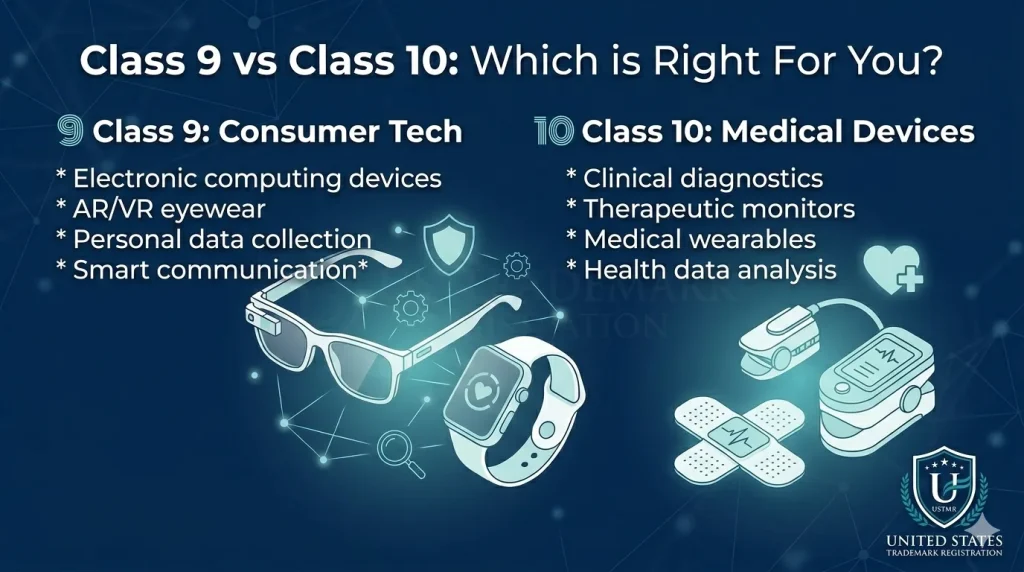
Class 9 covers scientific, optical, photographic, electronic, and electrical apparatus. In practice, it covers the majority of consumer technology products, including smartphones, computers, cameras, downloadable software, and consumer electronics generally.
For wearable technology, Class 9 covers smart glasses and augmented reality eyewear that primarily function as consumer electronics or computing devices, fitness trackers and smartwatches functioning as electronic monitoring devices, wearable cameras and recording devices, and downloadable applications powering wearable device features.
When a wearable product primarily functions as electronic computation, data collection, communication, or entertainment, Class 9 covers it. The product does not need to be a medical device to qualify for Class 9 protection.
What Class 10 Covers?
Class 10 covers surgical, medical, dental, and veterinary apparatus and instruments; artificial limbs, eyes, and teeth; orthopedic articles; and suture materials. In the wearable context, Class 10 becomes relevant when a product makes medical claims, receives FDA classification as a medical device, or targets healthcare applications specifically.
Smart eyewear with clinical vision correction features, wearables that monitor health metrics for diagnostic purposes rather than general wellness, hearing aids and cochlear implant accessories, and medical-grade biosensors all fall into Class 10 territory. The distinction between Class 9 and Class 10 often tracks closely with how the FDA classifies the product.
A product marketed as a general wellness tracker sits in Class 9. The same hardware marketed as a clinical diagnostic tool for a specific medical condition likely needs Class 10 coverage as well. Marketing claims and regulatory classification drive the trademark classification analysis more than underlying technology does.
Why Smart Eyewear Needs Both Classes?
The most sophisticated smart eyewear products of 2026 genuinely occupy both classes simultaneously. A device combining augmented reality display technology with prescription lens correction and health monitoring sensors delivers consumer electronics functionality, optical functionality, and potential medical device functionality in a single product.
A single-class filing in either Class 9 or Class 10 leaves the other functionality unprotected. A competitor who studies the registration can market a competing product under the same brand name in the uncovered class without infringing.
Our trademark filing experts conduct a full product functionality analysis before recommending a class strategy for wearable technology brands. We map every commercial use of the product to the appropriate class before any trademark application goes in.
Additional Classes Wearable Brands Often Miss
- Class 42: SaaS, cloud computing, data analytics. Covers the cloud platform powering the wearable device and any health or fitness dashboard the brand operates.
- Class 44: Medical services, health monitoring services, and telehealth. Relevant for wearable brands offering associated health monitoring or virtual care services.
- Class 41: Health and fitness training services, educational content. Covers fitness programs and coaching content bundled with device subscriptions.
- Class 25: Clothing and wearable apparel. Relevant for smart clothing and textile-integrated wearables that blur the line between garment and device.
The FDA Classification Link
For wearable brands navigating Class 9 versus Class 10, FDA classification provides useful guidance. Products the FDA classifies as general wellness devices support a Class 9 primary filing. Products the FDA classifies as medical devices under a specific product code support a Class 10 primary filing or a dual-class strategy.
Trademark classification and FDA classification serve different regulatory purposes, so the alignment is not perfect. But a brand whose marketing materials and regulatory submissions consistently describe the product as a medical device faces a harder argument that it belongs only in Class 9.
We Build Trademark Classification Strategies for Wearable Tech Brands
At united states trademark registrations and law (USTML), our trademark application services for technology hardware brands start with a product functionality mapping that drives class selection. We identify what the product does, how the brand markets it, and what regulatory classification it carries before recommending a filing strategy. Our intellectual property services cover multi-class filings for wearable brands needing protection across hardware, software, and services categories. We also run trademark monitoring across all registered classes, so new competitor filings in any covered category surface immediately.
Run our free trademark search across the relevant classes first. Our trademark application services handle the multi-class strategy and filing from there.
Frequently Asked Questions
Should smart glasses be filed in Class 9 or Class 10?
Most smart glasses and augmented reality eyewear fall primarily in Class 9 as electronic apparatus and optical instruments. Products with clinical vision correction or medical diagnostic features should also file in Class 10. Many advanced smart eyewear products need both classes to fully protect all functionality.
What is the difference between Class 9 and Class 10 for wearable technology?
Class 9 covers consumer electronics, optical apparatus, and electronic monitoring devices. Class 10 covers medical and surgical instruments, including wearable health devices with diagnostic or therapeutic applications. Whether the product makes medical claims or carries an FDA medical device classification is the primary distinguishing factor.
Does a fitness tracker need a Class 9 or Class 10 trademark?
General wellness fitness trackers monitor steps, heart rate, and activity without a medical claims file in Class 9. Fitness wearables with clinical health monitoring capabilities, FDA clearance, or specific medical condition management features may also need Class 10 coverage.
What other trademark classes do wearable technology brands need?
Beyond Class 9 and Class 10, wearable brands often need Class 42 for cloud platform and software services, Class 44 for associated health monitoring or telehealth services, Class 41 for fitness training and coaching content, and Class 25 for smart clothing or textile-integrated wearable products.