


Filing a trademark application without adequate preparation is one of the most expensive mistakes a business owner can make. Office actions, refusals, abandoned applications, and the need to refile from scratch all stem from issues that a thorough pre-filing review would have caught. The USPTO filing fees are non-refundable. The time spent in examination is not recoverable.
This pre-filing trademark checklist covers the 12 things every applicant should verify before submitting a trademark application. Work through each item before you file, and you will enter the process with significantly better odds of a clean, successful registration.
1. Confirm Your Mark Is Actually Distinctive
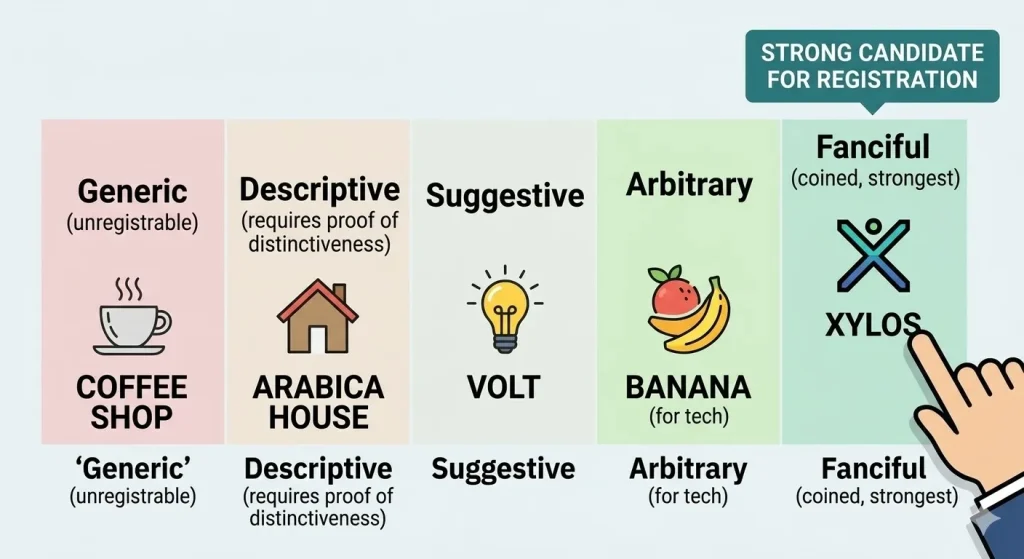
Trademark registration requires distinctiveness. Before anything else, evaluate your mark honestly against the spectrum of distinctiveness. Generic terms that describe the product itself cannot be registered. Descriptive terms that describe a quality, characteristic, or function of the goods can only be registered with evidence of acquired distinctiveness. Suggestive, arbitrary, and fanciful marks are the strongest candidates and the easiest to register.
If your brand name is “Best Coffee” for a coffee shop, you are already facing a challenge. Moreover, If it is “Arabica House,” you may have a descriptiveness issue. If it is a coined word with no prior meaning, you are in a strong position. Assess your mark honestly before investing in the filing process.
2. Run a Comprehensive Trademark Search
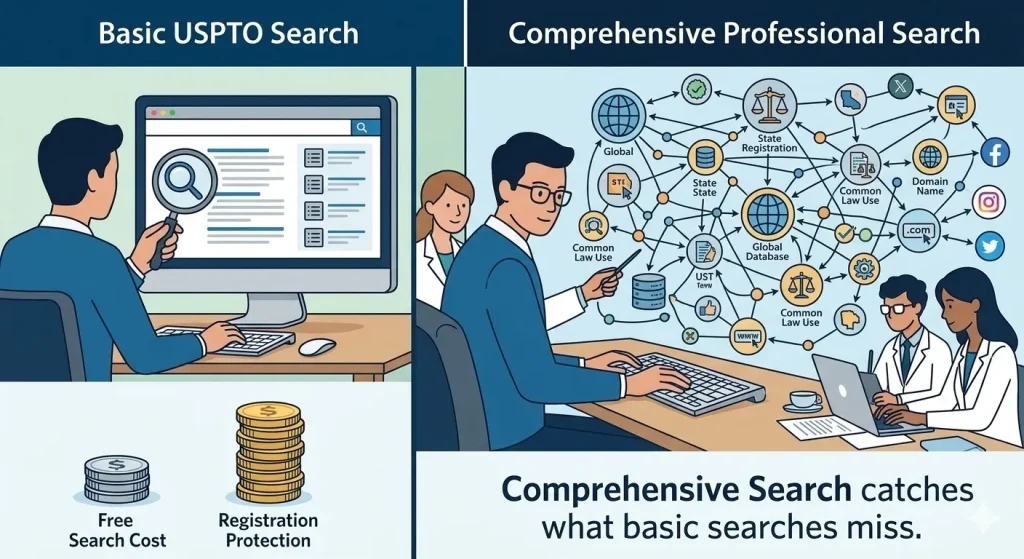
Free trademark search services are available, and running one before you file is non-negotiable. A search identifies existing registrations and pending applications that could block your mark or lead to an office action because of the likelihood of confusion. The USPTO database is publicly searchable through the Trademark Electronic Search System.
A comprehensive trademark search goes beyond the USPTO database to cover state trademark registrations, common law use in commerce, domain names, and social media handles. A professional search catches conflicts that a basic USPTO search misses. The cost of a comprehensive search is a fraction of the cost of refilling after a refused application.
3. Verify Your Mark Is Available in Your Target Classes
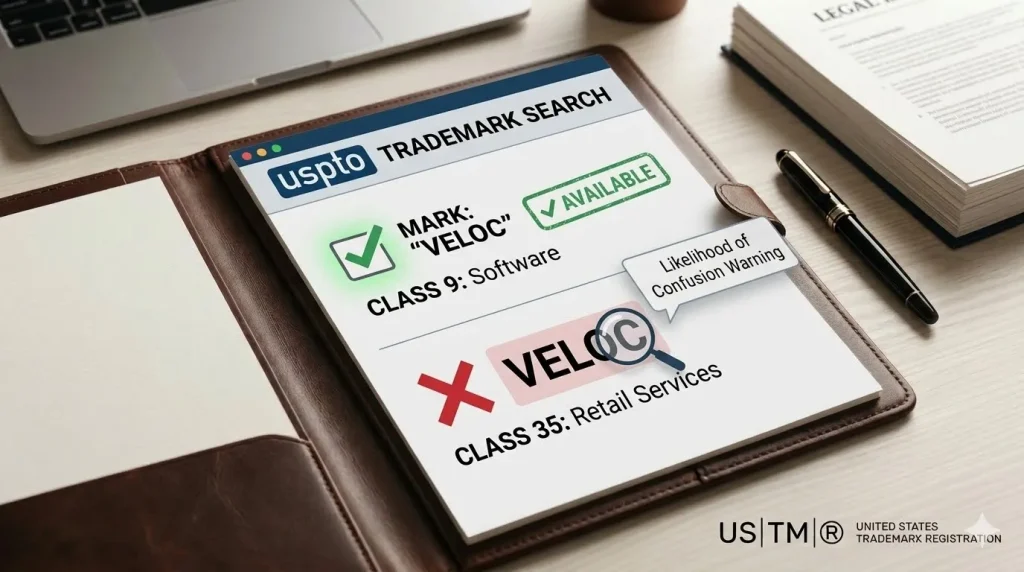
Searching generally for your mark is not enough. You need to verify that no confusingly similar marks exist in the same or related international classes that cover your specific goods and services. A mark that is available in Class 9 for software may be blocked in Class 35 for retail services. Search specifically in the classes you plan to register for.
4. Identify All the Classes You Actually Need
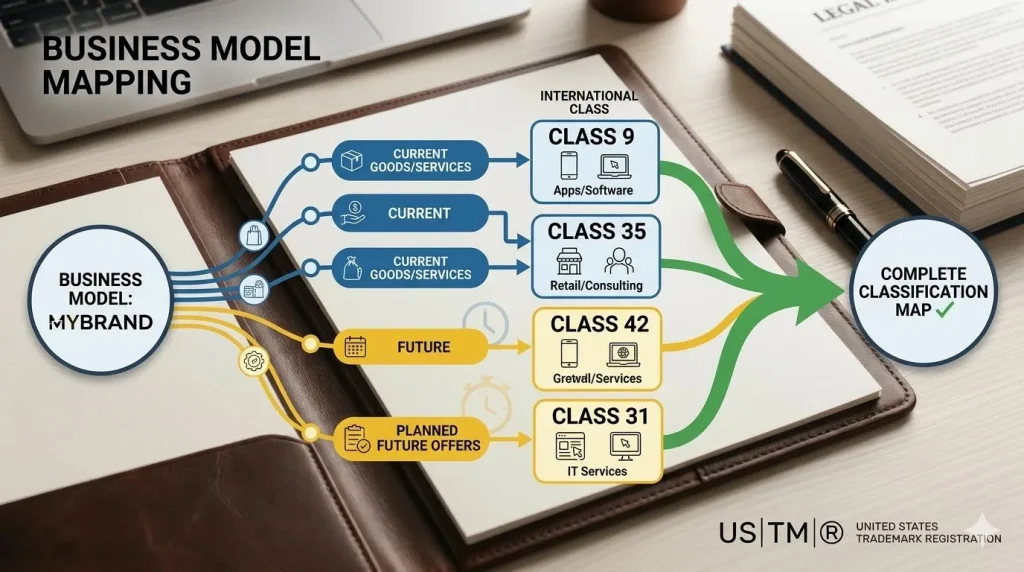
Trademark Application Services teams constantly see applications that are too narrow. Before filing, map your business comprehensively. List every category of goods and services you currently offer, as well as every category you reasonably plan to offer within the next three to five years. Match each to the appropriate international class. Filing in additional classes now is less expensive than filing new applications later.
5. Decide Which Version of Your Mark to File
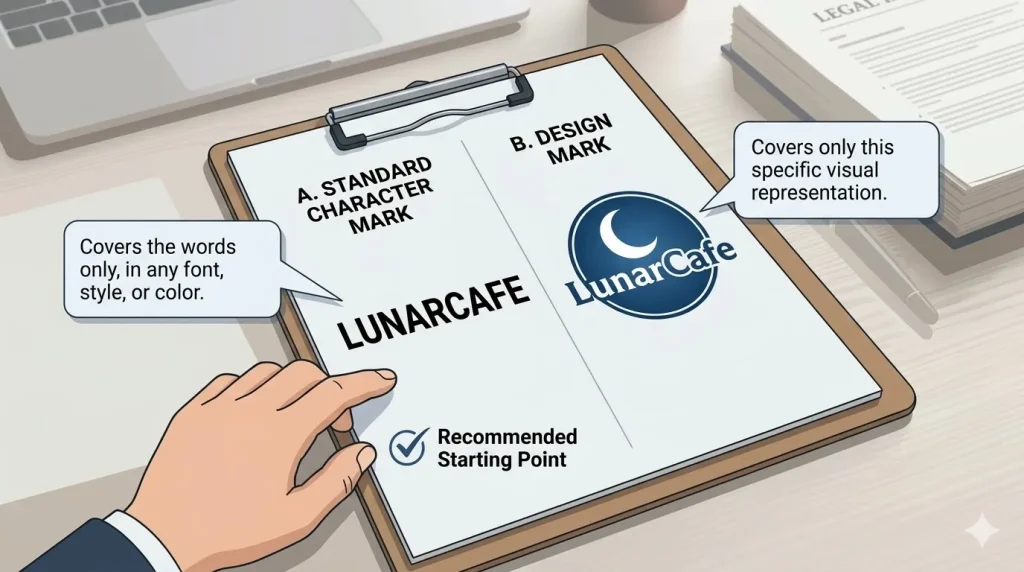
You can file a standard character mark, which protects the text itself in any font, size, or color. Or you can file a stylized or design mark, which protects the specific visual presentation. You can file both. Standard character marks provide broader protection because they cover the words in any form. Design marks protect only the specific version filed. For most brands, filing a standard character mark is the recommended starting point.
6. Confirm You Have a Specimen or a Plan to Get One

Federal trademark filing on a use-in-commerce basis requires a specimen at the time of filing that shows the mark being used in commerce in connection with the identified goods or services. Before filing, please ensure you have an acceptable specimen ready. If you are filing on an intent-to-use basis, you do not need a specimen at the time of filing, but you will require one before registration can be completed.
7. Determine Your Filing Basis
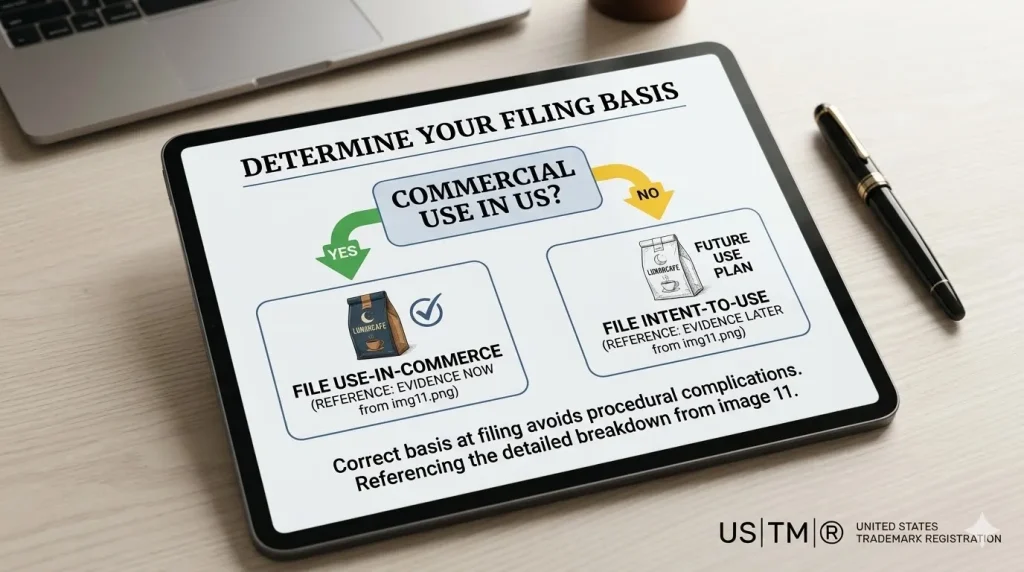
Are you currently using the mark in commerce in the United States? If yes, you can file on a use-in-commerce basis. But iif you have not yet begun commercial use but intend to, you file on an intent-to-use basis. If you have a foreign registration and want to claim priority in the US, you may have additional filing basis options. Getting the basis right at filing avoids procedural complications during examination.
8. Verify Your Goods and Services Description Are Accurate and Complete
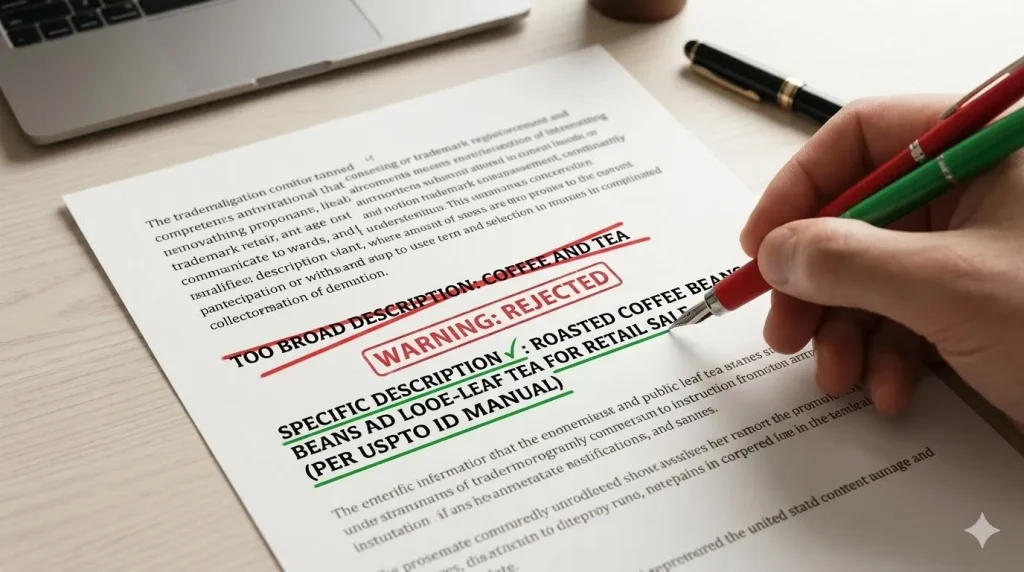
Trademark protection solutions depend on a description that accurately covers your actual commercial activity. A description that is too broad may be challenged. A description that is too narrow leaves gaps in your protection. The USPTO Trademark ID Manual contains thousands of pre-approved descriptions. Use it as your starting point and make sure your final description reflects what you actually sell or do, described with appropriate specificity.
9. Confirm the Correct Applicant Entity
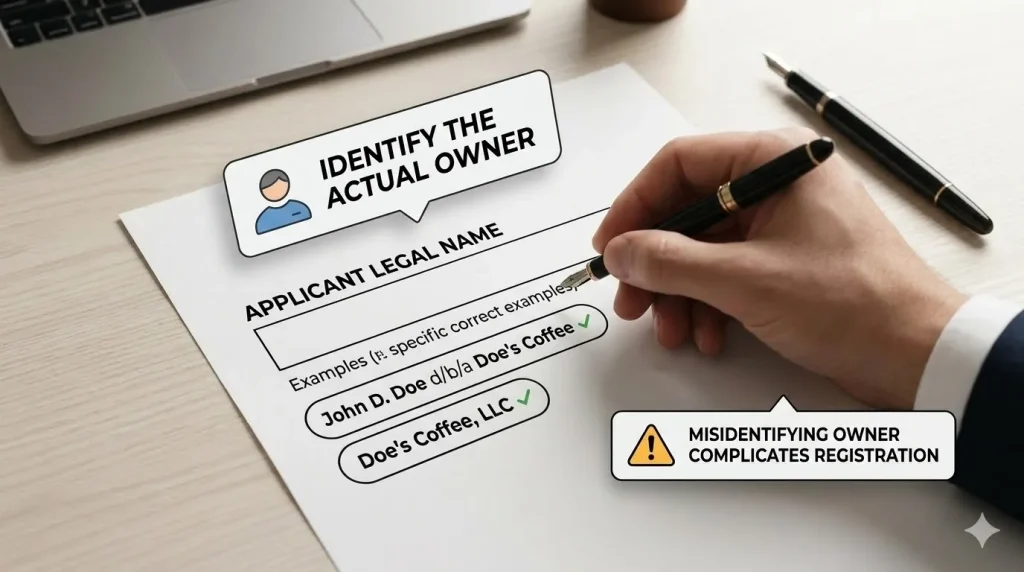
Trademarks must be filed in the name of the actual owner of the mark. For an individual doing business as a sole proprietor, that is the individual’s legal name. For a corporation, LLC, or partnership, the filing must be in the legal name of the entity. Misidentifying the owner is an error that can complicate the registration and affect your ability to enforce it.
10. Check for Intent-to-Use Timeline Feasibility
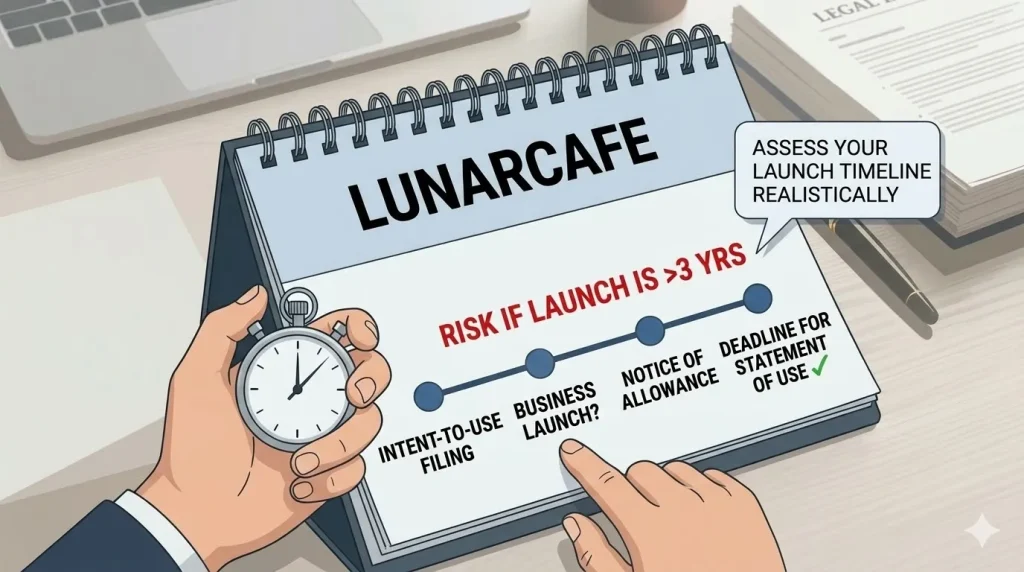
Trademark Management Services advises intent-to-use applicants to realistically assess their launch timeline before filing. Intent-to-use applications require a Statement of Use within a defined period after the Notice of Allowance. Extensions are available but carry fees and have a three-year outer limit. If your business launch is more than three years away, or if your launch timeline is highly uncertain, the intent-to-use basis may not be appropriate at this time.
11. Understand the Cost You Are Committing To

The total cost of a trademark registration includes USPTO filing fees, any professional fees for filing assistance, potential response fees if office actions are issued, and Statement of Use fees for intent-to-use applications. Multi-class filings multiply the fees. Understand the full cost before filing, and factor in the cost of monitoring and maintenance over the life of the registration.
12. Have a Monitoring and Maintenance Plan

Trademark monitoring is not something to figure out after registration. Know before you file how you will watch for conflicting applications that publish during the opposition window, how you will track your maintenance deadlines for the Section 8 Declaration between years five and six and the Section 9 renewal at ten years, and who is responsible for managing these obligations over the life of the registration.
united states trademark registrations and law Services at USTML work through this checklist with every applicant before filing. We conduct the searches, identify the right classes, prepare the application, and build a protection strategy that covers the full lifecycle of your mark. Start with a free trademark search today.
Frequently Asked Questions
How long does a trademark search take before filing?
A basic USPTO TEAS search can be conducted in a matter of hours. A professional comprehensive search that covers the USPTO database, state registrations, common law sources, and relevant online channels typically takes a few business days. Most applicants should allow at least one week for a thorough search before finalizing their filing decision.
Can I file a trademark application myself without professional help?
Yes. The USPTO TEAS system allows self-represented applicants to file directly. However, the application requires legal knowledge to complete correctly. Errors in goods and services descriptions, specimen issues, incorrect filing basis selection, and missed procedural requirements are significantly more common in self-filed applications and lead to office actions, delays, and refusals that cost more to resolve than professional assistance would have cost upfront.
What is the difference between a standard character mark and a design mark?
A standard character mark protects the words, letters, or numbers in your mark in any font, size, color, or stylization. A design mark protects a specific visual presentation, including logos, stylized text, and graphical elements. Standard character marks provide broader protection because they are not limited to one visual form. Design marks protect only the exact version filed.
What happens if I discover a conflict after filing?
If the USPTO discovers a conflict during examination, it will issue an office action citing the conflicting mark as the reason for refusal. You can respond by arguing no likelihood of confusion, amending your goods and services description to reduce overlap, or submitting a consent agreement with the conflicting mark’s owner. A conflict discovered before filing gives you the option to choose a different mark, which is almost always the better outcome.