
The Shopify store had 40,000 customers. The Instagram account had 85,000 followers. The brand had spent four years building both.
In the span of six weeks, seventeen fake accounts appeared across Instagram and TikTok using the brand’s name, logo variations, and product photography. Several were selling counterfeit products and tagging real customers. Others were running giveaway scams. The brand’s customer service inbox filled with confusion. They filed reports with Instagram. Most were rejected. TikTok responded slowly. The impersonators kept appearing.
The fundamental problem was that the brand had no federal trademark registration. Without it, their reports to social media platforms had no legal foundation to stand on. Platforms process trademark reports differently from copyright reports, and the key differentiator is whether the reporting party has a registered trademark.
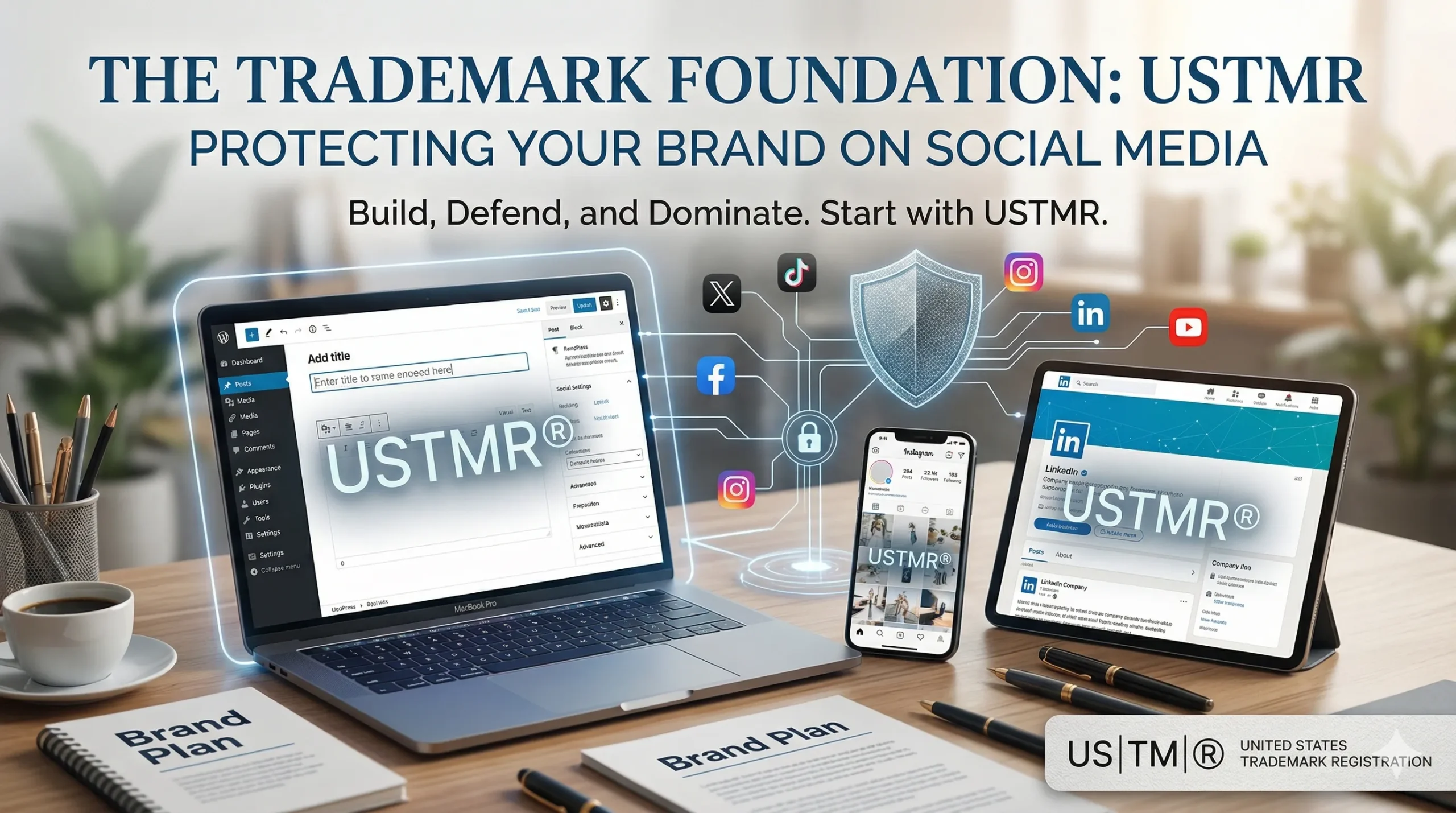
This guide explains exactly how social media brand protection works, why trademark registration is the non-negotiable starting point, and what an effective protection strategy looks like in practice.
Why social media brand protection is a trademark problem?
Most business owners approach social media impersonation as a technology problem, looking for a button to press that will make the fake account disappear. The platforms do have reporting systems, but those systems are designed to respond to legal rights, not to opinions about who owns a brand.
Trademark law is the legal framework that establishes who has exclusive rights to use a name, logo, or brand identity in commerce. Social media platforms built their IP reporting systems around trademark law specifically because trademark law creates the clear legal relationships that platforms can act on. Without a registered trademark, you are reporting based on your belief that the account is unauthorized. With a registered trademark, you are reporting based on a verifiable legal right that the platform’s legal team can confirm.
This is not a policy preference by the platforms. It reflects the legal reality that trademark rights are created by registration and use, not by the feeling that a brand belongs to its creator.
Username squatting: what it is and what you can do about it?
Username squatting happens when a third party registers a social media handle that matches or closely resembles a brand name, often before the brand owner has claimed the handle on that platform. The squatter may intend to sell the handle, use it to impersonate the brand, or simply hold it to prevent the legitimate owner from claiming it.
Each major platform has a username dispute process, but the outcomes vary significantly based on whether you have trademark protection.
How major platforms handle trademark infringement reports?
Instagram and Facebook (Meta)
Meta has an IP reporting portal. The report requires you to identify your trademark, provide your registration number or application number, and describe how the account infringes on your rights. Meta reviews reports and typically responds within a few business days. Reports backed by a registration number are processed more reliably than those relying solely on claimed rights.
TikTok
TikTok’s trademark reporting form is accessible through its Intellectual Property Policy page. TikTok requires a registration number for trademark reports. The platform has strengthened its IP enforcement processes in response to regulatory pressure and typically addresses clear trademark infringement when properly documented.
X (formerly Twitter)
X has a trademark policy that covers both username squatting and general brand impersonation. Their trademark report form requires a trademark registration number. X distinguishes between accounts that parody or comment on a brand, which may not violate trademark policy, and accounts that impersonate with intent to deceive.
LinkedIn handles trademark complaints through its intellectual property complaint process. The platform is particularly responsive to trademark violations in professional contexts, where impersonation can affect recruitment and business relationships.
YouTube
Google’s trademark complaint process covers YouTube channel names, thumbnails, and content. A registered trademark number significantly strengthens reports. YouTube is also subject to DMCA takedown procedures for copyright, which united states trademark registrations and law (USTML) handles through its DMCA Takedown Engine service.
Why trademark reports without registration numbers frequently fail?
Social media platforms process thousands of IP reports every day. Their review teams look for documentation that gives them legal confidence to act. A registration number allows the reviewer to verify your claim in a public database in seconds. An unregistered claim requires the reviewer to make a judgment call about who legitimately owns the brand identity, which is a much higher burden to meet.
Platform terms of service generally prohibit impersonation and misuse of brand names. But the enforcement of those terms relies on the reporting party being able to establish rights. Without a registration, you are asking the platform to take your word for it. With a registration, you are giving them a verifiable legal document.
Step-by-step brand protection strategy for social media
- Register your trademark. This is the foundation. Without a federal trademark registration, every other step in social media brand protection is built on sand. united states trademark registrations and law (USTML) handles the complete registration process.
- Claim your username on every major platform immediately, even if you do not plan to use all of them actively. Consistent username ownership across Instagram, TikTok, X, LinkedIn, YouTube, Facebook, Pinterest, and Threads prevents squatting before it starts.
- Enable two-factor authentication on every brand account. Account takeovers that lead to impersonation frequently start with compromised credentials.
- Create a brand monitoring system. Set up Google Alerts for your brand name, monitor social media search results weekly, and use trademark monitoring to catch newly filed applications that could conflict with your mark.
- Document your brand assets. Maintain dated records of your logo files, color codes, fonts, and other visual brand elements. This documentation supports IP reports and potential litigation.
- Report violations promptly. Platform algorithms can amplify fake accounts quickly. Reporting early reduces the number of users an impersonator reaches before the account is reviewed.
- Escalate to legal action when necessary. For persistent or large-scale infringement, a demand letter from a trademark attorney followed by a lawsuit in federal court is sometimes the only effective remedy.
What to do when an impersonator has a larger following than you?
This situation is more common than it might seem. A counterfeit or impersonator account that launched earlier, engaged in follow-for-follow tactics, or ran paid promotions can accumulate significant follower counts before the legitimate brand owner discovers them.
A larger follower count is not a defense to trademark infringement and it does not affect the strength of a trademark report. The platform’s IP team evaluates the legal rights of the reporting party, not the relative social media presence of each account.
In practice, impersonator accounts with large followings sometimes require legal escalation beyond platform reports. A federal trademark registration gives you standing to file in federal court for injunctive relief, which can compel platform compliance more quickly than the standard reporting process.
Trademark monitoring as an ongoing strategy
Brand protection on social media is not a one-time action. New fake accounts appear regularly for established brands, and new trademark applications by competitors or bad actors can create legal conflicts that affect your social media brand presence.
Trademark monitoring services scan new USPTO filings, online mentions, and marketplace listings to alert you to potential conflicts before they escalate. For brands that have invested significantly in social media presence, monitoring is a continuous part of the brand protection infrastructure, not an occasional activity.
united states trademark registrations and law (USTML) offers trademark monitoring as a standalone service that alerts you to new filings, unauthorized uses, and potential conflicts across trademark databases and online platforms.
Frequently asked questions
Can I protect my social media handle as a trademark?
A social media handle is not itself trademarkable in most cases. However, the brand name that your handle represents can be registered as a trademark. Once the trademark is registered, it protects the name regardless of what platform or handle format it appears in, including social media usernames.
What if a fake account is using my logo but a different name?
Using a visual mark that is likely to cause consumer confusion with your registered trademark is still infringement. Platform trademark reports cover logo and design mark infringement as well as name infringement. Include your design mark registration number in the report if the infringement involves visual brand elements.
Can social media platforms be held legally responsible for infringement?
Under Section 230 of the Communications Decency Act, social media platforms generally have immunity from liability for content posted by users, including infringing content. They are not required to remove infringing content unless served with proper legal notice. Trademark notices and DMCA takedowns are the legal mechanisms that trigger a platform’s obligation to act.
How long does it take for a platform to respond to a trademark report?
Response times vary by platform and by the quality of documentation provided. Well-documented reports with registration numbers typically receive responses within a few business days to two weeks. Incomplete reports or reports without registration numbers can take longer or be rejected outright. Providing complete, accurate information in the initial report improves response times.
Does an Instagram or TikTok verification badge protect my brand?
Platform verification indicates that an account is authentic, which helps consumers identify the legitimate brand. However, verification is not a substitute for trademark registration. Platforms grant verification based on their own criteria, which can change, and verification can be lost. A federal trademark registration is independent of any platform and provides legal rights that no platform policy can modify.
| Trademark registration is the foundation of social media brand protection united states trademark registrations and law (USTML) handles your trademark registration from clearance search to approval. Once registered, our DMCA Takedown Engine helps remove infringing content from online platforms. Protect your brand online: ustmr.com/trademark-registration/ |