

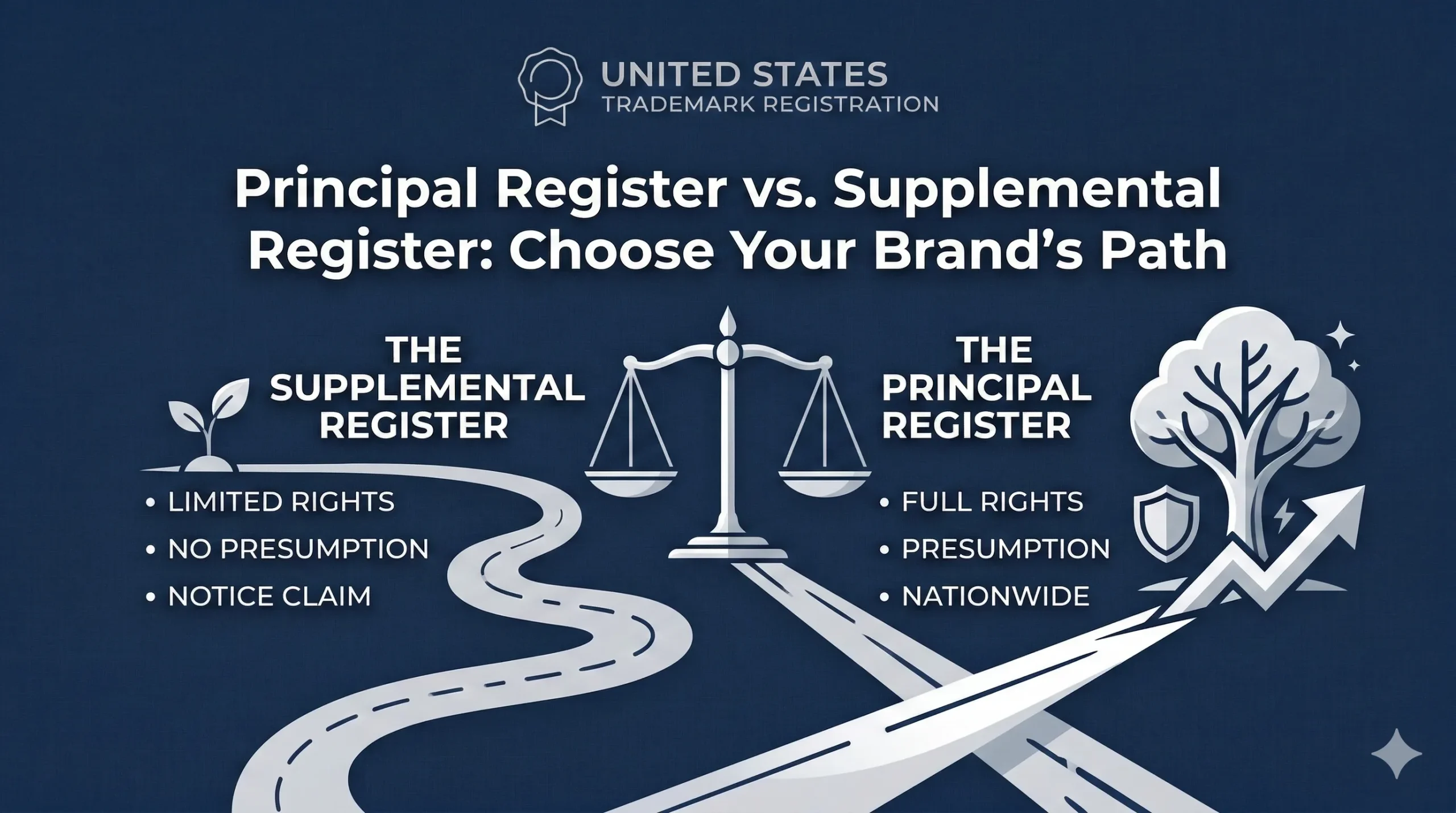
Most business owners filing a trademark application don’t know there are two USPTO registers until an examiner refuses their application for the Principal Register and the word “supplemental” appears in the response. At that point, the discovery feels like bad news. It doesn’t have to be.
Understanding the difference between the two registers is important. Knowing when the Supplemental Register is a strategic choice, rather than a consolation prize, is equally valuable. This is one of the most useful pieces of trademark knowledge a brand owner can have.
What is the Principal Register?
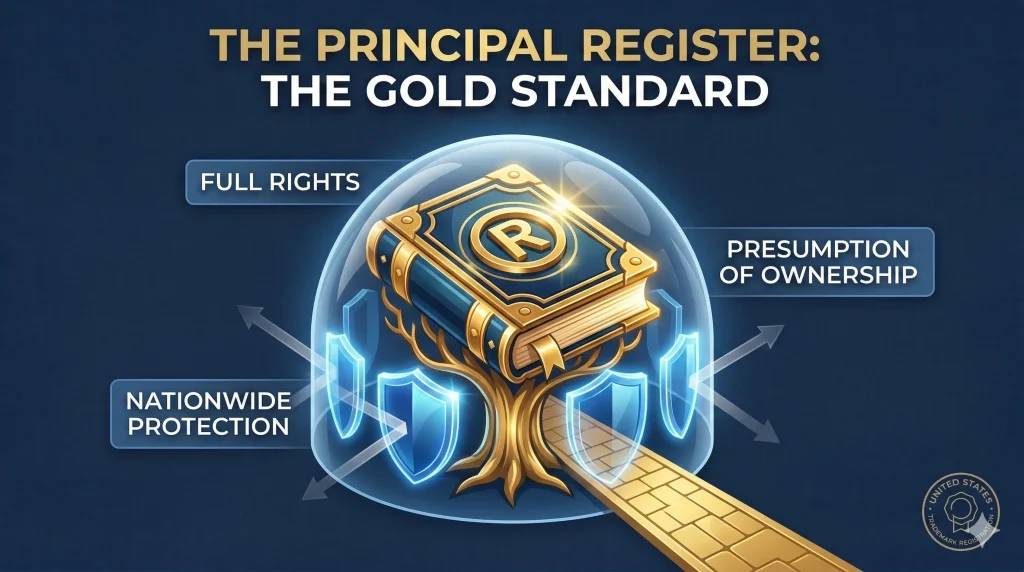
The Principal Register is what most people picture when they think of trademark registration. It’s the primary federal register maintained by the USPTO, and registration there comes with the full set of trademark rights and benefits.
When your mark registers on the Principal Register, you get the right to use the federal registration symbol ®. You receive a legal presumption that you own the mark. You also gain the exclusive right to use it nationwide in your registered classes.
Your mark becomes part of the USPTO’s official records. This serves as constructive notice to others. As a result, no one can claim they were unaware of your mark when they began using something similar.
Principal Register registration also opens the door to filing with U.S. Customs and Border Protection to block infringing imported goods. And after five years of continuous use, you can file for incontestable status, which significantly strengthens your legal position in any future dispute.
What is the Supplemental Register?

The Supplemental Register is a separate USPTO register designed for marks that can’t qualify for the Principal Register right now but may be able to qualify in the future. It serves a specific purpose, and that purpose is more valuable than most applicants realize when they first encounter it.
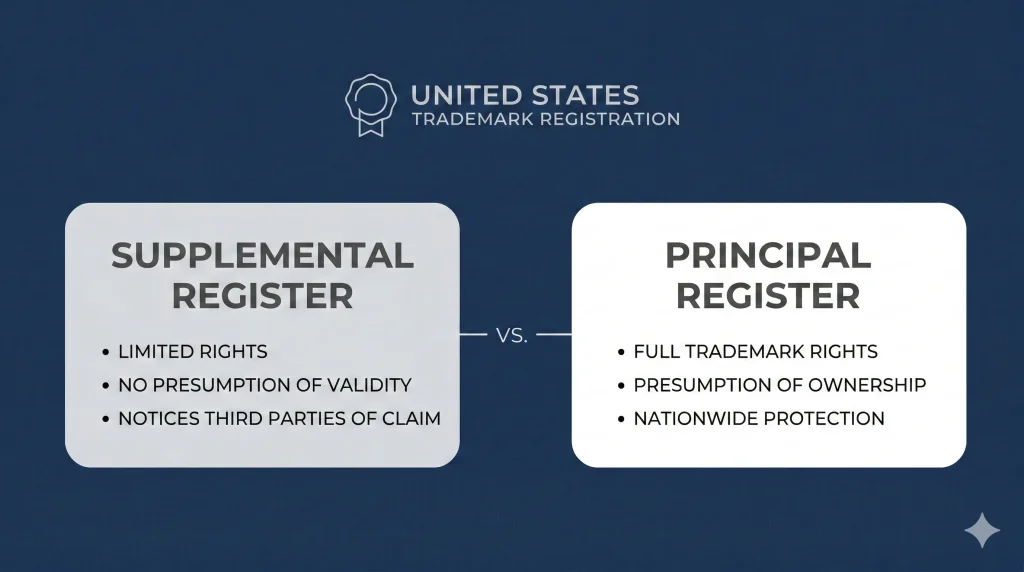
Marks on the Supplemental Register do not receive all the benefits of Principal Register registration. There’s no presumption of ownership. There’s no constructive notice. Incontestable status isn’t available. The ® symbol is still permitted, which matters more than it might seem.
What the Supplemental Register does provide is a USPTO record of your mark that shows up in trademark searches. That visibility matters. It also satisfies the registration requirement for filing trademark applications in many foreign countries through the Madrid Protocol, which is significant for brands with international ambitions.
Why are Marks Refused for the Principal Register?
The most common reason an examiner refuses Principal Register registration is that the mark is considered merely descriptive. A descriptive mark directly describes a feature, quality, or characteristic of the goods or services it’s used with.
If you sell cold brew coffee and try to register the mark “Smooth Cold Brew,” the USPTO is likely to refuse it. The phrase directly describes the product. Descriptive marks cannot register on the Principal Register without proof of acquired distinctiveness. You must show that consumers associate the phrase with your brand, not with the product category in general.
Geographic terms can face similar refusals. Surnames used as brand names often do as well. Primarily laudatory marks, such as “Best,” “Superior,” or “Premium,” also run into the same issue for similar reasons.
When Is the Supplemental Register a Smart Move?
If your mark is descriptive and you don’t yet have the years of use and consumer recognition needed to prove acquired distinctiveness, the Supplemental Register keeps your brand protected at the federal level while you build toward that threshold.
Five years of substantially exclusive and continuous use in commerce is the benchmark the USPTO generally accepts as evidence of acquired distinctiveness.
During those five years, registration on the Supplemental Register protects your mark. It creates a searchable USPTO record. It also allows you to use the ® symbol.
Once you reach the five-year mark, you can apply for the Principal Register. You will need to submit evidence of acquired distinctiveness. If accepted, your mark moves into the full protection framework.
For brands with international reach, the Supplemental Register satisfies the home registration requirement for the Madrid Protocol even though it doesn’t carry the same domestic legal weight as the Principal Register. That makes it a legitimate piece of an international trademark protection solutions strategy.
What the Supplemental Register Cannot Do?
It’s important to go into a supplemental register strategy with clear eyes about what it doesn’t offer. It doesn’t give you priority rights that defeat a later user who files for the Principal Register. Furthermore, it doesn’t allow you to block imports through Customs. And it doesn’t prevent the USPTO from registering a similar mark on the Principal Register for someone else, because Supplemental Register marks don’t serve as bars to registration the way Principal Register marks do.
Brand protection services that rely solely on a Supplemental Register filing without a plan to migrate to the Principal Register are leaving meaningful protection gaps in place. The Supplemental Register should be treated as a stage in a longer strategy, not a permanent resting place.
Making the Decision
When an examiner refuses your mark for the Principal Register and offers the Supplemental Register as an alternative, you have a real choice to evaluate. You can respond to the refusal and argue for principal register eligibility, sometimes successfully, depending on the examiner’s reasoning. You can accept an amendment to the Supplemental Register and begin building toward acquired distinctiveness. Or in some cases, you can redesign the mark to make it more distinctive and refile.
Our trademark application services at USTML include a thorough pre-filing distinctiveness assessment. We identify marks that carry descriptiveness risk before the application goes in, not after a refusal arrives. When a Supplemental Register strategy is genuinely the right path, we explain that clearly and build the five-year plan alongside it.
Trademark management services that look at your registration as a trajectory, not just a single filing event, give your brand a meaningful advantage. Whether your mark is ready for the Principal Register today or needs time to build toward it, we map the right route for where your brand actually is.
Not sure which register your mark qualifies for? USTML’s trademark filing experts assess your mark’s distinctiveness before you file and build a registration strategy around the real picture.
Frequently Asked Questions
What is the main difference between the Principal Register and the Supplemental Register?
The Principal Register offers full federal trademark rights, including legal presumption of ownership, constructive notice, and the ability to achieve incontestable status after five years. The Supplemental Register is for marks that can’t yet meet Principal Register requirements, offering more limited protections while the brand builds toward qualifying.
Can a mark on the Supplemental Register use the ® symbol?
Yes. Marks registered on either the Principal Register or the Supplemental Register may use the ® symbol. This distinguishes them from unregistered marks, which may only use ™.
How do I move from the Supplemental Register to the Principal Register?
After five years of substantially exclusive and continuous use in commerce, you can file a new application for the Principal Register and submit evidence of acquired distinctiveness. That evidence demonstrates that consumers now associate your mark specifically with your brand rather than with the broader category of goods or services.
Does a Supplemental Register registration stop others from registering a similar mark?
No. Unlike Principal Register registrations, Supplemental Register marks do not serve as bars to registration for similar marks. Another party can register a similar or identical mark on the Principal Register even while your Supplemental Register registration is active.
Is the Supplemental Register useful for international trademark filing?
Yes. Registration on the Supplemental Register satisfies the home registration requirement for extending trademark protection internationally through the Madrid Protocol, making it a useful tool for brands with global markets even when Principal Register registration isn’t yet available.