

A gift shop owner in Vermont registered her brand as a state trademark with the Vermont Secretary of State. The process was fast, inexpensive, and she felt her brand was protected.
Eight months later, an attorney representing a home goods company in New Hampshire sent a cease and desist letter. The company had filed a federal trademark registration for a similar name four years earlier, and their counsel had just discovered the Vermont business. Under federal trademark law, their prior registration gave them the right to demand she stop using the name nationwide, including in Vermont.
The Vermont state registration she had paid for gave her nothing in that dispute. State trademark registrations do not override federal trademark rights. They do not even factor into a federal infringement analysis.
Understanding the practical difference between state and federal trademark registration before you file prevents this kind of expensive and disruptive outcome.
How state trademark registration works?
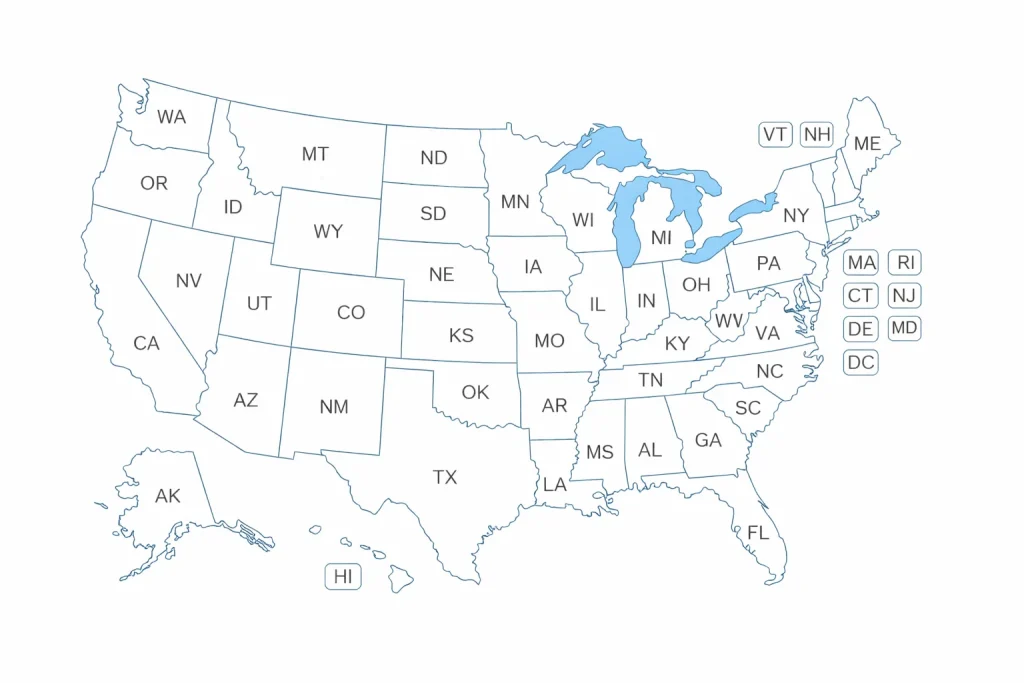
Every state has its own trademark registration system, generally administered by the Secretary of State. State trademark registration gives you legal recognition of your trademark rights within that specific state only.
State trademarks are governed by state law, not federal law. They create rights that are enforceable in state courts using state trademark statutes. They do not appear in the USPTO trademark database and are not considered during federal trademark examination.
The process is straightforward. You file an application with the state trademark office, pay a relatively modest fee (Vermont charges 80 dollars per class, California 70 dollars per class), and receive a state trademark registration certificate if the application is approved.
State trademark registrations typically expire on a set schedule and must be renewed. They do not provide any rights outside the state in which they are registered.
How federal trademark registration works?
Federal trademark registration is administered by the USPTO under the Lanham Act. A federal registration gives you trademark rights across all fifty states and US territories, regardless of where your business is physically located or where most of your customers are.
Federal rights attach to the trademark based on your filing date, which becomes your priority date. Any later filer of a confusingly similar mark in the same class is subordinate to your rights, regardless of their state registrations or local commercial use.
The federal registration process takes longer than state registration, typically 8 to 12 months, and costs more. However, it provides protections that state registration cannot.
Key differences between state and federal trademark registration
| Factor | State Registration | Federal Registration |
| Geographic coverage | One state only | All 50 states and US territories |
| Governing law | State trademark statute | Lanham Act (federal law) |
| Appears in USPTO database? | No | Yes |
| Blocks federal filers? | No | Yes, from the priority date |
| Enforcement venue | State courts | Federal courts plus state courts |
| Statutory damages available? | Varies by state | Yes, in federal court |
| Presumption of ownership? | State only | Nationwide presumption |
| Basis for international filing? | No | Yes (Madrid Protocol) |
| Cost (approximate) | $50 to $150 per class | $350 per class (TEAS Plus) |
| Processing time | Weeks | 8 to 12 months average |
When state trademark registration is legitimately useful?
State trademark registration serves a genuine purpose in specific circumstances, and dismissing it entirely would be an overstatement.
Strictly local businesses with no interstate ambition
A neighborhood restaurant, a local repair shop, or a regional service business that operates entirely within one state, serves a local customer base, and has no plans to expand or sell online may find state registration adequate for their practical needs. The risk of a federal trademark holder in another state targeting a local business that poses no competitive threat is relatively low, though not zero.
Fast interim protection during federal application
A state trademark registration can be obtained quickly, sometimes within a few weeks. During the 8 to 12 month wait for federal registration, a state registration provides some documented evidence of trademark use that may be useful in litigation, even if it does not provide the full protections of federal registration.
Industries with genuinely state-specific regulatory environments
Some industries, such as certain professional services, real estate, and insurance, operate under state-specific licensing frameworks. In these sectors, a state trademark registration may have practical value in local regulatory contexts beyond its legal trademark protections.
When federal registration is necessary?
For the vast majority of businesses operating in the current economy, federal registration is the appropriate choice. Consider these situations where state registration is clearly insufficient.
The combined approach: when both make sense?
Some businesses choose to file both state and federal trademark applications. The state registration can provide faster documentation of trademark rights during the federal examination period. In states with strong local business communities, a state registration may also have practical enforcement value in local business disputes.
If you file both, understand that the state registration provides no protection against federal trademark holders with earlier priority, and that federal registration supersedes state registration in any conflict between federal and state rights.
Frequently asked questions
Can I convert a state trademark registration to a federal one?
No. A state trademark registration cannot be upgraded or converted to a federal trademark registration. They are separate legal instruments under separate legal systems. If you have a state registration and want federal protection, you must file a new application with the USPTO. However, your commercial use history supporting the state registration may serve as evidence of prior use in the federal application.
Does a state trademark registration show up in a USPTO search?
No. State trademark registrations are maintained in separate state databases and are not included in the USPTO trademark search system. A thorough clearance search must check state databases separately. This is one reason comprehensive clearance searches are more valuable than USPTO-only searches.
If I have a state trademark, can a federal trademark holder in another state force me to rebrand?
Yes, if their federal trademark predates your commercial use. Federal trademark rights are nationwide from the priority date. A later user, even one with a state registration, is generally required to stop using a confusingly similar mark in interstate commerce. Geographic exceptions may apply if you can prove prior commercial use in your local area before their federal registration, but these exceptions are narrow and expensive to establish.
How much cheaper is state trademark registration than federal?
State trademark fees are typically $50 to $150 per class, compared to $350 per class for USPTO TEAS Plus applications. The lower cost is the main appeal of state registration. However, the limited geographic coverage means you are paying for significantly less protection.
Do trademark attorneys recommend state registration?
Most trademark attorneys recommend federal registration as the primary strategy for commercially active brands. State registration is sometimes recommended as a supplementary measure or as a cost-effective interim step for early-stage businesses with limited budgets. The standard professional advice is to pursue federal registration as soon as the business has a defined name and is operating in commerce.
| Federal trademark registration is the right foundation for your brand. united states trademark registrations and law (USTML) handles federal trademark registration from clearance search through USPTO approval. Starting at $39 plus government fees, professional filing is more accessible than most business owners expect. Start your federal trademark application: ustmr.com/trademark-registration/ |