


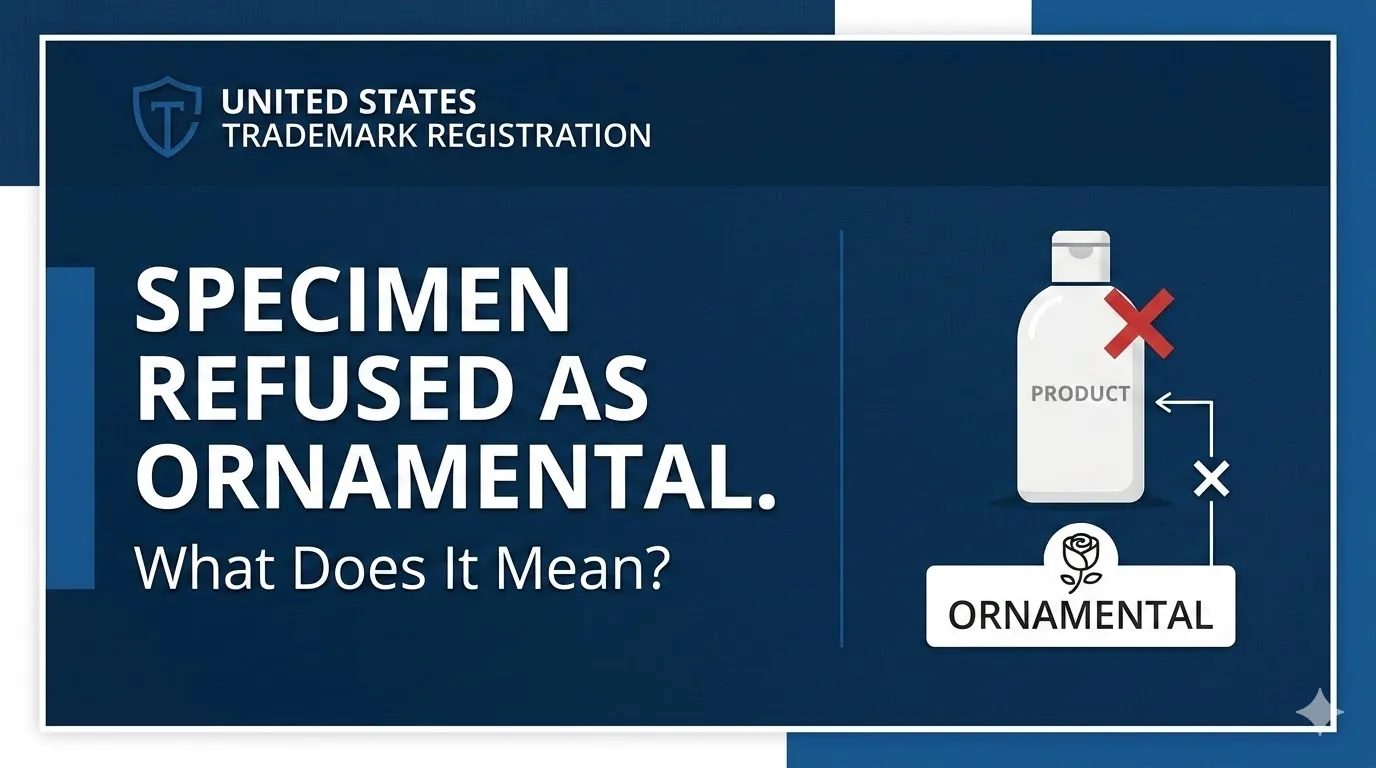
We see this constantly. A clothing brand applies for united states trademark registrations and law, submits a photo of their t-shirt with the logo printed across the chest as their specimen, and receives an Office Action refusing the specimen for a reason they weren’t expecting: ornamental use.
The application hasn’t been refused. The mark hasn’t been rejected. The specimen is the proof of use in commerce that has been found insufficient. Understanding exactly what that means saves your application from abandonment.
What is a trademark specimen?
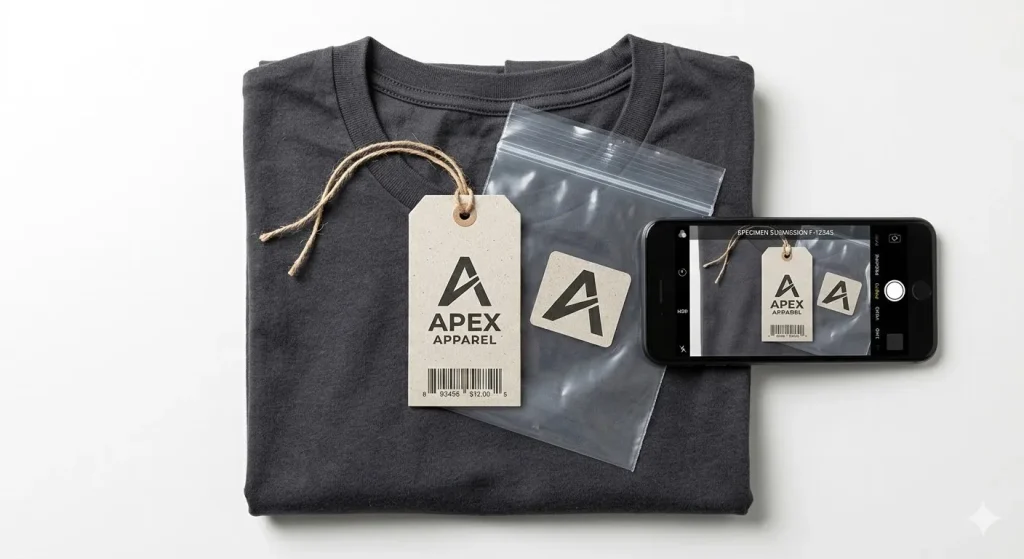
When you file a trademark application based on use in commerce, you must submit a specimen showing the mark as it actually appears in connection with your goods or services. The specimen proves to the USPTO that your mark functions as a trademark. It must identify your goods or services and signal their source to consumers.
The bar is specific: the mark must function as a source identifier, not just appear on the product. That distinction is where the ornamental refusal lives.
What Ornamental Use Means?
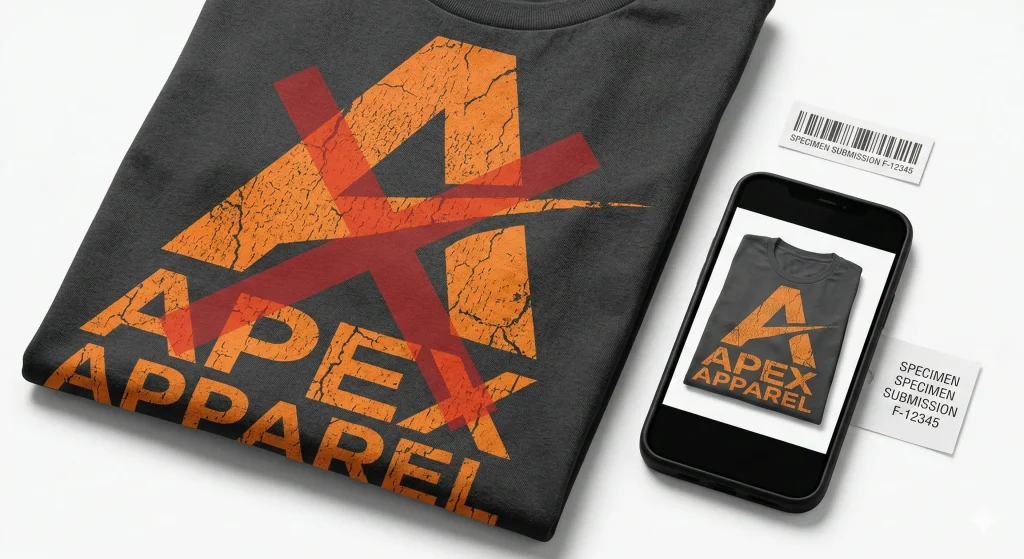
Ornamental use means the USPTO examiner concluded that your mark decorates the product rather than identifies its source. The mark is on the product, but it appears to be a design element or decorative feature rather than a brand signal.
The clearest example is a large graphic logo printed prominently across the front of a t-shirt. Consumers are conditioned to view large front-of-shirt graphics as decorative or expressive, not as indicators of who made the shirt. When the examiner looks at your specimen and sees a large chest print, the assessment is that an ordinary consumer would view it as ornamentation, not as a trademark.
This doesn’t mean your mark can’t function as a trademark for clothing. It means the specific way you showed it in the specimen was ornamental.
What Counts as Ornamental?
The examiner considers several factors when making an ornamental determination. Size matters. A large, dominant graphic is more likely to be seen as ornamental than a small, discreet mark. Placement matters. A front-of-chest, across-the-back, or large-portion-of-the-item signal decoration rather than source identification. The nature of the mark matters too. A phrase, slogan, or design that carries independent meaning as a message or artistic expression is more likely to be treated as ornamental.
Common examples that get flagged: large logos centered on t-shirt fronts, slogans printed across sweater chests, brand names running along the full sleeve, and graphic designs covering the back of a jacket. These are the ornamental use scenarios our trademark filing experts at USTML see most often.
What Actually Works as a Specimen for Clothing?
Specimens that successfully show trademark use for apparel tend to share certain characteristics. Hang tags displaying the mark and attached to the garment work well. Interior sewn labels carrying the brand name work. Exterior neck or collar labels showing the mark in a size and placement consistent with branding rather than decoration are effective.
A small mark applied to a chest pocket or cuff in a way consistent with how brand logos appear on professional apparel can work, but size and context still matter. The key question is whether an ordinary consumer would see the mark as identifying the brand or as decorating the item.
Fixing an Ornamental Refusal
An ornamental refusal is not the end of your application. You have real options for responding to the Office Action.
The most common path is submitting a substitute specimen. If you have labels, hang tags, or other branding materials that display your mark in a trademark-appropriate way, those can serve as replacements. The substitute must show the mark in use before the filing date of your application.
A second option is arguing against the ornamental determination. This requires making the case that the mark functions as a source identifier in your specific specimen. It works when the examiner’s assessment is inconsistent with how similar marks have been treated or when consumer recognition evidence supports your position. Trademark protection solutions built around a well-crafted legal argument take time and expertise to execute effectively.
A third option is amending to an intent-to-use basis and securing new specimens that work correctly before registration issues. This approach has procedural implications that a trademark management services professional should walk you through before you commit to it.
Preventing an Ornamental Refusal Before It Happens
The best time to address ornamental use risk is before you file, not after an office action arrives. Intellectual property services professionals who review your specimen before submission evaluate whether your proposed proof of use meets the USPTO’s source-identification standard.
If you’re filing for clothing, plan your specimen strategy as carefully as you plan your mark. Get your labels, hang tags, or packaging materials ready before filing. Know what the USPTO will accept. Submitting a strong specimen from the beginning keeps your application moving through examination without detours.
At USTML, our united states trademark registrations and law services include specimen review as a standard part of the filing process for goods-based applications. We look at what you’re planning to submit, flag any ornamental risk, and help you identify a better specimen before the application goes in. Getting this right up front is far less disruptive than navigating it under office action deadline pressure.
Got an ornamental refusal on your trademark application? USTML handles office action responses, including ornamental specimen issues.
Frequently Asked Questions
Why was my logo refused as ornamental when it’s clearly my brand?
The USPTO’s ornamental determination is based on how an average consumer would perceive the mark in the context shown in your specimen. A logo you know is your brand can still appear decorative to someone unfamiliar with your company. Size, placement, and context all factor into the examiner’s analysis.
Can I still get my trademark registered after an ornamental refusal?
Yes. An ornamental refusal is an office action, not a final rejection of your application. You can respond by submitting a substitute specimen that shows the mark functioning as a source identifier or by arguing against the examiner’s ornamental determination with supporting evidence.
What is the best specimen for a clothing trademark application?
Interior sewn labels, hang tags attached to the garment, and exterior neck or collar labels are the most effective specimens for clothing. Large front-of-chest graphics are the most common ornamental refusal triggers and should generally be avoided as specimens.
How long do I have to respond to an ornamental refusal office action?
You have three months from the issue date of the office action to respond without additional fees, or six months with a fee extension. Missing the response deadline can result in your application being abandoned.
Does the ornamental use problem apply to services as well as goods?
Ornamental refusals are most common for goods, particularly clothing and other items where decorative use is common. Service mark applications have different specimen requirements, and ornamental issues arise less frequently, though they can occur in certain contexts.