

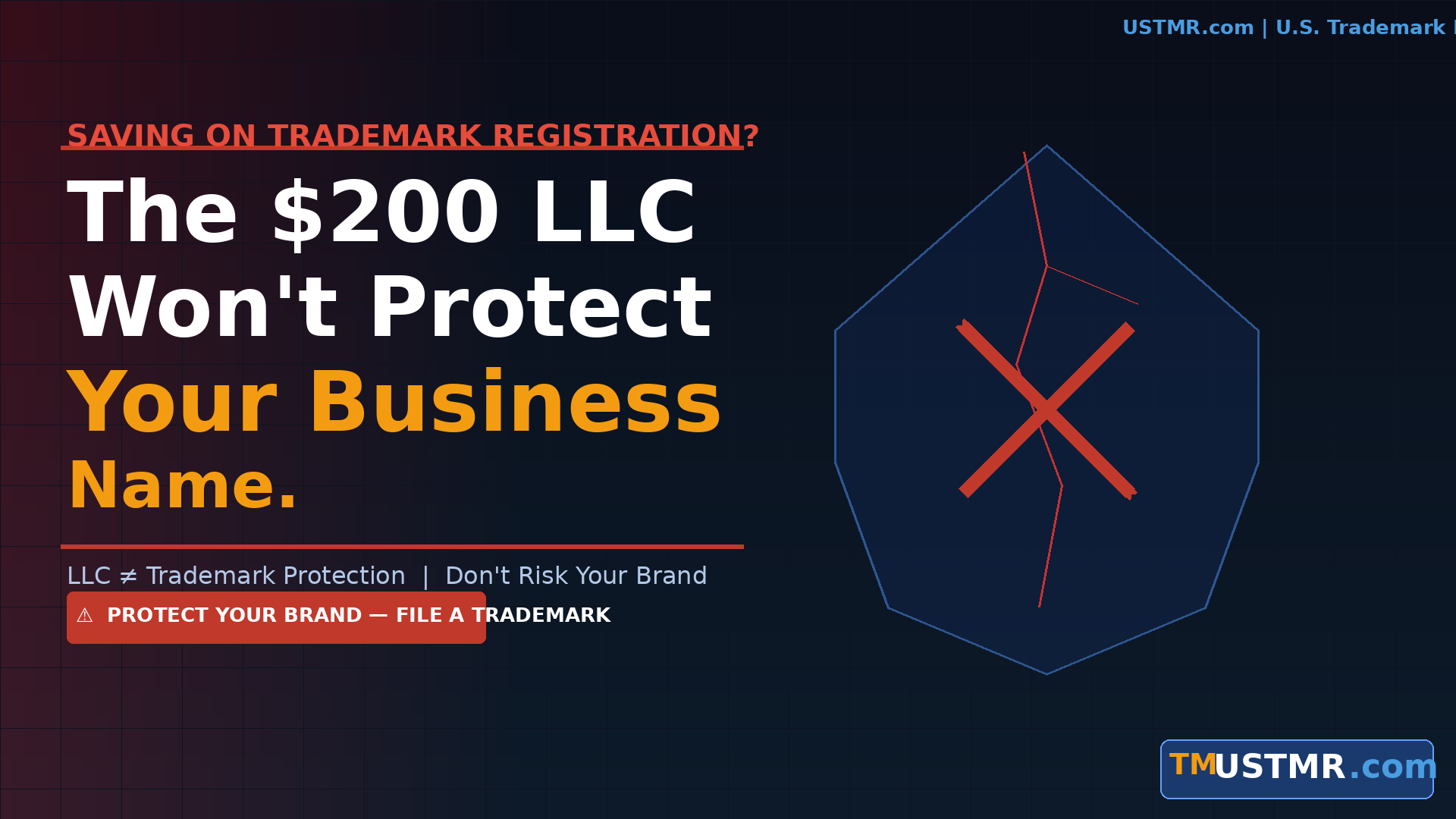
Business owners call USTML all the time with the same confusion: “I just paid $200 to set up my LLC in Texas. Doesn’t that protect my business name?” Short answer? No. Not even close. The LLC protects the owner from getting personally sued if the business goes south. That’s valuable. But it did absolutely nothing to stop someone in California from launching a competing business with the same name as yours.
Most people don’t figure this out until it’s way too late. This is where trademark registration saves you.
What Does an LLC Actually Do?
When businesses file for an LLC with their state, they’re creating a legal business structure. Think of it like building a wall between personal assets and business liabilities. If the business gets sued or racks up debt, creditors can’t come after the owner’s house, car, or personal bank account. That’s valuable protection.
But here’s what an LLC filing does NOT do: it doesn’t give exclusive rights to the business name anywhere outside that state. In fact, it barely gives protection inside the state.
This plays out constantly. Someone forms “Blue Sky Consulting LLC” in Ohio. They spend two years building the business, getting clients, and creating a reputation. Then they Google themselves one day and discover “Blue Sky Consulting LLC” also exists in Michigan, Florida, and New York. All completely legal, sing the same name. All confusing potential customers.
The Ohio business owner is furious. “How can they do this? I filed my LLC first!” The answer: LLC registration is state-specific. The Michigan business filed its LLC in Michigan. The Florida business filed in Florida. Everyone followed the rules. But now there are four businesses with identical names competing for the same customers online.
What a Trademark Actually Does?
Trademark registration is different. When a business registers a trademark with the USPTO, it gets nationwide exclusive rights to that name for its specific type of business. Someone in Florida can’t just copy the name and open up shop. If they try, the trademark owner can shut them down.
Here’s what business owners don’t realize: the LLC name and the trademark don’t have to be the same thing. The LLC might be “Smith Consulting LLC” for legal purposes, but the trademark could be “Smith Consulting” or even just “Smith” as the brand name.
The LLC is about legal structure and liability protection. The trademark is about brand protection and market exclusivity. Businesses need both, but they do completely different jobs.
One USTML client learned this lesson expensively. She formed her LLC, launched her product line, and spent $30,000 on inventory with her brand name printed all over the packaging. Six months later, a competitor filed a federal trademark for basically the same name. The client had been using the name longer but never protected it with a trademark. The competitor got the registration. Now the original business is stuck rebranding everything.
The Cost Difference
Here’s where it gets interesting. Most people spend more money on their LLC than they need to, and not enough on trademark protection.
LLC formation probably costs anywhere from $50 to $500, depending on the state and whether a service is used. Some states are cheap; some are expensive. California hits businesses with an $800 minimum. Delaware is around $90. It varies.
Trademark registration through the USPTO costs $250 per class in government fees. Using a service like USTML to avoid mistakes brings total costs to around $500 to $800. USTML’s trademark registration starts at just $49 plus the USPTO fees.
Similar money for both. But most people prioritize the LLC and skip the trademark because they think the LLC is “the important one.” Then they get blind sided by brand conflicts later.
When Businesses Actually Need Both?
A purely local business with no online presence and no plans to expand might get away with just an LLC. The corner pizza shop that only serves walk-in customers in a five-mile radius probably doesn’t need federal trademark protection.
But businesses doing any of this need both:
Selling products online, even on Etsy or Amazon. Building a brand that extends beyond the immediate neighborhood. Planning to grow to multiple locations someday. Competing in an industry where brand recognition matters. Operating in any kind of digital space where customers from anywhere can find.
That covers about 95% of modern businesses. The internet made geographic boundaries irrelevant. The LLC might be registered in Ohio, but customers are in 40 states. Protection needs to match the actual market reach.
E-commerce sellers especially get crushed by this. They form their LLC, launch on Amazon, and then get destroyed by knock-off sellers because they don’t have trademark protection. Amazon’s Brand Registry requires a registered trademark. Without it, sellers are defenseless against hijackers who jump on listings and tank sales.
What Happens When Businesses Skip One?
Skip the LLC; keep just the trademark? There’s brand protection but zero personal liability protection. If someone sues the business, they can go after everything the owner has personally. House, savings, car. That’s a terrible risk.
Skip the trademark and keep just the LLC? There’s liability protection but zero brand protection. Competitors can copy the name. Customers get confused about which business is which. Brand equity gets diluted across multiple businesses that the owner doesn’t control.
The smart move is having both. They’re not that expensive when considering what they protect.
The Timeline That Actually Makes Sense
Form the LLC first. A legal business entity is needed before properly filing for a trademark anyway. Get the federal EIN, open the business bank account, and get the basic structure in place.
Then, before spending serious money on branding, packaging, or marketing, get a comprehensive trademark search. This is the step everyone skips and later regrets. Businesses need to know if their name is actually available for trademark registration before investing thousands in building a brand around it.
If the search comes back clear, file for the trademark immediately. Don’t wait. Don’t think, “I’ll do it when I’m bigger.” File now while there’s priority. The USPTO grants trademark rights based on first-to-file in most cases. Every day of waiting is another day someone else could file first.
Once the trademark is filed, the business can start using the TM symbol. When it’s registered (8 to 12 months later), switch to the ® symbol. That ® tells everyone the brand is officially protected by federal law.
The Real Cost of Confusion
The whole system seems designed to be confusing. State business registrations, federal trademark registrations, DBAs, trade names, and about fifteen other terms that all sound similar but mean different things.
But here’s what it boils down to: the LLC protects the owner personally. The trademark protects the business brand. Most businesses need both. They cost about the same. Neither should be skipped because someone thinks the other one provides coverage.
Businesses that get this right from the beginning save themselves from expensive nightmares later. The ones that skip trademark protection end up either losing their brand name or spending five figures on legal battles and rebranding.
USTML can’t help with LLC formation, but we make sure trademark applications get filed correctly so businesses aren’t fighting brand conflicts three years down the line.