

Launching a business in one state is challenging enough. Expanding into multiple states brings a different set of opportunities and risks. One of the most common misunderstandings among growing businesses is the belief that operating in several states automatically creates nationwide ownership of a business name.
It is easy to understand why so many founders think this way. If customers recognize your brand in Florida, Texas, California, and New York, it feels like the name belongs to you across the country. Unfortunately, trademark rights law does not always follow business logic. Many companies discover this only after receiving a legal notice, finding a competitor with a similar name, or attempting to expand into a new market.
The reality is that operating in multiple states and owning nationwide trademark rights are two very different things. Understanding that difference can save a business from costly disputes, forced rebranding, and growth interruptions.
Why Business Registration Does Not Create National Trademark Rights?
Many business owners begin by registering an LLC or corporation in their home state. Some later register foreign entities as they expand into additional states. While these registrations are important for legal and tax purposes, they do not automatically create trademark rights across the United States.
A state business registration simply allows a company to operate legally within that jurisdiction. It does not guarantee exclusive ownership of a brand name nationwide. In fact, state agencies generally do not perform the same level of trademark review that the USPTO conducts.
This means two businesses in different states may legally exist with similar names. The conflict often remains hidden until one company expands, increases advertising, or enters the other’s market.
Many founders assume that because a state approved their business name, the name must be legally available everywhere. That assumption has created countless trademark disputes over the years.

The Difference Between Common Law Rights and Federal Trademark Rights
In the United States, trademark rights can exist even without federal registration. These are known as common law trademark rights.
When a business uses a name in commerce, it may develop rights within the geographic area where consumers associate that name with the business. This protection can be valuable, but it is often limited.
Imagine a regional restaurant chain operating throughout several Midwestern states. The business may have strong common law rights in those markets. However, those rights may not automatically extend to other regions where the brand has little or no presence.
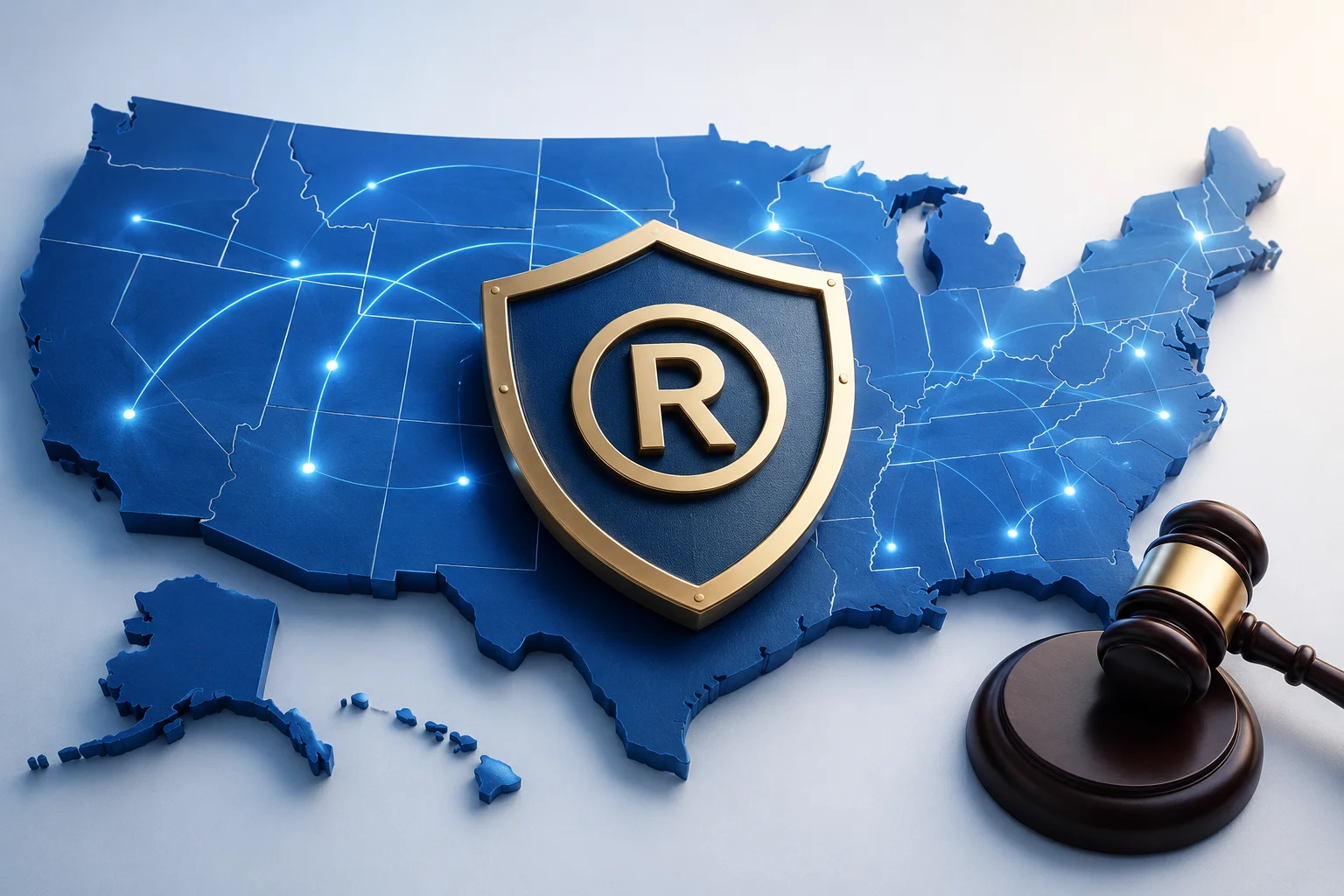
Federal trademark registration changes the equation significantly. A federally registered trademark provides nationwide protection and establishes a public record of ownership. It also creates stronger legal tools for enforcement if conflicts arise later.
The distinction becomes especially important when a business begins scaling aggressively across state lines.
What Happens When Another Business Uses a Similar Name?
One of the biggest risks for growing companies is discovering that another business has been using a similar name elsewhere in the country.
This situation is more common than many founders realize. The United States has millions of active businesses, and name conflicts occur regularly. Sometimes the issue involves direct competitors. In other cases, the businesses operate in related industries that could create customer confusion.
The legal question usually centers on the likelihood of confusion. Courts and trademark examiners do not ask whether two names are identical. They ask whether consumers are likely to believe the businesses are connected.
This is why companies with names that sound similar, look similar, or create a similar commercial impression often find themselves in conflict.
A business can spend years building brand recognition only to discover that expansion plans are blocked by an existing trademark owner.

How Expansion Creates New Trademark Risks?
Growth is exciting, but expansion often exposes legal vulnerabilities that remained hidden during the early stages of a business.
A company operating in a limited geographic area may never encounter another brand with a similar name. Once advertising budgets increase and new markets are entered, the situation changes.
Search visibility expands. Marketing campaigns reach larger audiences. Competitors become aware of the brand. Customers begin encountering multiple businesses with similar names.
At this point, trademark conflicts become much more likely.
This is one reason experienced founders and investors often view trademark protection as a growth strategy rather than a legal formality. The cost of addressing trademark issues early is usually far lower than the cost of fixing them after expansion begins.
The Cost of Discovering a Trademark Problem Too Late
Many business owners underestimate the financial consequences of a trademark dispute.
Changing a name is rarely as simple as updating a logo.
A rebrand can require replacing packaging, signage, websites, social media profiles, advertising campaigns, product labels, and marketing materials. Existing customers may become confused. Search rankings can suffer. Brand recognition built over years may be weakened.
For e-commerce businesses, the impact can be even greater. Product listings, reviews, marketplace accounts, and customer trust often depend heavily on brand identity.
Some businesses spend tens of thousands of dollars correcting a problem that could have been identified much earlier.
The larger the company becomes, the more expensive a rebrand usually gets.
Why Trademark Searches Matter Before National Expansion?
Many founders perform basic Google searches before choosing a name. Some check domain availability. Others search social media platforms.
While these steps are useful, they are not enough.
Trademark conflicts are not always obvious. Similar marks may exist under different spellings, related industries, or alternative branding formats.
The USPTO evaluates trademarks based on consumer confusion rather than exact duplication. This means a name that appears available at first glance may still present legal risk.
A thorough trademark review helps businesses understand whether expansion plans could create future conflicts.
For companies planning long-term growth, professional trademark services often become an important part of risk management and brand strategy. Businesses seeking nationwide protection frequently begin by evaluating their trademark position before entering new markets. Learn more about available trademark services here:
How Federal Registration Supports Long-Term Growth?
Federal trademark registration offers advantages that become increasingly valuable as a company grows.
A registered trademark strengthens ownership claims and provides nationwide priority in many situations. It also creates stronger enforcement rights against infringing businesses.
Registration can support marketplace protection, licensing opportunities, investor due diligence, and future business transactions.
Investors, buyers, and strategic partners often examine intellectual property assets during due diligence. A protected brand is generally viewed as a stronger business asset than an unregistered one.
For founders building companies with long-term ambitions, trademark protection often becomes part of the foundation of enterprise value.

The Question Every Expanding Business Should Ask
The most important question is not how many states your business currently serves.
The real question is whether your brand has the legal protection needed to support future growth?
Many businesses successfully operate across multiple states without federal trademark registration. Some never encounter problems. Others discover conflicts at the worst possible moment, after years of investment and expansion.
The goal is not simply to avoid legal disputes. It is to create a brand foundation that supports growth with confidence.
A business name can become one of a company’s most valuable assets. Protecting it properly becomes increasingly important as the business expands beyond its original market.
Conclusion
Operating in multiple US states does not automatically provide nationwide trademark protection. Business registrations, domain ownership, and geographic expansion are not substitutes for federal trademark rights.
As a company grows, trademark issues become more complex and more expensive to resolve. The safest approach is to evaluate brand protection before major expansion plans are underway.
Businesses that align trademark strategy with growth strategy are often in a stronger position to protect their identity, preserve customer trust, and expand without unexpected legal obstacles.
Frequently Asked Questions
Does registering an LLC protect my business name nationwide?
No. An LLC registration allows you to operate legally but does not automatically create nationwide trademark rights.
Can two businesses have the same name in different states?
Yes. Depending on the circumstances, businesses may coexist in different regions. However, conflicts often arise as markets overlap.
Do I need a federal trademark if I already operate in several states?
Not always, but businesses planning continued growth often seek federal registration to secure stronger nationwide protection.
What happens if another company trademarks a similar name?
The outcome depends on factors such as priority of use, geographic presence, registration status, and likelihood of confusion.
When should a growing business consider trademark protection?
Many businesses evaluate trademark protection before major expansion, significant marketing investment, or entry into new markets.