


Most brand owners know they need a trademark. Few know that the application they file depends entirely on one question: is the mark already in commercial use, or not yet?
The answer determines the filing basis, and the filing basis determines the cost, timeline, and how soon protection actually begins. Choosing the wrong one creates paperwork problems at best and a rejected application at worst.
We walk every client through this decision before filing. Here is exactly how both bases work and which one fits different situations.
What Does “Intent to Use” Mean?
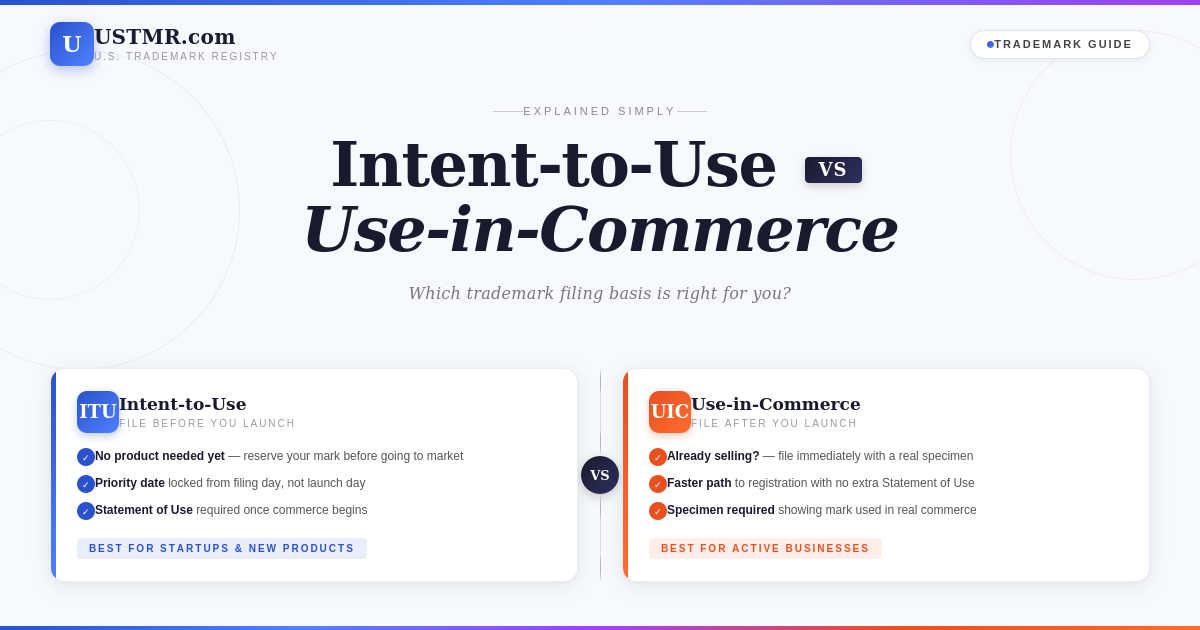
An intent-to-use trademark application lets a business claim a mark before it has started selling anything under that name. The applicant must have a genuine, bona fide intention to use the mark in commerce, but commercial activity does not need to exist at the time of filing.
This is important for one critical reason: priority. In the US trademark system, rights generally go to whoever uses a mark first. Filing an intent-to-use locks in a priority date immediately. If a competitor tries to register the same or a confusingly similar mark after your filing date, your earlier date takes precedence, even if they start selling before your product launches.
Think of it as planting a flag. The filing tells the USPTO and any future competitors that this name belongs to your brand, backed by a legal claim with a specific date attached to it.
What Does “Use in Commerce” Mean?
A use-in-commerce trademark application is filed after the mark is already active in the market. The business is selling products or delivering services under the name at the time of filing, and they include a specimen proving it.
This basis has fewer moving parts. The specimen goes in with the initial application. There is no Statement of Use to file later. The path to registration is more direct because the commercial use requirement is satisfied on day one.
Established brands, businesses relaunching under a new name, and founders who delayed filing until after launch all typically use this basis. The trade-off is a priority date that starts at filing, not before. Any gap between when use began and when the application was submitted is a window where someone else could have claimed the name.
When to File Each Type?
The right basis comes down to timing and readiness:
- File an intent-to-use when the brand name is decided, but the product or service is not yet available to buyers. This fits startups in development, businesses planning a rebrand, or any situation where launch is still weeks or months away.
- File use-in-commerce when the mark is already active, and a genuine specimen is available showing the name in real commerce. Waiting until after launch to file means missing the chance to lock in an earlier priority date.
One pattern we often see: founders hold off on filing until after launch, believing they need live sales first. By the time the application goes in, a competitor may have already filed the same name. An earlier intent-to-use filing would have secured the priority date before any of that happened.
Statement of Use: What Comes After Intent-to-Use?
Filing an intent-to-use is not the end of the process. After the USPTO approves the application and publishes the mark, a Notice of Allowance is issued. From that point, the applicant has six months to file a Statement of Use, proving commercial activity has actually started.
The Statement of Use requires a real specimen showing the mark in active commerce, the same type of evidence a use-in-commerce filer submits upfront. Without it, no registration certificate will be issued, regardless of how long the application has been pending.
Extensions are available if six months is not enough time. Each one adds another six months, but they come with fees that accumulate fast.
Extension Costs: Budget for These Early
Each Statement of Use extension costs $125 per class, per six-month extension. Up to five extensions beyond the initial period are available, covering a total of three years from the Notice of Allowance.
A two-class application needing three extensions past the initial window adds up to 3 extensions x 2 classes x $125, which equals $750 in extension fees alone. Combined with original filing costs, that number gets meaningful fast for a bootstrapped startup.
We walk every intent-to-use client through these projections before filing. Matching the extension budget to a realistic launch timeline is part of our filing strategy, not a conversation we have after the fees have already hit.
Timeline Differences
A clean use-in-commerce application runs 8 to 12 months from filing to registration. Examination, publication, and certificate issuance happen in one continuous sequence once use is established upfront.
An intent-to-use application adds a second phase. After examination and publication, the Notice of Allowance opens the Statement of Use window. That filing, once accepted, leads to the certificate. On a fast track with no complications, intent-to-use applications typically take 12 to 18 months total.
The extra time is the cost of protecting the priority date before the product is live. For most startups, that trade is worth it. For businesses already generating sales, use-in-commerce reaches the finish line faster.
Which Basis Fits Your Situation?
A simple breakdown:
- Pre-launch startups: File intent-to-use. The name is the asset. Protecting the priority date now costs far less than disputing ownership later.
- Established businesses already using the mark: File use-in-commerce. A specimen already exists. There is no benefit to delaying.
- Businesses are uncertain about launch timing: File an intent-to-use with a conservative estimate and budget for extensions. They exist for exactly this situation.
Choosing the wrong basis does not always kill an application, but it creates problems that slow things down and cost money to correct. Picking correctly at the start is easier than fixing it under deadline pressure.
The Priority Date Advantage
Priority date is the single most important concept in US trademark law. It determines who wins when two parties claim the same or a similar name. Earlier always wins.
An intent-to-use filing stakes a claim before a single unit ships. A competitor who launches under a confusingly similar name after your filing date cannot claim senior rights, even if they are actively selling while you are still in development. That protection is real, and it begins the day the USPTO timestamps the application.
We have seen this matter directly for clients. An intent-to-use filing we submitted for one brand was followed three months later by a competitor’s nearly identical application. The priority date was the deciding factor. Our client’s rights are held. Without the early filing, the outcome would have been far harder to defend.
We Help You Choose the Right Filing Basis
The difference between intent-to-use and use-in-commerce is straightforward once the variables are on the table. What takes experience is reading those variables correctly for a specific business, timeline, and product category.
At U.S. Trademark Registration (USTML), we review each client’s situation before recommending a filing basis. Launch date, budget, class count, and specimen availability all factor into the recommendation. Our trademark registration services include a filing strategy review so clients know exactly what they are submitting and why before anything goes to the USPTO.
For intent-to-use clients, we stay involved through Statement of Use filing, extension requests, and specimen review as the launch approaches. Filing is the start. We handle the rest.
Not sure if the name is even available? Start with our free trademark search before anything else. Then we will tell you which filing basis fits and what to expect from there.