
Trademark services exist for one purpose: to turn your business name and logo into legally enforceable assets, not just branding elements.
Without that protection layer, your name and logo are just identifiers. With it, they become rights you can defend, license, and scale under the authority of the United States Patent and Trademark Office.
That difference is what separates a brand you control from one you merely use.
Business name is more vulnerable than you think
Most founders assume that once they start using a name, it’s theirs. It feels logical. You created it. You’re operating under it. Customers recognize it.
But trademark law doesn’t work on assumptions. It works on priority and protection.
If your name is not registered, your rights are limited. They are tied to where you operate and how widely you are known. Someone in another state can adopt a similar name and build under it without immediately violating your rights.
Worse, if they file a federal trademark before you, they can gain a stronger legal position, even if your business existed first in a smaller scope.
This is how brands lose control of their own identity.
Trademark is actually a shield
Trademark protection is not just about stopping exact copies. It protects against something more subtle and more dangerous: consumer confusion.
That means if another business uses a name or logo that is similar enough to make customers think there is a connection, you have the right to challenge it.
This applies even when:
- The spelling is slightly different
- The logo is not identical
- The wording is rearranged or modified
What matters is the overall impression in the marketplace.
This is why trademarks are powerful. They don’t just guard your exact design. They guard the space your brand occupies in the mind of your customer.
Difference between a name, a logo, and a trademark
Name Vs. Logo Vs. Trademark is still a confusing and trending argument
It’s easy to treat these as the same thing, but legally, they are different layers.
Your business name is how you are identified. Your logo is how you are visually recognized. A trademark is the legal protection applied to those elements.
You can operate with a name and a logo without a trademark. Many small businesses do.
But without registration, you are relying on informal rights. Those rights are weaker, harder to enforce, and often limited to your immediate geographic area.
Trademark services formalize that protection and extend it across the United States.
Trademark services protect your name step by step: A glimpse of the procedure
- The protection process is not a single action. It is a sequence that builds legal strength around your brand.
- It starts with evaluating whether your name or logo can actually be protected. Not every name qualifies. Generic or highly descriptive names often face rejection because they don’t distinguish your business clearly enough.
- From there, the process moves into filing, where your trademark is submitted with the correct classification and description. This determines where your protection applies and how it is enforced later.
- After filing, your application is examined. This is where conflicts, clarity issues, or technical problems are identified. If handled correctly, the application moves forward. If not, it can stall or fail.
- Once registered, the trademark gives you enforceable rights. You can prevent others from using confusingly similar branding and take action if infringement occurs.
- Trademark services exist to manage each of these stages properly, because mistakes at any point weaken the final protection
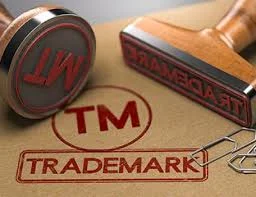
Logos need protection as much as names
Many businesses focus on trademarking their name but overlook their logo.
This creates a gap.
Your logo is the most recognizable part of your brand. It’s what appears on packaging, ads, websites, and social media. If it’s not protected, someone can create a visually similar design and operate in a way that confuses your audience.
Trademarking a logo protects its visual identity, not just the wording. It ensures that the design itself cannot be copied or imitated in a way that affects your brand.
For businesses that rely heavily on visual branding, this protection is just as important as the name.
When your brand is not protected you are open to sudden risk
The risks are not always immediate, which is why many businesses underestimate them.
At first, everything seems fine. You operate under your name, build recognition, and grow your presence.
Then one day, you discover:
- Another business using a similar name in your industry
- A competitor filing a trademark that overlaps with yours
- Marketplace listings appearing under confusingly similar branding
At that point, your options are limited.
Without a registered trademark, enforcement becomes harder. You may need to rely on weaker claims, negotiate from a less favorable position, or in some cases, consider rebranding.
That’s when the cost of not having protection becomes clear.
USTML trademark services in preventing these problems
Trademark services are not just about filing paperwork. They are about reducing risk before it becomes visible.
A well-structured service like united states trademark registrations and law – USTML looks at:
- Whether your name or logo is likely to face conflict
- Your filing aligns with your actual business activity
- Your application meets USPTO standards
- How your trademark is monitored and maintained after registration
This proactive approach prevents issues later.
Because once a conflict appears publicly, the cost of resolving it is always higher than the cost of preventing it.
USTML protect your name and logo the right way
Most trademark services focus on getting an application submitted. united states trademark registrations and law – USTML focuses on getting it right from the start.
That means aligning your trademark with your actual business model, ensuring your description pass examination, and reducing the chances of rejection or delay.
It also means not leaving you after filing. Trademark protection is a process, not a single step, and visibility during that process matters. For business owners, the difference shows up in fewer surprises and stronger protection at the end.
Your business name and logo are more than branding elements
They are assets that can either be protected or exposed. Without trademark protection, you are using a brand. With it, you own it.
And that trademark ownership gives you the ability to grow without looking over your shoulder ever. Play safe!