

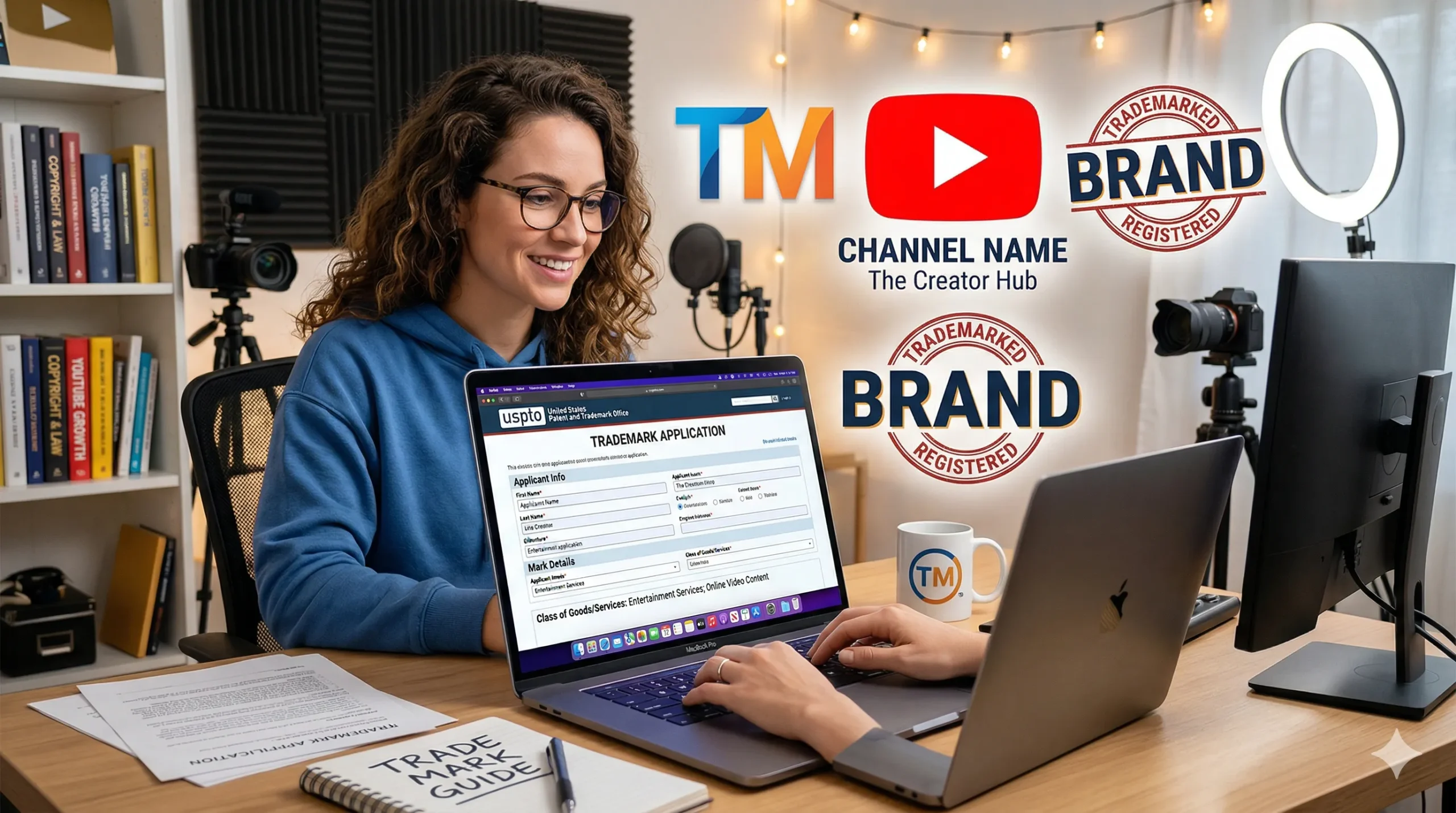
A YouTube channel can turn into a successful business. You invest years building an audience, developing recognizable content, and creating brand associations that viewers use to find you specifically. The name, visual identity, catchphrases, and merchandise line connected to your channel, including everything, have commercial value that grows with your audience. What surprises many creators is how vulnerable that investment is without trademark protection. Platform handles are not the same as legal rights. YouTube has no mechanism to adjudicate trademark ownership between competing channels. Copycats, impersonators, and unauthorized merchandise sellers are active problems in every content category. Here is precisely how to protect your YouTube brand through federal trademark registration.
What Parts of Your YouTube Brand Can Be Trademarked?
Trademark registration for YouTube channels can cover several different brand elements, and understanding each one helps you build a complete protection strategy.
Your channel’s name is the primary candidate. If you use a consistent channel name that your audience uses to find and identify your content, and if that name is distinctive rather than purely descriptive, it may qualify for federal trademark protection. The name “MrBeast” is a prime example of a distinctive channel name that functions as a brand. A channel called “Daily Cooking Tips” describing its content category is significantly harder to register.
If you consistently use a distinctive channel logo or visual identity, you can register it as a design mark. Your show title or series title, if it has developed an independent audience, is another identifiable element. You can potentially register any branded phrase or tagline that your audience specifically associates with your channel.
Brand protection services for YouTube creators focus on the elements that drive audience recognition and commercial value. The trademark strategy should protect what makes your channel uniquely identifiable and what your audience would use to intentionally seek you out.
Why a YouTube Handle Is Not the Same as Trademark Rights
This is the most important thing for creators to understand. Claiming a channel handle on YouTube gives you that handle on that platform. It gives you nothing else.
Federal trademark filing is the only mechanism that creates enforceable legal rights in your brand identity. YouTube does not adjudicate trademark disputes between competing channels. If two channels use similar names, YouTube has no system for determining who has superior trademark rights. The platform may act on verified trademark infringement reports, but those reports require you to have actual trademark rights established outside the platform.
A creator who has built a channel under a name for five years with no trademark registration has common law rights in the geographic areas where they have conducted commercial activity. Another creator filing a federal trademark application for the same name today may establish federal registration rights that complicate the first creator’s position outside their established territory. Waiting to file is always a risk in trademark strategy.
Which trademark classes are relevant for YouTube channels?
Trademark application services for YouTube and other content creators most commonly work with the following classes.
Class 41 covers entertainment services, education, and online content creation. This is the foundational class for any creator whose commercial activity centers on producing video content. Registration in Class 41 protects your channel brand in connection with the content production and entertainment services you provide.
Class 25 covers clothing and apparel. If your channel brand appears on merchandise, particularly shirts, hoodies, and hats, Class 25 registration protects your brand name and logo in connection with those products. For creators with active merchandise operations, Class 25 is often just as important as Class 41.
Class 35 covers advertising and business services and may apply to channels that generate revenue through sponsored content, brand partnerships, and promotional services. Class 9 covers downloadable digital content and software, which applies to creators who distribute apps, digital downloads, or software products associated with their channel brand.
The Specimen Challenge for YouTube Channel Trademarks
Trademark protection solutions for YouTube creators include navigating the specimen requirement carefully. The USPTO requires a specimen showing the mark being used as a source identifier in commerce in connection with the specific goods or services in the application.
For a Class 41 entertainment services application, acceptable specimens typically include a screenshot of your YouTube channel page showing the channel name clearly associated with the entertainment services being provided, a screenshot of your channel home page showing the name or logo in a commercial context, or advertising materials promoting your channel as a commercial entertainment service. The key is that the specimen must show the mark functioning as a brand identifier for a service being offered commercially, not simply as a label or description.
For a Class 25 merchandise application, a specimen showing your brand name or logo on actual merchandise that has been sold, or a screenshot of a merchandise store page where the branded products are offered for sale, satisfies the requirement.
Filing Before Your Channel Launches or While It Is Growing
Trademark management services for creators consistently recommend filing earlier rather than later. An intent-to-use application allows you to establish your trademark priority date before you launch a channel or before you have begun commercial activity. This is valuable if you have chosen a channel name and want to protect it before investing in content production.
For creators who are already operating and generating revenue, the urgency of filing is even greater. Every day you operate without trademark registration is a day that someone else could file for a confusingly similar name and begin building competing rights. The filing date determines your federal priority, and there is no way to backdate it.
Your Trademark to Protect Your Channel
YouTube creators can practically use their trademark registration with the help of Online Trademark Services once they obtain it. A federal registration gives you standing to file verified trademark infringement reports with YouTube through its Content ID and trademark dispute processes. Parties with federal trademark registrations resolve platform disputes faster and more consistently in their favor.
Registration also gives you standing to pursue unauthorized merchandise sellers on Amazon, Etsy, Redbubble, and other marketplaces. Brand registry programs on Amazon specifically require federal trademark registration. Without registration, stopping unauthorized merchandise sellers is a slow and often ineffective process.
Protect What You Have Built
united states trademark registrations and law (USTML) helps YouTube creators and digital content brands at every stage of trademark registration. We run comprehensive searches, identify the right class structure for your specific revenue model, prepare and file your application, handle any office actions, and provide ongoing monitoring to protect your brand as your channel grows. Start with a free trademark search today.
Frequently Asked Questions
Can I trademark a YouTube channel name before the channel launches?
Yes. Filing on an intent-to-use basis allows you to establish trademark priority before you launch your channel or begin commercial activity, as long as you have a genuine intent to use the mark in commerce. This is an effective strategy for creators who have chosen a name and want to protect it during the production and launch process.
What if someone already has a YouTube channel with a similar name?
Having a similar channel name on YouTube does not automatically mean there is a trademark conflict. The analysis depends on the similarity of the names, whether both channels are in the same content category and target audience, whether either party has trademark registration rights, and the timeline of each party’s first commercial use. A trademark search and professional assessment will clarify your position.
Does YouTube’s trademark complaint process require a federal trademark registration?
YouTube’s trademark reporting process asks for trademark registration information, but it can accept claims from parties with registered or unregistered trademark rights. However, having a federal registration makes the process more efficient, provides stronger documentation, and typically results in faster and more consistent outcomes in dispute resolution.
Do I need a separate trademark registration for my merchandise and my channel?
You do not need separate applications, but you may need multiple classes within a single application. Your channel name trademark in Class 41 protects it as an entertainment service. A separate class registration, most commonly Class 25 for clothing, is needed to protect the same name or logo in connection with merchandise. A single application can cover multiple classes simultaneously.