


Your Shopify store name appears on product pages, receipts, advertising, and packages. It is how your customers discover you, recall you, and refer their friends to you. Most of the owners use the name as a temporary username rather than as intellectual property.
This is a guide to the process of trademarking the name of your store step-by-step. You will get to know the major decisions, filing processes and most of the pitfalls that lead to delays. On your way, you will meet terms like united states trademark registrations and law Services, Trademark Registration Basics; however, such notions make the process clear.
Before you file, Three Decisions Control your destiny
Check What You are Trademarking
Decision as to whether to trademark the name of the store, the logo and or both. Word mark safeguards the name itself, and not necessarily the font or style. Design mark secures a certain logo. Make your most frequent stores and marketing as your starting point.
Decide Your Filing Basis
In case you currently sell the products between the states, register for use in commerce. Your filing is on intent to use and actual use in the future, in case you do not yet have a launch. Select the basis that can fit your actual case.
Match Goods and Services to What You Truly Sell
The trademark classes classify goods and services. Choose classes that fit your present catalogue and near-future expansion strategy. It is dangerous when you over-generalise categories which you cannot substantiate.
How To: Mark Your Shopify Store Name?
Step 1: Conduct a Real Clearance Search
Use the USPTO database to search using your name and near-misses. Look at sound-alikes, various spacing and singular/plural. Also visit Shopify, Amazon, Instagram, TikTok and domain registrations. A name can be legally free but commercially unsafe when your name loses its space to another search engine.
Step 2: Secure Your Owner Details
Select the type of owner between yourself and your business. Use the same name on your USPTO registration, business records, store-front branding. A later change in ownership involves additional paperwork and time.
Step 3: Select the Right Classes and Descriptions
Choose goods and services descriptions that are appropriate to what you sell now. Whenever feasible, use the accepted language at the USPTO. Proper classes eliminate the risk of Office Action and become easier to enforce. It is a simple trademark registration trick: accuracy is the key to future headaches.
Step 4: Prepare Your Specimen or Proof Plan
Assuming you make an application based on user compiled, clear evidence of the location where customers observe the mark. All works product pages, packaging photographs, and store screenshots. Store images undated and unedited. In case of intent-to-use, make arrangements to demonstrate real use in the future. Don’t guess.
Step 5: Submit an Online Filing at USPTO
Apply with the USPTO using the online system of filing. Check all fields twice and then submit. One little error in your name or signature may cause trouble.
Step 6: Track the Process
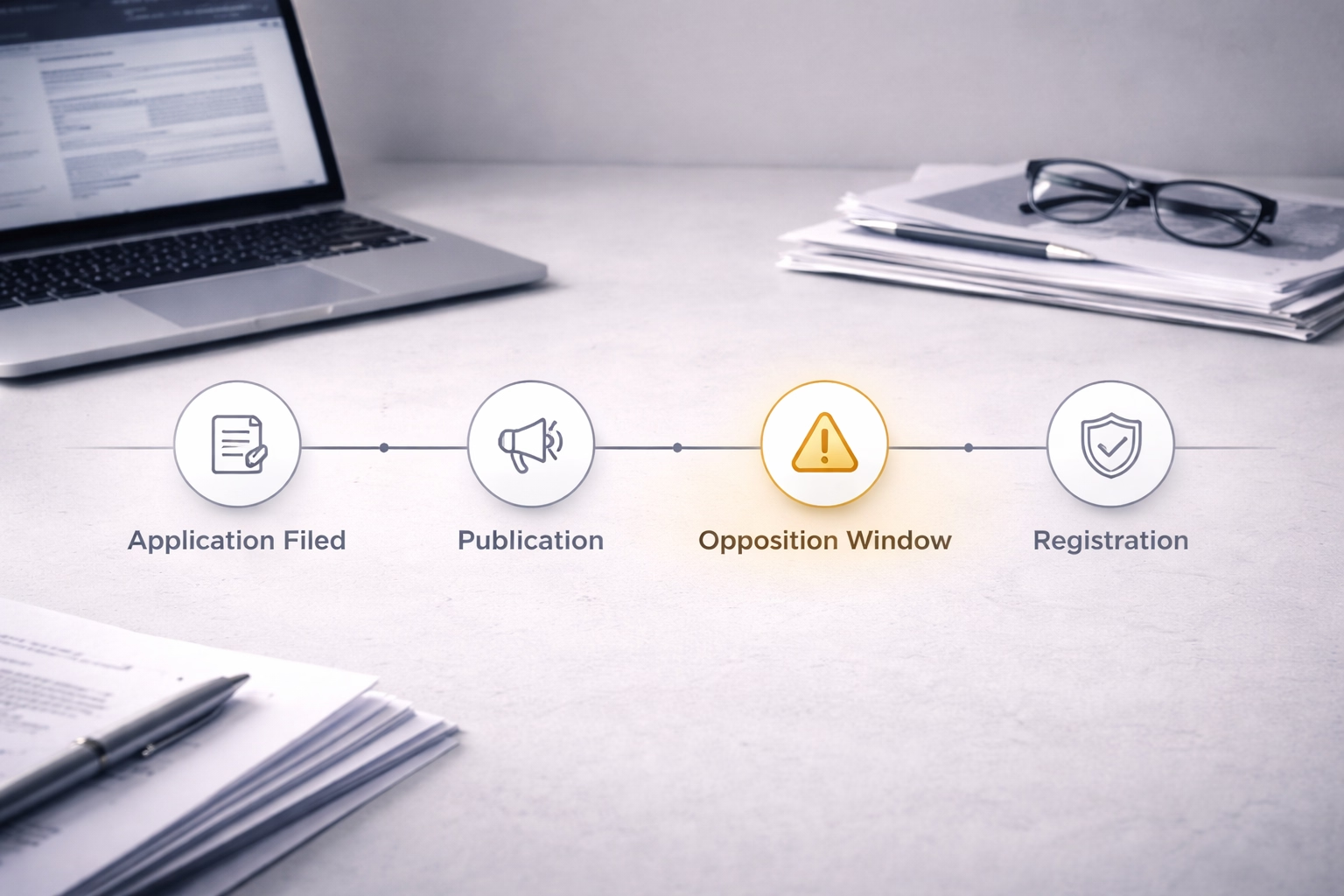
On filing, your application passes through examination, potential Office Actions, publication, and then registration. It can take timelines based on the level of cleanliness of your application and the occurrence of problems. Act in time in case the USPTO needs changes.
Step 7: Monitor the Opposition Window
When your application appears in the Official Gazette, a period of thirty days starts. It is in this window that the third parties may object to your mark. The majority of the applications will pass this phase, but control is essential.
Errors made by Shopify Sellers that led to refusal or delay
- Pre-confirmation Filing Before Conflicts and Variants: Even when a name is not the same but sounds or appears similar, it causes trouble. The risks are lost by searching only for exact matches.
- Choosing Broad or Inaccurate Goods and Services: Inconsistent descriptions with the storefront you actually have invite Office Actions, and undermine your registration. Keep your filing in line with reality.
- Lack of Strength or Inconsistent Branding: Samplings resembling prototypes or failing to present the mark clearly lead to postponement. Create the spellings and logo locations of your store name throughout your Shopify site to have evidence available. Trademark registration fundamentals are the leading cause of most delays, but not misfortune.
A Basic Shopify to USPTO Checklist to Use
Always remember to make sure you have done name searches and provided research before filing. Lock your owner identity and make it the same in the records. Choose classes which correspond to your real catalogue. Get ready, evidence or how to prove evidence next. Clustering documents and dates. Develop a tracking folder for each document and deadline.
In case you prefer to have a checklist led by hand and document scrutiny, united states trademark registrations and law Services can be of use as you retain the power of decisions. The organisation does not take over your work, but rather supports it.
Conclusion
Look before you leap. Select the right foundation and correct categories. Make up clear evidence and register properly in the USPTO. Follow up on your application with examination, publication and registration.
Regular use of your name on Shopify reinforces physical brand awareness and helps enforce it in case of conflict. You must take care in treating your store name as an asset to protect, because you are on solid ground which cannot be drawn out beneath your feet.