

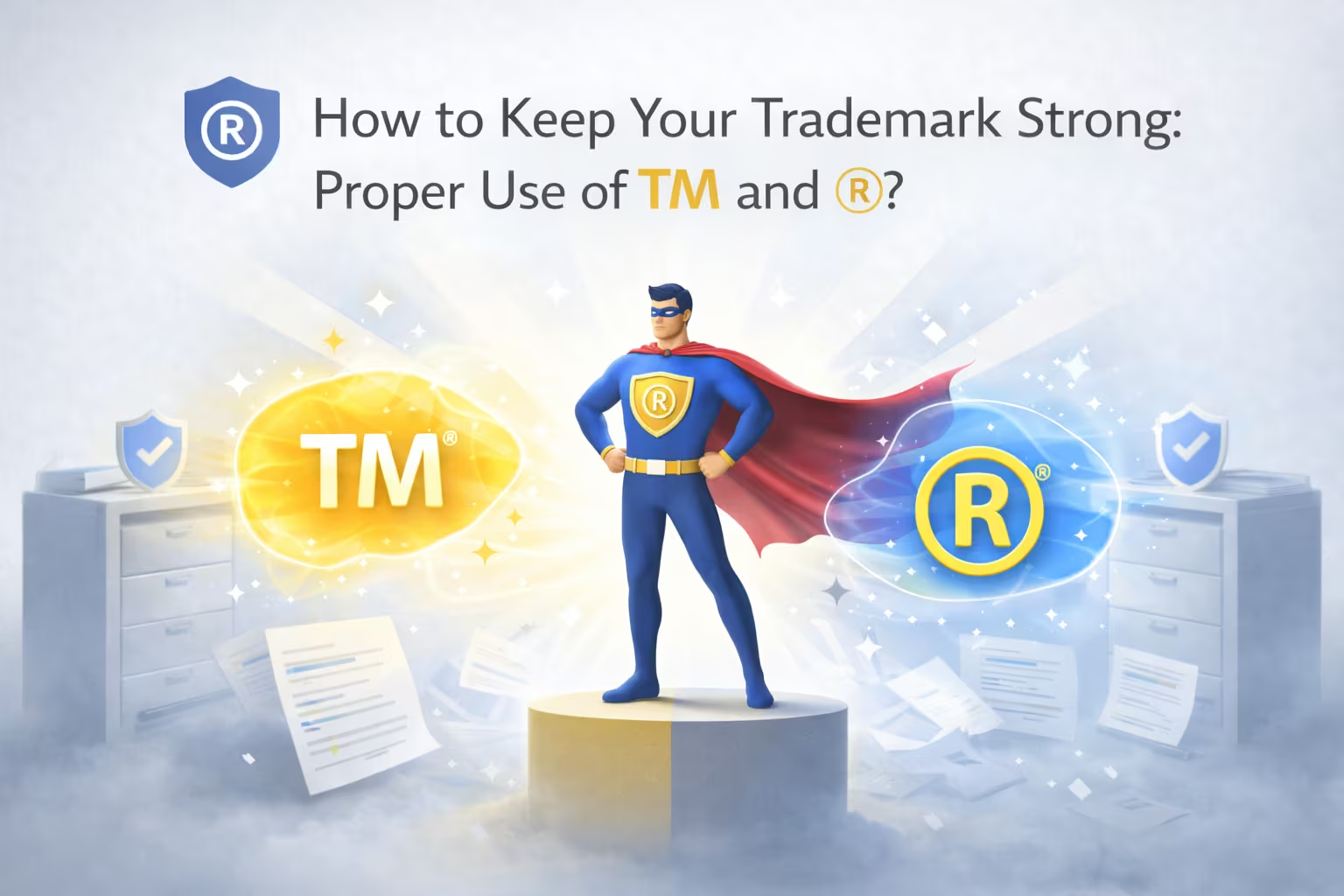
The little icons in front of brand names have a meaning. The sign ® will mark that you are registered with the federal regime. The ™ sign indicates that it is an implication of ownership even though the mark is not registered. No symbol enables rights by itself, but both initiate an open statement which can discourage the violators.
You must use them correctly. There are legal issues related to the misappropriation of the ®. Failure to mark your brand at all dilutes the enforcement in future. This manual describes when to employ each sign, common pitfalls to take care of, and easy tips that keep your trademark vibrant.
You will also notice terms like Trademark Services, USTML and united states trademark registrations and law Services and at least these terms are frequently discussed in the context of trademark strategy and enforcement.
tm vs (r) Before You Use Them, Know the Difference
Use TM in Cases where You Claim a Mark but An Unregistered Mark.
The ™ is used to signify that you are the owner of a trademark and to goods. SM symbol marks a service mark, although in most cases ™ is used by businesses that deal with goods and services. You are free to use ™ immediately you start using a brand name in business, even before you have applied. It warns the masses that you own it.
Use (r) Upon USPTO Registration
The ® symbol indicates that your mark is registered with the United States Patent and Trademark Office. They may not use it until registration is finished, or in relation to goods or services not in your registration and so doing amounts to a violation of federal laws. It may also lack credibility as it can be checked by the rival competitors. In the U.S., the ® is to be used only with federally registered marks, so be sure you have it before you add it.
Word placement ™ or (r): Where and How?
Place it right-First, Most prominent use
Include the symbol in the earliest or the most notable appearance of your brand name. On the web page, select the homepage hero or header. On the package, put it on the front side. When in an app store, place it in the listing title. There is no need to do it all the time, but it is always good to write down the major areas of usage to reinforce your argument.
Keep Formatting Consistent
Use the mark in superscript where possible, i.e. BRAND TM or BRAND TO. Always be consistent with spelling, space, and capitalisation. It is advisable not to use your trademark as a verb or a plural noun, which will dilute singularity. When naming your brand, is USTML software always spelt in the same form, as it is not USTML it or a USTML?
ABA Use of Trademarks Properly and Makes Your Mark Strong.
Don’t You Use Your Mark as an Adjective, but as a noun or a verb?
Register your trademark as an adjective which can be tacked to a generic noun. As an example, there is a difference between saying Kleenex tissues, but not a Kleenex. When your brand name ends up becoming the generic term in a category, it faces the danger of genericide, losing registration due to not being used to identify your origin.
Make Marks Visually Differentiated
Stand out your brand name in the marketing materials. Capitalisation should be used consistently, in a different font, bold or colored. Similarity in the visual is a sign that the word is not just a normal text but a trademark.
Match the Mark with a Generic Descriptor
A combination of your brand and what you sell always goes well, e.g. BRAND analytics platform. This informs the customers literally what the mark is, and prevents it from being a generic name. Such usage guidelines are found in the protection packages of many professional Trademark Services.
Top Ten Common Descriptions of the Fallacies of Trademarks
- The use of too many symbols or incorrectly used ones: It is clumsy to add ® to all mentions. More to the point, the misuse of ® to designate unregistered variants deceives society and contravenes the USPTO regulations. Keep the symbol of registered marks reserved and employ it tactfully.
- Modifying the Mark over Time, but not Strategy: Alterations to logo versions, space or capitalisation will confuse the consumers and undermine your argument. In case you change your brand, do not change it without intent, and write about it. Growth creates awareness; chaos ruins it.
- Allowing other people to misuse your Mark: Your rights are lost whenever your brand name is used improperly by resellers and influencers, or if it is being sold by unauthorised individuals. A strong trademark should be policed against inappropriate usage. Registration through united states trademark registrations and law Services provides finer enforcement mechanisms, but regular attention is important regardless of registration.
Easy Brand Principle Checklist: You may follow
Choose the spelling and capitalisation of your mark and record it. Indicate placement of ™ or ® -first mention, packaging, product pages, site footer. Write a short list of Do’s and Don’ts in your group of partners and team. Keep examples of proper uses of words of date.
These steps will cushion against brand investment. Regardless of whether you write your own guidelines or apply USTML guidelines, it is vital to ensure consistency. Find problems that are prone to becoming entrenched through regular usage audits, which is usually suggested by Trademark Services.
When to Seek Help
Expert review can be considered with replicators, with national expansion, brand licensing, and brand expansion. Professionals in the trademark field are aware of the peculiarities of use, protection, and support of registration. Brand owners can be supported by United States Trademark Registration Services or Trademark Services during these issues.
Conclusion
Use ™ from day one. Reserve ® Marks registered in the USPTO. Always use the same spelling, formatting, and application of your brand name. Record the manner in which you use the mark to be able to establish it in case of dispute later.
The practices you engage in today will either make your trademark remain enforceable tomorrow. It does not cost anything to use but protects everything.