


There is a brand name, a logo, and a date of launch. Then you know that trademark registration is not a week-long process. Time is relative as there are several aspects affecting the process, including USPTO examination lines, Office Actions, opposition timeframes, and faster response to requests.
Being aware of such phases makes you plan in real terms instead of wishing things to go well. This guide describes what will be done at each stage, how much time is normally spent at each stage and what is under your own control. In the process, you will come across such terms as Trademark Services and USTML. These names are seen in the context of effectively seeking your way through the registration process.
The Planer English Typical Timeline
The conventional experience of the majority of applicants
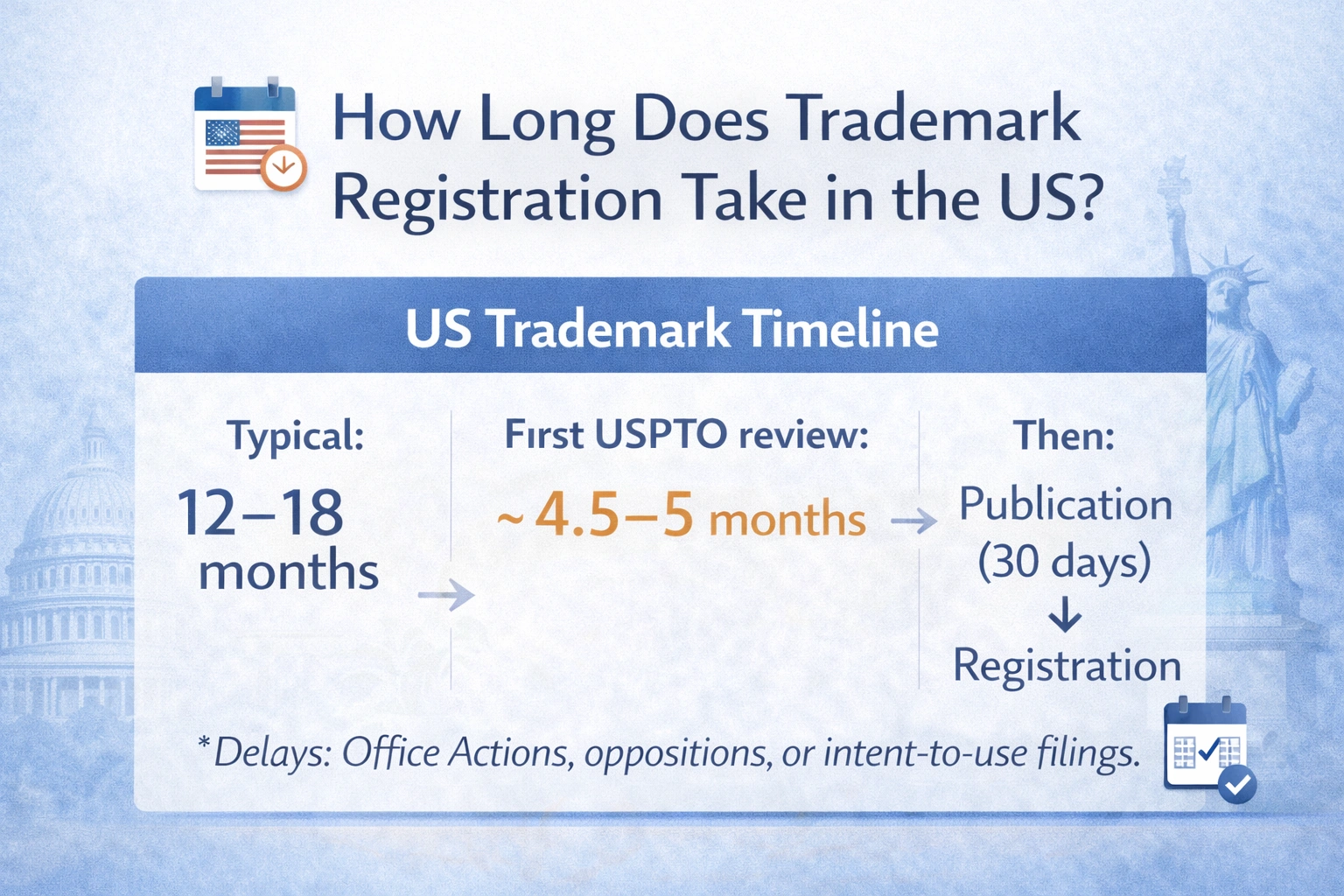
The duration between a normal trademark application upon filing and registration is between twelve and eighteen months, provided there are no significant issues. Applications take a certain amount of time to complete. This is timed to the level of cleanliness of your application, any concerns raised by the examiner and also whether any other party will challenge your mark.
The Main Stages You will be going through
The first thing that you do is to file your application. A reviewing attorney reviews it in terms of federal rules. Should the attorney notice issues, it will issue an Office Action, and you have to respond. After the exam has been finished, the mark becomes publishable to the opposition. Where nobody complains, the application proceeds to registration. Intent-to-use marks require additional measures following publication.
Use-in-Commerce Filings: Timeline
File Clean from Day One
Proper and precise application is faster to process. Search for full conflict before filing. Offer descriptions of your products and services that are applicable. Give an example of the mark in actual use. Mistakes in this case might slow down an entire process.
Wait until the First Examination
The USPTO allocates applications to lawyers according to the sequence of filing. The current average wait times stand at several months. The attorney examines your marks against existing marks, ensures that your specimen and application match, and that your mark satisfies registration criteria.
How to Respond to an Office Action Without Losing Momentum?
Approximately half of all applications get an Office Action. Common problems are descriptiveness, problems with the specimen, or the likelihood of confusion. You get three months to reply. Quick, transparent responses keep the process going. Unclear or partial responses lead to further clarification and lengthening of the process.
- Publication and the Opposition Window: Upon acceptance of the exam, the mark is included in the Official Gazette of the USPTO. Third parties can submit an opposition within a period of 30 days. The majority of applications pass this phase, and an opposition may introduce a considerable delay.
- Registration After Publication: In case no opposition is raised, and no concern is raised, the USPTO will grant a registration certificate. This mark has become federally registered, and you could use the ® symbol on all goods and services that are related.
Intent-to-Use Filings: Why These Reports Can Be Lengthy
- The Front Half Looks Similar: The intent-to-use applicants apply due to the fact they intend to utilise the mark in business in the near future. USPTO cases these applications as it cases use-based ones. It is the same in the exam and publication stages.
- You Get Allowance of Permission and Not a Registry: Intent-to-use applicants are awarded a Notice of Allowance after a period of publication and opposition. This is to inform you that the mark is approved, but can not be registered until you demonstrate that you are actually using it in commerce.
- Total Timeline worries Statement of Use and Extensions: Based on the Notice of Allowance, you have six months from the filing of a Statement of Use that contains a specimen. In case you are not using the mark, you can have up to six-month extensions of a maximum of thirty-six months. Each extension adds time. Upon submission of a complete Statement of Use, the USPTO examines it and, when passed, approves the application and proceeds to the registration process.
- Registration Following SOU Acceptance: Upon acceptance of your evidence of use by the USPTO, the application is then subjected to registration. You are given a certificate and can start using the ® symbol.
What Accelerates and What Slows Down?
Speed‑Ups You Control
Proper accurate description of the goods and services to prevent questioning. Consistency: Keep the owner information the same to obtain matching records. Show practical examples in the form of specifications. Respond immediately and fully to Office Actions to get the file in motion.
Gradual-Downlow You ought to have a few
In other cases, the likelihood of confusion refusals can be overcome by arguments or evidence. There are several back-and-forth Office Actions which prolong the exam. Additional time spent in oppositions may be months or more. Foreign applicants receive extra consideration, which may make a difference in timing.
A Simple Planning Rule
Create a marketing schedule that has attainable milestones. Suppose that you will get an Office Action and have time to reply. Include the opposition window. File as intent-to-use: then include the Statement of Use timeline. Best-case estimates can most frequently result in missed deadlines.
Monitor Your Position and Deadline Issues
Monitor your application straight into the USPTO Trademark Status and Document Retrieval system.
- Retain copies of all the filing and correspondence.
- Record all the response dates in a calendar, and reminders should start well before.
- Failure to meet a three-month Office Action deadline will destroy your application.
Conclusion
Quick responses and a clean filing cut down the registration time. Conflicts and intricacy make it longer. Being familiar with all of these phases will assist in making realistic goals about your brand conception, marketing budget, and IP approach.
Set a buffer in your timeline. Document everything. Stick to the same mark all through. You are protecting the brand you are creating by planning around the actual, rather than the shortcut process.