

Waiting to file a trademark until after launch is one of the most expensive decisions a startup can make. Not because the filing itself costs more later, but because everything else does. When you defer trademark protection, you increase the risk tied to your business name, brand identity, and product launch. Here is why timing matters and what the right approach looks like for early-stage companies.
The Core Risk of Waiting
U.S. trademark rights are built on priority. The party with the earliest established claim to a mark holds the stronger legal position. That claim begins either at first use in commerce or at the date of a filed federal trademark application, whichever comes first.
Every day a startup operates without a filing is a day when a competitor, a larger company, or even a trademark troll can file the same or a similar mark. Once that happens, the startup’s options narrow significantly. Defending or reclaiming a mark after someone else has filed is far more expensive than securing it before launch.
We see this pattern regularly. A founder spends months developing a brand, launches it successfully, and then discovers a conflicting filing that predates their own use. At that point, the options are litigation, negotiation, or a rebrand. None of those are cheap.
What Intent-to-Use Filing Solve?
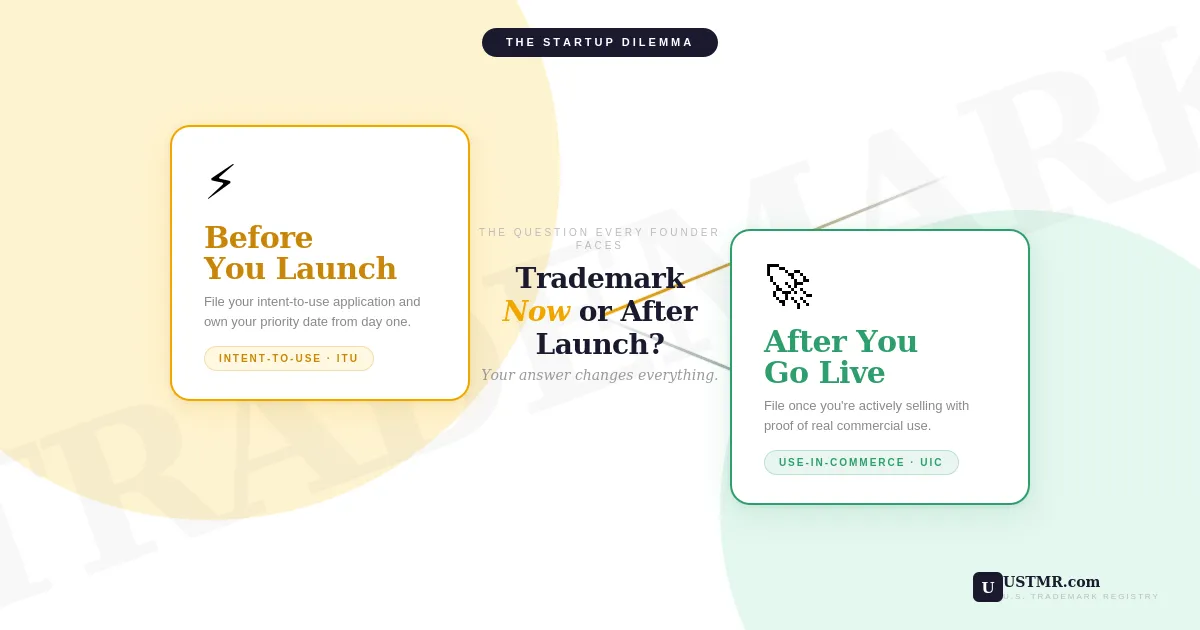
The USPTO’s intent-to-use trademark application exists precisely for situations like this. It allows a startup to file before launching, before the first sale, and before the product even exists in its final form. The only requirement is a genuine, bona fide intention to use the mark in commerce.
Filing an intent-to-use does two things immediately. It locks in a priority date that precedes any later filers. It also opens the USPTO examination process and surfaces any conflicts or legal issues with the mark before you make a significant marketing investment.
Finding a conflict at the filing stage costs time and a filing fee. If you discover the issue after launching the product, printing the packaging, and introducing the brand to the market, you will pay far more to fix it.
The Priority Date Is Everything
When disputes arise, the USPTO and federal courts look at who has the earlier claim. A startup that files an intent-to-use application the week it chooses a name holds an earlier priority date than a competitor who starts using the same name two months later, even if the competitor launches first.
That priority date becomes the legal anchor for enforcement. It determines who has rights and who has to stop. Securing it early, before any public announcement or product launch, is one of the most cost-effective moves a brand can make.
The Risk of Announcing Before Filing
Product announcements, crowdfunding campaigns, and press coverage all publicize a brand name before a trademark filing is in place. This creates a window where competitors can see the name and file first.
We consistently advise clients to file the trademark application before any public announcement. The filing fee is fixed. Losing a brand name after it has been announced publicly is not.
Some founders worry that filing before launch means revealing their brand name through public USPTO records. That concern is valid but manageable. The USPTO publishes applications, but a filing date is still better than no filing date when a conflict arises.
What About Use-in-Commerce Filings?
If a startup is already selling, even in a limited beta or soft launch, a use-in-commerce filing may be possible immediately. This requires a qualifying specimen showing the mark in active commercial use.
Use-in-commerce applications skip the Statement of Use step that intent-to-use filers must complete later. For startups that are already in commerce, even at a small scale, this is worth evaluating before defaulting to intent-to-use.
We assess which basis applies based on where the client is in their launch cycle. The wrong basis creates procedural problems later that are entirely avoidable with the right initial decision.
The Cost of a Rebrand
The question we ask every startup that hesitates on filing is simple: What would it cost to rebrand?
Rebranding means new logo design, new packaging, new website, new social media handles, updated marketing materials, and the loss of any brand equity built under the original name. For an early-stage company, the cost typically runs from $10,000 to well over $100,000, depending on how far the brand has been taken to market.
A federal trademark filing costs a few hundred dollars in USPTO fees. The math is straightforward.
We File Early So Startups Do Not Have to Rebuild Later
At united states trademark registrations and law (USTML), we work with startups at every stage. Pre-launch, mid-development, or already in the market, we assess the right filing strategy and move quickly.
Our trademark application services include a conflict search before filing, so clients know what they are walking into. We handle the application preparation, specimen review for use-in-commerce filers, and the full process from filing to registration.
If the name has not been searched yet, start with our free trademark search. That first step takes minutes and tells founders whether the name they have been building on has a clear path to registration.